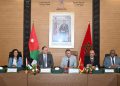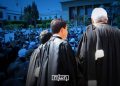

Rabat – Head of Government Aziz Akhannouch presented a glowing review of his government’s performance in a televised program aired Wednesday evening telling viewers that the past four years were marked by achievements that go beyond party lines and individual credit.
However, his upbeat assessment clashed sharply with widespread public discontent, mounting criticisms from civil society, and fierce opposition from political rivals, who argue that many of his government’s promises remain unfulfilled and that his record is marred by controversy.
Akhannouch’s report, claims
In his televised address, which comes as the 2026 elections are fast approaching, Akhannouch touched on a range of major issues. He insisted that the government’s work was “a collective effort,” not tied to his National Rally of Independents (RNI) party or to himself personally.
He backed the Ministry of the Interior to oversee legislative elections, saying electoral neutrality is essential and asserting that the government has not passed laws “tailor-made” for the elections.
He also spoke about earthquake recovery in Al Haouz and ongoing repair and rebuilding of hospitals and schools. The government chief said he is “satisfied” with the progress and that only a “very small number” of temporary shelters remain. This contracts the stories affected-communities tell, with several demonstrations taking place across Morocco this week to protest delays in housing delivery on the second anniversary of the disaster.
Regrading the water crisis Morocco has been grappling with, he said the country had to resort to rerouting water from certain dams, while accelerating major desalination plant projects in Casablanca, Tangier, Tiznit, and Nador to meet drinking water and irrigation needs.
Akhannouch described the direct social support program as successful, stating that 4 million families benefitted, including 5 million children, 1 million adults under 60, and 300,000 widows. He said 56,000 people received housing support, of whom 48% were women and 23% were from the Moroccan diaspora.
He added that national herd recovery was progressing well, arguing that the cancellation of the official Eid Al Adha sacrifice and spring rains had helped strengthen livestock numbers.
Regarding pension reform, which he described as a sensitive issue, Akhannouch said his government had launched serious dialogue with unions, saying that reform requires “innovative and consensual” solutions that take union perspectives into account.
He concluded by saying the government remains committed to completing its projects and will present further results to citizens, adding that he believes any party, including his own, which aims to lead the next government, must build on these achievements.
Moroccans push back: Mistrust, criticism, and skepticism
Despite Akhannouch’s positive framing, many Moroccans and political analysts are skeptical, and some are even openly critical. A range of surveys and public debates reveal deep frustration and distrust with his government’s performance.
According to the Afrobarometer survey published in May 2025, over 61% of Moroccans disapprove of Akhannouch’s performance, while only about 30% said they approved.
A number of analysts see economic hardships, inflation, and unemployment as key reasons behind this distrust. Critics point to rising prices of essential goods, especially food and fuel, which many say have outweighed government aid programs.
Opposition parties and watchdogs continue to raise conflict-of-interest concerns around major public contracts awarded to companies tied to Akhannouch or his conglomerate (Akwa Group / Afriquia). In particular, the seawater desalination project in the Casablanca-Settat region is under criticism because one of the awarding firms is connected to Akhannouch, raising questions about transparency and fairness.
أشعر بخيبة أمل خاصة إزاء الحوار الذي أجراه هذا المساء رئيس الحكومة #أخنوش مع القناتين الوطنيتين: مجموعة من المغالطات والتقريبات ومحاولات تجنب الأسئلة الموضوعية والجوهرية، أمام صحفيين غير قادرين على مناقضة ضيفهم وليس لديهما دراية جيدة بمختلف القضايا الوطنية. بعض الأمثلة: تضارب…
— Mohammed Benmoussa (@benmoussamed01) September 11, 2025
Public discontent with Akhannouch’s government was further amplified in 2022, when Morocco ended duty exemptions for international e-commerce purchases, making all online imports subject to tariffs. The government defended the move as protecting the local economy, but many Moroccans saw it as limiting their freedom to shop abroad.
The timing fueled additional accusations of conflict of interest, since Akhannouch’s wife, Salwa Idrissi Akhannouch, is a retail magnate. Critics argued the policy risked directing more business toward her companies, with one social media user remarking: “Of course she is among Africa’s leading retail billionaires … when laws are made to maximize your profit it’s no surprise.”
Critics also point to the 2018 boycott movement targeting Afriquia and other Akwa Group-linked businesses as a long-standing symbol of public protest against price gouging and perceived abuse of economic power.
In short, many observers believe Akhannouch’s televised defense glossed over serious and lingering problems.
“He only pays attention to people when elections are near. I had even forgotten he existed until he showed up now,” a social media user said.
Moroccan continue to call for government transparency and direct action to the critical that affects their daily lives.