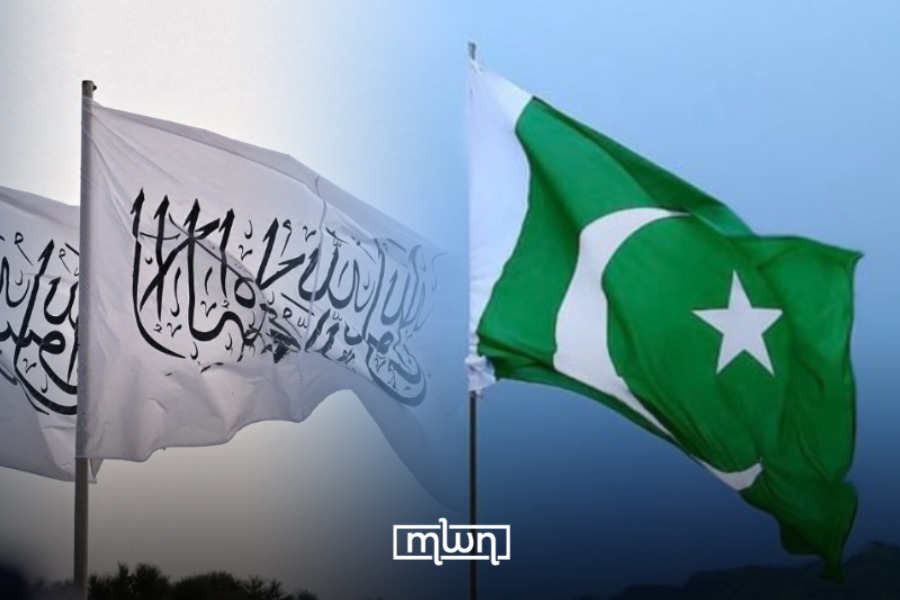
Rabat — Taliban forces and the Pakistani army engaged in clashes along their shared borders. The fights erupted after Kabul accused Islamabad of conducting airstrikes on Afghan territory, with both countries’ officials confirming the escalations.
The Taliban Defense Ministry announced late Saturday that it had successfully launched a retaliatory military operation against Pakistani security forces in response to what it called recurring violations and airstrikes on Afghan soil.
A Taliban military spokesman said his forces were engaged in intense combat against Pakistani security forces across multiple border areas.
On Sunday, Pakistan promised a forceful response, with the country’s Prime Minister Shehbaz Sharif warning that his country would tolerate no compromise on its defense and would respond to provocations with a strong and effective response.
He particularly accused Afghanistan of harboring terrorists.
Interior Minister Mohsin Naqvi escalated the rhetoric further, saying Afghanistan would receive “a crushing response.”
Pakistan had not confirmed that it carried out the Thursday bombings in Afghanistan’s capital and southeastern regions.
However, Islamabad said it came under attack Saturday night and returned fire against armed clashes originating from Afghan provinces, including Kunar, Nangarhar, Paktia, Khost, and Helmand. The violence erupted along the Durand Line, the border dividing the two nations.
Kabul announced the end of its operation around midnight local time.
Key crossings shut down
By early morning, Pakistan and Afghanistan closed two major border crossings, Torkham and Spin Boldak. These crossings normally handle thousands of Afghan migrants being deported by Islamabad.
An unnamed Pakistani official told news agencies that the Torkham checkpoint was completely closed and civilian border staff had withdrawn to prevent casualties from renewed gunfire. Pakistan also deployed additional paramilitary troops to the area.
Afghanistan confirmed it closed the Chaman checkpoint for all types of traffic, both commercial and civilian.
Deeper tensions over terrorist sanctuaries
Relations between Pakistan and Afghanistan have been volatile since the Taliban returned to power in the summer of 2021. Islamabad accuses the Taliban of harboring the Pakistani Taliban, known as the TTP, a group formed through combat in Afghanistan that claims the same ideology as the Afghan Taliban.
Pakistan says the TTP has killed hundreds of its soldiers since 2021. On Saturday, the TTP claimed responsibility for deadly attacks in the country’s northwest that killed 23 people, including three civilians, on Friday near the Afghan border in Khyber Pakhtunkhwa province.
Islamabad blames the Afghan Taliban for enabling the TTP’s resurgence. A UN Security Council report published earlier this year found that the TTP had likely benefited most from the Taliban’s return to power in Kabul, which welcomed and actively supported the group.
Kabul denies these accusations and turns the tables on Pakistan, insisting that Islamabad supports terrorist groups, particularly the regional branch of the Islamic State.
On Thursday, Pakistani Defense Minister Khawaja Muhammad Asif told Parliament that multiple attempts to convince the Afghan Taliban to stop supporting the TTP had failed.
He vowed that Pakistan would no longer tolerate the situation and called for united action against those who help the TTP, whether their hideouts are on Pakistani or Afghan soil.