
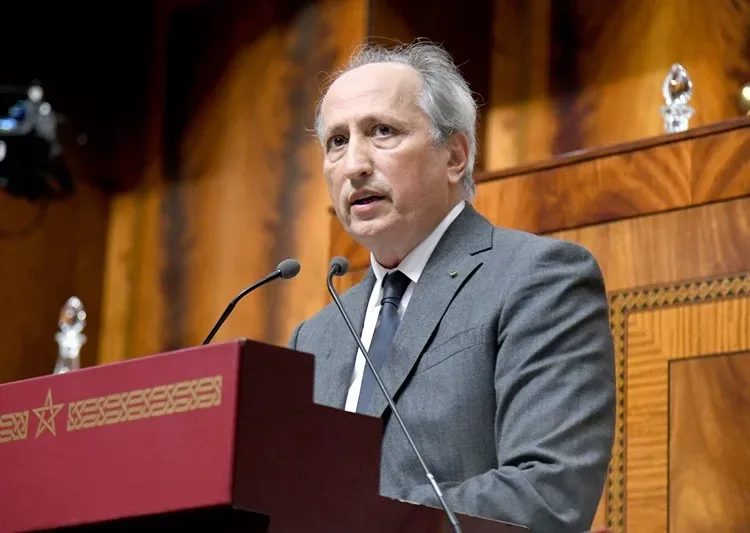
Rabat – Amid growing public pressure and parliamentary debate, Morocco’s Minister of National Education, Mohamed Saad Berrada, said on Monday that his department is reviewing the decision to cap the age of candidates for teacher recruitment exams at 30.
Speaking before the House of Representatives during the weekly oral question session, Berrada announced that a final decision will be made before the upcoming recruitment exams for 20,000 teachers, set to take place in the coming weeks.
The minister explained that the decision has been under evaluation for two months following repeated requests from Parliament and teaching unions.
When the policy was first introduced three years ago, he said, it aimed to “improve the education system, make teaching careers more attractive, and invest in continuing professional development.”
However, Berrada acknowledged that challenges have emerged. “I understand that there is a problem that must be resolved,” he said.
“We are considering how to address it before organizing the competitions, while ensuring that any change will not have negative repercussions for the sector or the candidates.”
Parliamentary consensus
Members of Parliament from across the political spectrum called for the abolition of the age ceiling, describing it as “unconstitutional” and “unjust.”
Many argued that the measure has excluded a large number of graduates, particularly unemployed degree holders over 30, without yielding noticeable improvements in education quality.
Three years after its adoption, MPs questioned whether the restriction has achieved its stated goals, noting that no significant progress has been observed in the education system’s performance.
Berrada shared new data showing that last year’s recruitment exam attracted around 120,000 applicants, but only 14,000 were accepted. Of those, 80% were under 25, while candidates aged 29 and above represented just 4%.
The minister also noted that 75% of accepted candidates had obtained “good grades” in their academic records, an indication, he said, of the strong potential among younger applicants in terms of academic and professional readiness.
While defending the initial rationale of the age limit, Berrada insisted that the measure was never meant to be exclusionary.
He concluded by reaffirming that the ministry’s ultimate goal remains to enhance the quality of education and advance the 2022–2026 roadmap for reform, which seeks to strengthen efficiency, equity, and performance across Morocco’s public schools.
The review comes amid broader debates on youth employment, equity in public service recruitment, and the education sector’s capacity to attract and retain skilled professionals – a subject that continues to draw widespread attention from Morocco’s younger generations.