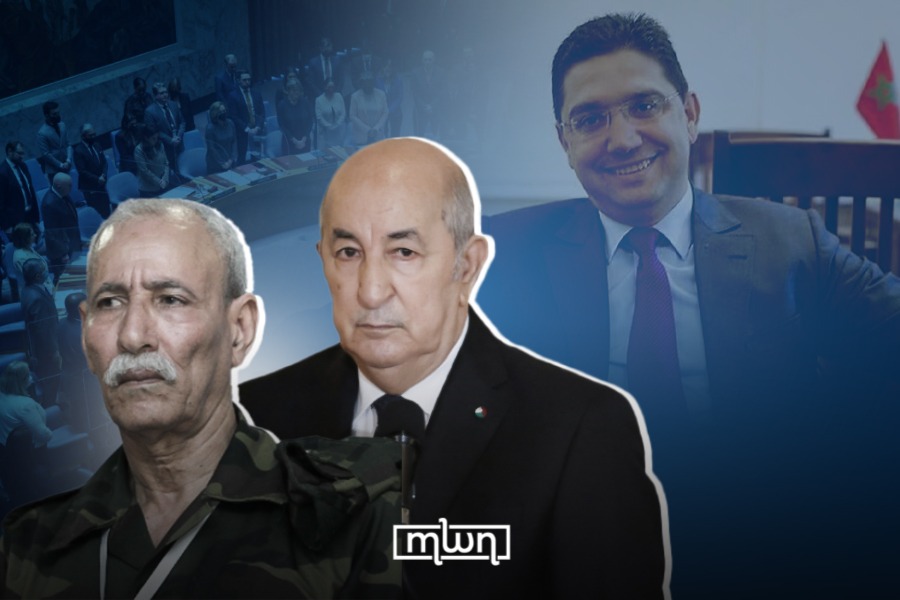
Rabat – Algeria and Polisario crash and burn in confusion and frustration amid a growing global consensus recognizing Morocco’s Autonomy Plan as the only realistic framework to end the dispute over Western Sahara.
Algeria’s regime continues to refuse to adapt to the new international momentum, insisting on supporting its outdated rhetoric and clinging to obsolete positions.
Cemented in this stance, the separatist group falls into further isolation as the international community moves forward toward a peaceful and pragmatic resolution under Morocco’s sovereignty over its southern provinces.
A few days ahead of the highly anticipated UN Security Council vote on Western Sahara, Algeria’s regime appears increasingly desperate, clinging to its few remaining allies, including Russia.
This week, Algerian officials held talks with Russian officials, including a phone call between Algeria’s Foreign Affairs Minister Ahmed Attaf and his Russian counterpart Sergey Lavrov on October 21.
This was followed by a meeting between Algerian President Abdelmadjid Tebboune and Alexei Repi, President of Business Russia, on Thursday.
The meeting follows high-level talks between Morocco and Russia, where Moscow signaled that its stance on Western Sahara could shift toward a positive neutrality or even full support for Morocco’s autonomy proposal.
Lavrov recently suggested that the autonomy proposal could be viewed as a legitimate form of “self-determination,” adding that Moscow could join the broad international consensus if all parties agree.
Morocco’s autonomy plan receives constant and firm support from over 120 countries that endorse the proposal as the most, or the only, viable political framework table to end the dispute.
The momentum, however, receives a deaf ear from Algeria and Polisario, which continue to echo and recycle their outdated narrative that the international community now merely notes. With the growing support for Morocco’s autonomy initiative, the international community is now ready to turn the page on a 50-year-old conflict sustained only by Algeria’s refusal to shoulder its responsibility in the dispute.
The Algerian regime is also in denial to admit the failure of its separatist agenda, refusing to engage constructively in the UN-led political process.
Backed by Algeria’s orchestrated campaign, Polisario persists in setting conditions and clinging to obsolete claims, alleging that it could accept the autonomy initiative only if approved by a long-outdated referendum.
AFP recently quoted the self-declared foreign minister of the Polisario, Mohamed Yeslem Beissat, who alleged that the group submitted “an expanded proposal” to the UN Security Council.
Beissat claimed the illusory proposal “includes the three operations provided by international law: independence, integration, and free association, which could resemble what Morocco is proposing.”
The separatist group also alleged that it is acting in “good faith,” and is committed to “good neighborliness and cooperation.”
Calling a dead line
Morocco’s government position is consistent, emphasizing that talks and negotiations around the regional dispute must involve Algeria’s direct and responsible engagement in the UN-led political process.
The Algerian regime’s maneuvers challenging Morocco’s territorial integrity have long deepened the stalemate between the two countries. Algiers also closed off avenues for discussion, shutting its land borders with Morocco since 1994, and in 2021, went further by cutting diplomatic ties and closing its airspace with Rabat.
Morocco has repeatedly called for the reopening of communication channels with a frank and direct dialogue.
Additionally, UN Secretary General Antonio Guterres continues to express concern over the prolonged diplomatic crisis between Morocco and Algeria, reiterating the urgent need for dialogue to prevent further escalation.
In his new report, the UN chief said: “I remain deeply concerned by the situation in Western Sahara and the entrenched circumstances on the ground that continue to impede progress towards a political solution to the conflict.”
The US is now seeking to mediate between the two countries. US top advisor Massad Boulos suggested that Algeria’s regime has recently indicated a willingness to ease tensions and explore ways to restore ties with Morocco. This comes amid Algeria’s ongoing maneuvers that continue to undermine genuine progress.
By the end of next week, the UN Security Council is voting on a new resolution on Western Sahara. Morocco World News (MWN) was sent a copy of the draft resolution, which suggests that the UN plans to renew the mandate of the peacekeeping operation MINURSO for only six months, instead of one year.
The proposal reflects the international community’s readiness to accelerate diplomatic efforts to move forward with a political solution.
In his latest report, Guterres called for a full one-year extension of the mission’s mandate.
The US, as the penholder of the resolution, appears to favor a shorter renewal period as a form of diplomatic pressure, particularly on Algeria’s regime to engage more constructively in the UN-led political process.