
 Join on WhatsApp
 Join on Telegram
Mohammedia – Cryptocurrency emerged not because someone wanted a digital novelty, but because a gap in the financial system had become impossible to ignore.
In the wake of the 2008 financial crisis, public trust in banks and financial institutions was badly shaken.
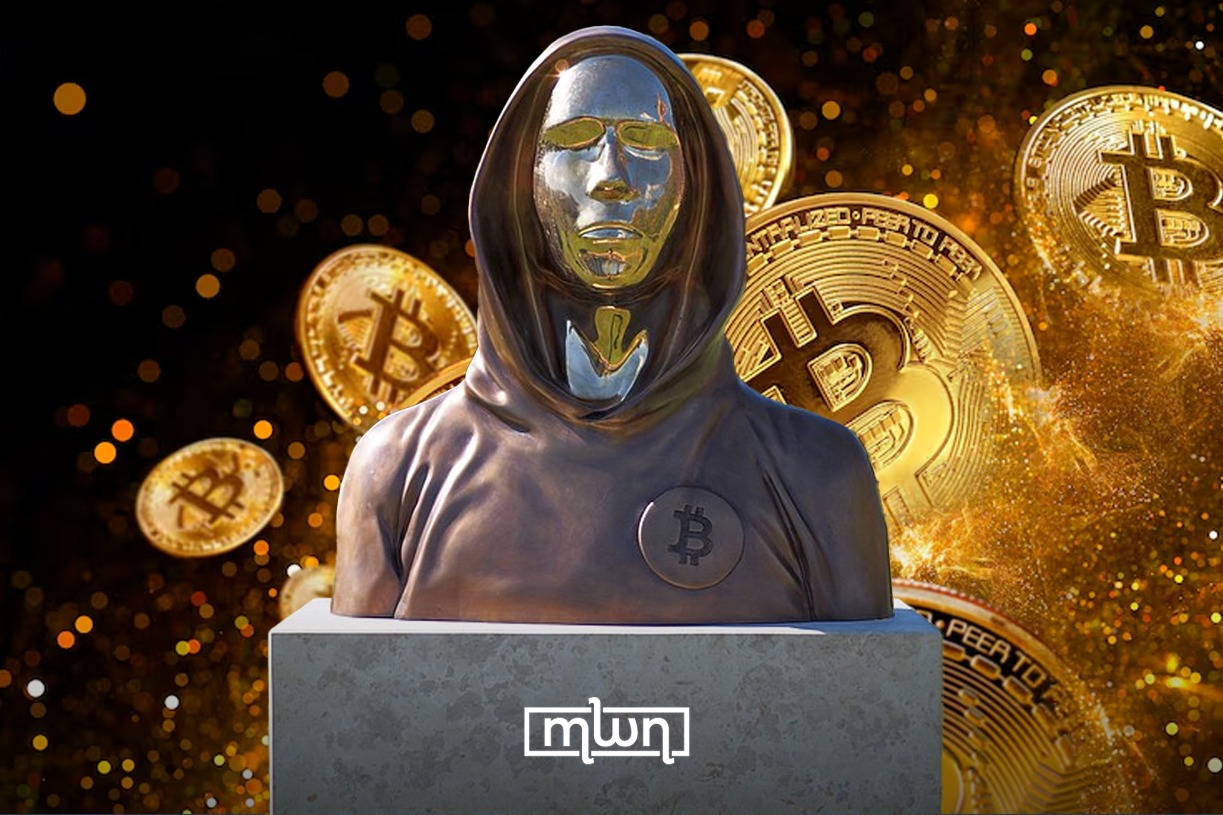
It was in this context that Satoshi Nakamoto—the pseudonym of an unknown person or group— released a paper in October 2008 outlining a new kind of digital money that could be transferred directly between users without passing through a financial intermediary.
The spirit of this vision was radical—digital money that doesn’t require a central authority to validate or reverse transactions.
In a world where payments are managed by layers of institutions—each adding fees, delays, and control—the idea was a bold reimagining. It wasn’t just about coins or hype, but about questioning how money works and whether it could function differently.
Why the existing system was creating problems
To send money online today, most people rely on banks, payment services, or other intermediaries that keep track of transactions between parties.
This dependency creates three familiar pain points—relying on a middleman, paying fees or accepting delays, and giving up some privacy or control.
Beneath that lies a deeper technical issue: double-spending. In the digital world, data is easy to copy.
So how can one ensure that the same coin isn’t spent twice? In traditional systems, banks prevent this by maintaining a single, trusted ledger that tracks all transactions and balances. Nakamoto’s proposal replaced that central ledger with a shared one maintained by many participants in the network.
Each transaction would be verified collectively, making it nearly impossible for anyone to duplicate or fake digital money.
Trust in financial institutions had also eroded. When systems fail or behave unfairly, people naturally begin to imagine alternatives—systems that are not controlled by a handful of powerful players. Cryptocurrency emerged as one such alternative.
How the proposed fix works
The solution Nakamoto proposed was a network in which no single actor owns or controls the ledger—the record of who paid whom.
Instead, the ledger is shared and updated by many independent computers (called nodes) working together in a distributed fashion. Because the process is collective, it removes the need to rely on one trusted middleman.
Then comes the clever part—cryptography and incentives. Transactions are grouped into “blocks,” and to add a new block to the chain, computers must solve a complex mathematical puzzle known as proof-of-work.
This process makes altering the transaction history extremely difficult and expensive. The result is a secure, transparent ledger that operates without a central mediator.
In simpler terms, it’s a shared record visible to everyone in the network, where participants verify each other’s transactions and cheating becomes prohibitively costly.
The system is designed to make digital money behave more like cash exchanged directly between people, rather than a check that requires approval.