

Rabat – Casablanca’s Mohammed V Stadium was the center of Moroccan football Wednesday night, as Wydad and Raja met for the 139th Derby. The match ended in a 0–0 draw, but the spotlight belonged to the fans.
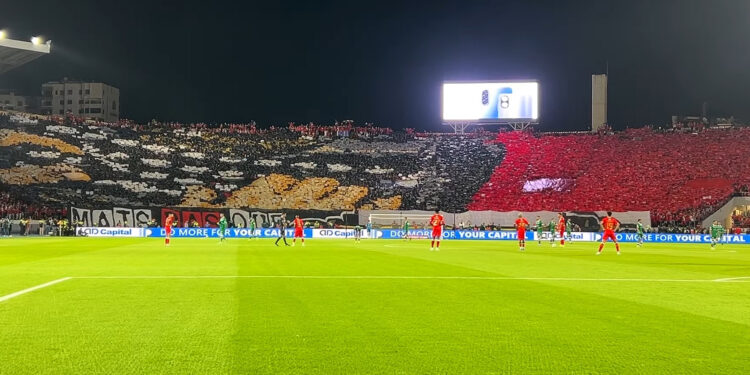
Tens of thousands packed the stands from Raja and Wydad, turning the stadium into a wall of red and green.
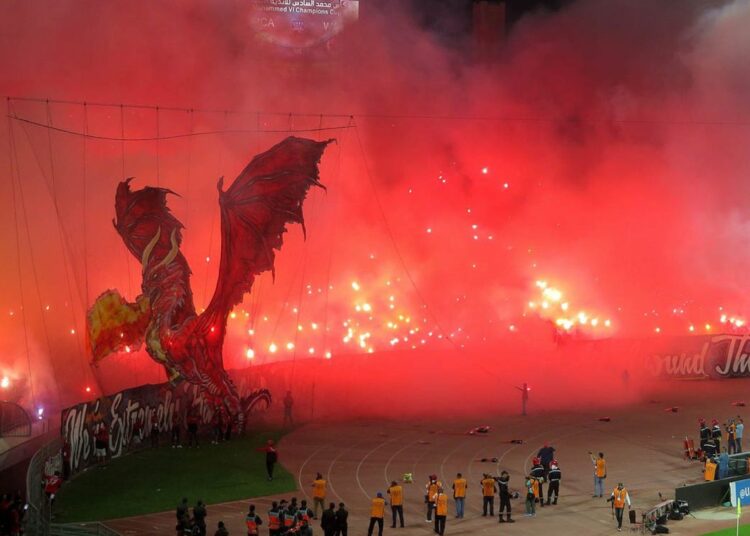
Supporters from both sides lit flares, waved banners, and unveiled massive tifos, one of them stretched across an entire curva, showing the painted jerseys of both clubs side by side.

The atmosphere was intense. Chants were loud, drums beat were nonstop, and thick smoke from pyrotechnics forced the referee to stop the game several times. Nearly thirty minutes of stoppage time were added to account for the delays.
Despite the lack of goals, the energy in the stands never dipped. The passion in the stadium once again proved why the Casablanca Derby remains one of Africa’s most historic football matches.
Inside the rival ultras of Wydad and Raja
The fiery atmosphere of the Casablanca Derby is fueled by Morocco’s deep-rooted culture of ultras.
Wydad’s fan base is led by Ultras Winners 2005, named after their founding year. Since their debut in late 2005, the Winners have built a reputation for bold visuals, loud drum sections, and massive hand-painted tifos that celebrate club legends and history.
Their creativity has earned global attention. In 2023, Ultras World ranked them number one worldwide ahead of Argentine clubs like Boca Juniors and River Plate, thanks to their choreographed displays and pyrotechnic shows.
Raja’s curva is home to two major ultra groups. The Ultras Green Boys 2005 were the first organized ultras in Morocco, holding the southern “Magana” end.
A split in 2006 led to the creation of Ultras Eagles 2006.
The Green Boys are known for layered, high-quality tifos and long-running pyro sequences.
The Eagles, meanwhile, bring a different energy, famous for their intense chants and bold, often provocative banners.
Together, these groups shape the identity of the Casablanca Derby, turning every match into a spectacle that goes far beyond the pitch.
More than football
In Moroccan football, ultras are known not just for their noise and color, but for their message. On derby days, their choreographed tifos and chants often feel like a second match full of emotion, precision, and meaning.
These fan displays go beyond support. The stands have become a space where young Moroccans express frustration and call for change.
Over the years, ultras have taken on a larger role, acting as grassroots movements that challenge authority and push for more inclusion.
The Wydad–Raja derby on Wednesday was a clear example. The match ended 0–0, but the real story was in the stands. The fans’ creativity, energy, and message turned the night into something much bigger than football.