Marrakech – The seventh African Union-European Union Summit in Luanda has concluded with a joint declaration stressing territorial integrity and non-interference principles, even as Algeria orchestrated a calculated propaganda campaign exploiting Polisario’s presence to mask its mounting diplomatic isolation.
Adopted November 24-25, the Luanda Declaration explicitly calls in paragraph 28 for respect of “good neighborliness, non-interference in the internal affairs of States, peaceful resolution of disputes, full respect of territorial integrity and sovereignty, right to self-determination.”
Yet this right has been systematically distorted, hijacked, and grotesquely instrumentalized by Polisario, stripped of its legal meaning and repurposed as a separatist pretext rather than a genuine democratic mechanism.
What was conceived as a principle of inclusive political participation has been mutated into a tool of manufactured fragmentation, deployed to justify an artificial entity with neither demographic legitimacy nor historical grounding.
In doing so, Polisario has not only undermined the integrity of the self-determination norm but also weaponized it against the very foundations of territorial stability, committing an abuse that no credible international framework can recognize, validate, or morally endorse.
However, Algeria’s myopic maneuvering transformed what should have been substantive continental cooperation into a theatrical display of concocted legitimacy for its separatist proxy.
Morocco’s diplomatic restraint inadvertently provided Algeria with an unprecedented opportunity to stage-manage the visual narrative. The kingdom’s decision to send only Minister of Equipment and Water Nizar Baraka left a conspicuous vacuum that Algeria exploited with characteristic opportunism.
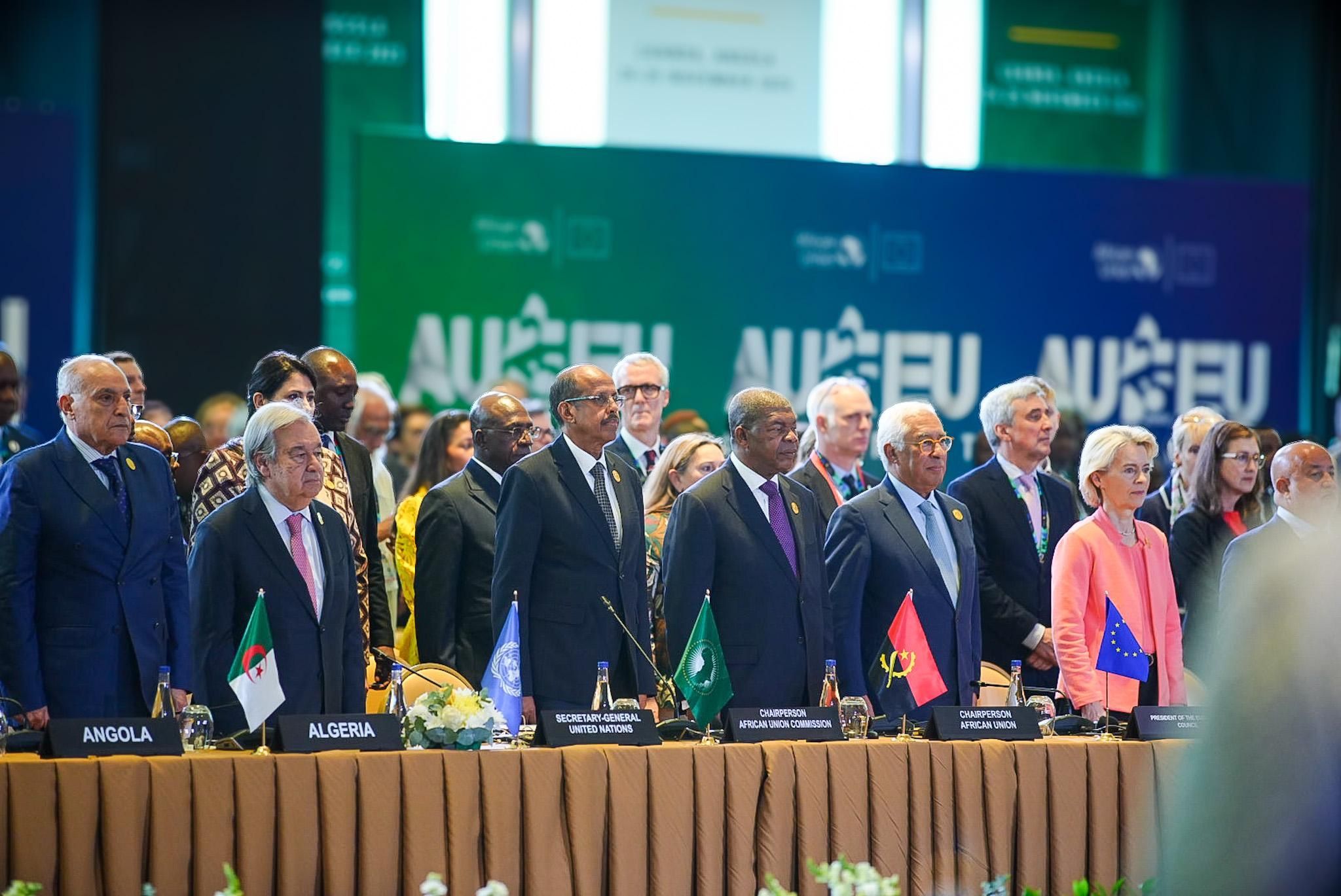
Algerian officials strategically positioned themselves alongside UN Secretary-General António Guterres while orchestrating Polisario leader Brahim Ghali’s seating arrangement to create artificial parity with Morocco’s delegation.
UN visuals gifted Algeria a manufactured propaganda triumph
The manipulative choreography reached its zenith when the UN spokesperson’s official account published photographs prominently featuring Ghali during the Secretary-General’s address. This deliberate visual positioning represented a propaganda coup for Algeria, which desperately seeks to revitalize its faltering separatist narrative following devastating setbacks in international forums.
Algeria’s machinations become particularly insidious when viewed against recent diplomatic reversals. The country has witnessed multiple African and Latin American nations withdrawing recognition of the self-proclaimed “Sahrawi Arab Democratic Republic (SADR),” leaving Algeria’s proxy increasingly marginalized on the global stage.
The Luanda Summit provided a crucial lifeline for Algeria’s hemorrhaging credibility, offering symbolic oxygen to a cause suffocating under international indifference.
The summit’s substantive achievements – including commitments to the Global Gateway Africa-Europe Investment Package and enhanced cooperation on energy transitions – were overshadowed by Algeria’s single-minded focus on symbolic victories.
While legitimate discussions addressed continental integration through the African Continental Free Trade Area and sustainable development partnerships, Algeria prioritized spurious photo opportunities over meaningful regional progress.
European Union officials repeatedly clarified their position, with spokespersons emphasizing that “neither the European Union nor any of its member states recognizes the SADR.” This unambiguous stance contradicts Polisario’s desperate attempts to portray EU engagement as tacit recognition of their illegitimate claims.
The joint declaration’s emphasis on “territorial integrity and sovereignty” principles directly contradicts Algeria’s destabilizing interventionism in regional affairs. The document’s call for “non-interference in the internal affairs of States” serves as an implicit rebuke to Algeria’s institutionalized undermining of Moroccan sovereignty through its separatist proxy.
Mali’s decision to drag Algeria before the ICJ for downing a Malian military drone epitomizes Algiers’ escalating destabilization across the Sahel, exposing a reckless pattern of border violations and interventionist aggression.
Algeria’s proxy now flounders amid worldwide marginalization
Algeria’s propaganda offensive extends beyond mere symbolism to encompass systematic disinformation campaigns. Pro-Polisario media outlets amplified the Luanda imagery as evidence of “symbolic victory” and “implicit recognition,” attesting Algeria’s sophisticated information warfare tactics to compensate for substantive diplomatic failures.
The UN’s recent Resolution 2797 exposed the bankruptcy of Algeria’s separatist strategy by explicitly identifying four parties to the conflict – Morocco, Polisario, Algeria, and Mauritania – while endorsing Morocco’s autonomy plan as the most realistic solution.
This crippling repudiation of Algeria’s two-party fiction prompted desperate attempts to salvage credibility through engineered summit theatrics.
Morocco’s absence from high-level representation reflects a strategic miscalculation that allowed Algeria unprecedented freedom to orchestrate its propaganda spectacle.
The kingdom’s diplomatic corps failed to anticipate Algeria’s cunning exploitation of protocol arrangements, missing opportunities to deploy elected representatives from the southern provinces who could have effectively countered separatist narratives.
The summit’s focus on legitimate continental priorities – including climate adaptation, digital transformation, and sustainable finance mechanisms – was systematically subverted by Algeria’s obsession with symbolic manipulation.
While African nations discussed practical cooperation frameworks worth billions in investment, Algeria prioritized photo opportunities designed to resuscitate its moribund separatist project.
Luanda briefly revived Algeria’s hemorrhaging diplomatic credibility
Angola’s hosting of the event provided Algeria with a particularly receptive environment for its manipulative strategies. Luanda’s relationship with Algiers has strengthened considerably in recent months, offering Algeria diplomatic cover for its destabilizing regional interventions while undermining Morocco’s expansion into Lusophone Africa.
The contrast between substantive continental cooperation and Algeria’s theatrical distractions highlights the regime’s fundamental misalignment with African development priorities.
While legitimate partnerships advance infrastructure connectivity, energy security, and economic integration, Algeria remains fixated on perpetuating artificial conflicts that drain regional resources and undermine stability.
The Luanda Declaration’s commitment to “peaceful resolution of disputes” and “territorial integrity” principles stands in stark opposition to Algeria’s systematic violations of these fundamental norms.
The regime’s instrumentalization of Polisario as a proxy for territorial aggrandizement represents a flagrant contradiction of the very principles enshrined in the summit’s final communiqué.
European officials’ consistent refusal to recognize Polisario’s fictional state demonstrates the fundamental weakness underlying Algeria’s propaganda offensive. Despite meticulously crafted visual theatrics and protocol maneuvers, Algeria cannot manufacture the international legitimacy that only genuine sovereignty and democratic governance can provide.
The summit’s genuine achievements in sustainable development partnerships and continental integration remain overshadowed by Algeria’s cynical exploitation of African Union membership rules.
The regime’s deliberate abuse of institutional frameworks to advance separatist agendas corrodes the continental organization’s credibility and diverts attention from pressing development challenges.
Morocco’s strategic error in diplomatic representation allowed Algeria to monopolize narrative control during crucial visual moments.
The absence of high-level Moroccan officials or elected representatives from the southern provinces created an information vacuum that Algeria filled with calculated propaganda designed to sustain its failing separatist project amid mounting international isolation.