
 Join on WhatsApp
 Join on Telegram
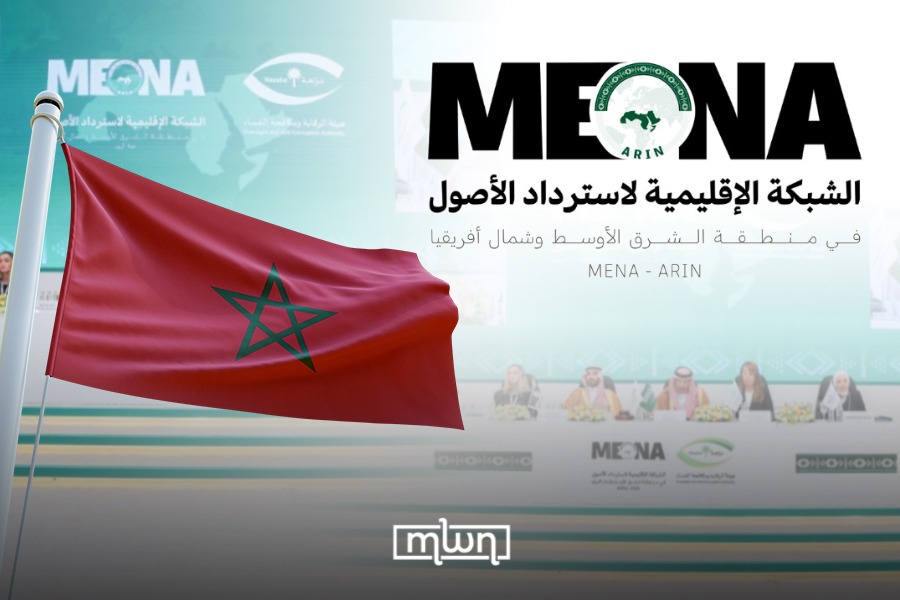
Mohammedia – Morocco has been elected to the Steering Committee of the Middle East and North Africa Asset Recovery Inter-Agency Network (MENA-ARIN), marking a significant step in the country’s growing role in regional and international efforts to fight corruption and recover illicit assets.
The three-year mandate places Morocco among a small group of influential member states shaping the network’s strategic direction.
Morocco is represented on the committee by Mohamed Benalilou, President of the National Authority for Integrity, Prevention, and the Fight against Corruption (INPPLC).
The election took place during the network’s founding congress held in Jeddah, following what organizers described as the distinguished participation of the Moroccan delegation.
For Rabat, the move is widely seen as international recognition of its expanding engagement in governance and anti-corruption reforms.
With this election, Morocco will sit alongside Saudi Arabia, the United Arab Emirates, Qatar, Egypt, and Lebanon on the Steering Committee.
Notably, Morocco and Egypt are now the only two African countries represented at this level within MENA-ARIN, giving the continent a direct voice in a platform focused on tracing, freezing, seizing, and recovering illicit financial flows.
Beyond membership, Morocco is also set to assume the presidency of MENA-ARIN in 2028 and host the network’s annual General Assembly the same year.
This future leadership role is expected to further raise the country’s institutional profile and strengthen its influence over the network’s priorities, particularly in the area of technical cooperation and capacity-building.
A strategic platform against illicit financial flows
MENA-ARIN serves as a regional platform for informal yet highly effective cooperation between authorities responsible for asset recovery across the Middle East and North Africa.
Its core mission is to facilitate the identification, tracing, freezing, seizure, and recovery of assets linked to corruption and financial crime, relying on practical mutual assistance, skills development, and partnerships with specialized international organizations.
The Steering Committee functions as the network’s strategic and administrative backbone. It oversees governance, validates observer memberships, supervises management, and coordinates with the General Secretariat to plan key documents such as the annual action plan, activity reports, and agendas of the General Assembly.
It also plays a central role in organizing training activities focused on the latest technologies and methods used in asset recovery.
Although MENA-ARIN is anchored in the Middle East, its African dimension is increasingly visible through Morocco and Egypt.
The network operates within a broader global ecosystem of eight regional asset recovery networks worldwide, including Africa’s eastern and central regions.
In this context, Morocco’s election offers tangible opportunities for African countries seeking to strengthen their technical and institutional capacities in tracking illicit assets.
For Morocco, the implications go beyond symbolism. The country is positioning itself as a bridge between African dynamics and global asset recovery mechanisms, facilitating the convergence of legal standards and operational practices.
It also strengthens its role as a regional interlocutor in a multilateral space dominated by Gulf economies, while carrying African priorities into strategic discussions on financial integrity.
As financial crime grows increasingly transnational and sophisticated, Morocco’s presence within MENA-ARIN’s decision-making body places it at the heart of a network where asset recovery is becoming a key tool of economic sovereignty and regional governance.
Read also: Morocco Holds Steady as MENA Startup Funding Drops 77% in October