
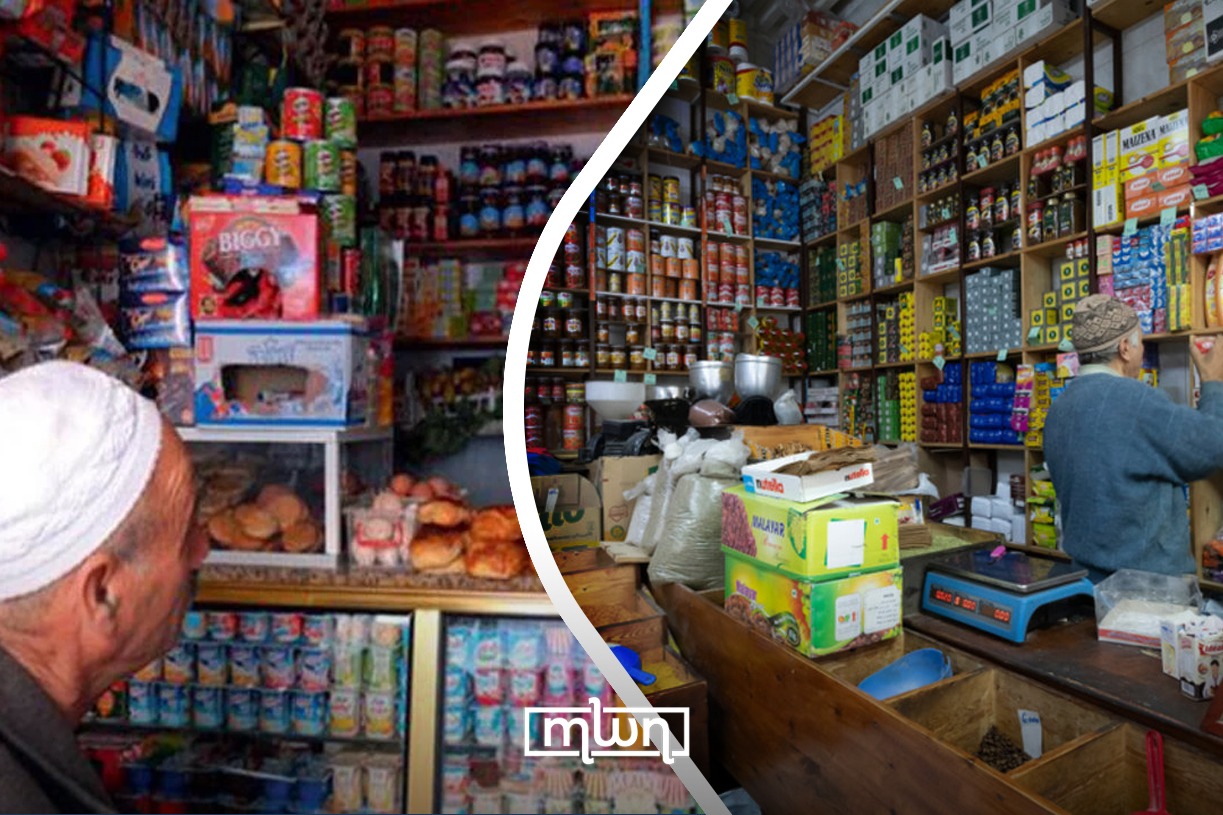
Rabat – For years, Morocco’s small neighborhood grocers — the familiar “moul l’hanout” who anchors every street corner — have been quietly losing ground. As major discount chains such as BIM, Kazyone, and Supeco multiply across cities and villages alike, the country’s traditional retail backbone is being squeezed to near-breaking point.
In many neighborhoods today, it’s no longer unusual to find two or even three small supermarkets within the same few blocks, drawing customers away from the local shops that long served as the country’s social and economic safety net.
That growing imbalance took center stage yesterday in the House of Representatives, where Minister of Industry and Trade Ryad Mezzour and MP Abdelatif Ezzaim painted sharply contrasting pictures of urgency and opportunity.
While both agreed the sector faces unprecedented pressure, Mezzour insisted that the government is already executing a long-term plan to lift neighborhood merchants into a more resilient future.
“The small and medium retail sector is suffering from unfair competition on two fronts. Major supermarkets that have infiltrated residential neighborhoods, and the informal sector of street vendors,” warned Ezzaim, speaking bluntly about the deterioration he sees on the ground.
He described shopkeepers as “caught between a rock and a hard place,” adding that they remain essential to Morocco’s social stability yet “stand today without real support.”
Ezzaim’s remarks echoed what many Moroccans witness daily with traditional grocers growing increasingly deserted as customers gravitate toward chain stores offering promotions, standardized pricing, and longer operating hours.
But for thousands of families — especially those who rely on the “karni”, the month-end credit system small grocers have maintained for generations — the disappearance of these shops would be a socioeconomic rupture.
Mezzour: a roadmap, 1,500 measures, and a new conference in 2025
Responding forcefully, Minister Mezzour framed the neighborhood merchant as a cornerstone of Morocco’s social fabric. “The grocer, the ‘moul l’hanout,’ is a fundamental pillar of social cohesion and solidarity,” he said.
He underscored just how deeply these merchants are embedded in Moroccan life. “Today, he effectively lends MAD 840 [$90] to every Moroccan household, and 30% of the credit he provides has nothing to do with his own products.”
Mezzour insisted the government has not been idle. Since 2019, he said, the ministry has implemented 1,500 recommendations, of which 80% have already been carried out.
A new national conference, planned for early 2025, will outline a refreshed roadmap toward 2030 — one that aims to help small merchants adapt, modernize, and reclaim their central role in the community.
The ministry also organized a National Day of the Merchant to strengthen dialogue with sector representatives, a symbolic gesture Mezzour described as preparing them to match the ambitions of Morocco 2030.
While Mezzour emphasized long-term structural reforms, Ezzaim pushed for immediate, multisectoral coordination — particularly with the Ministry of Interior — to slow the rapid encroachment of chain stores and regulate informal competition.
Read also: Morocco Sees 17.5% Rise in New Businesses in First Eight Months of 2025