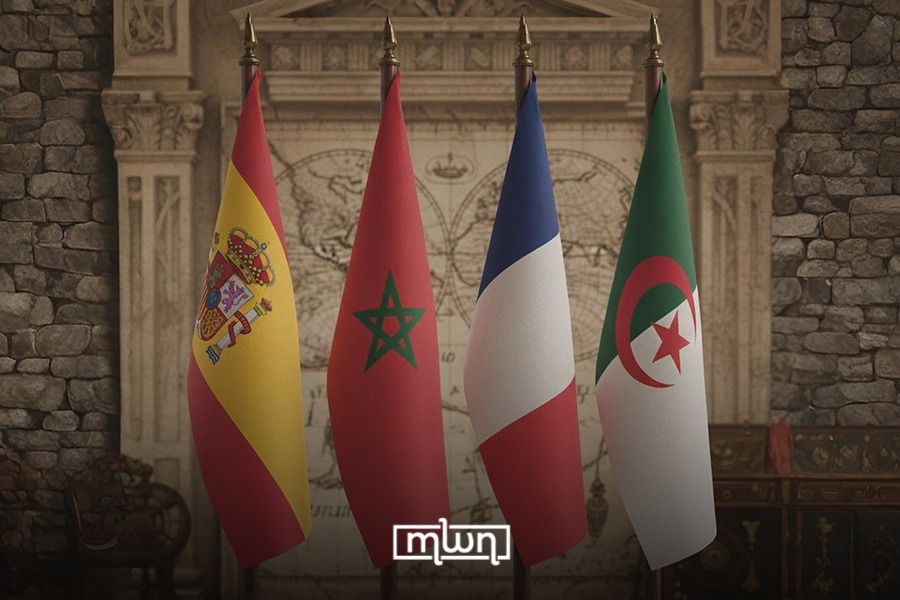
Spanish-Moroccan relations in recent years have been marked by pragmatic, transactional cooperation, and growing interdependence. Franco-Algerian relations, by contrast, remain weighed down by an asymmetric colonial legacy in which memory politics and a scarred national psyche routinely derail meaningful collaboration. Algerian demands for apologies and reparations for a long and traumatic colonial period continue to reinforce colonizer–colonized power dynamics that have carried into the postcolonial era. And although Morocco and the Western Sahara dispute remain major points of tension between Paris and Algiers, Algeria’s influence in shaping relations between Rabat and Madrid is waning as Algerian gas exports to Spain decline.
Memory remains central to Algerian rhetoric against France, whereas tensions between Spain and Morocco have historically revolved around territorial disputes rather than historical trauma. Spain is the only European country with a territorial presence in North Africa, and while Madrid sees Ceuta and Melilla as integral parts of the nation, Morocco regards the enclaves as symbols of an unfinished decolonization process. In the 1960s, meetings between King Hassan II and Francisco Franco yielded little for Morocco: Spain refused to reconsider Moroccan sovereignty over the then-Spanish Sahara or over Ceuta and Melilla.
In recent years, however, Moroccan diplomats shifted away from the enclaves to prioritize the Western Sahara, economic interdependence, and cooperation on migration, security, and narcotics. This allowed Spain to soften its decades-long rejection of Moroccan interests and adopt a position of “positive neutrality,” built on what analysts have called a “cushion of shared interests.” For decades after Moroccan independence, Spanish political parties and NGOs strongly backed the Polisario Front, and regular contact between Spanish officials and the group was a persistent source of tension. Relations plunged in 2021 when Spain admitted Polisario official Brahim Ghali for medical treatment using Algerian documents, an act that infuriated Rabat. Morocco responded by relaxing border controls, prompting thousands of irregular migrants to cross into Spain.
Yet the diplomatic landscape changed dramatically the following year. Prime Minister Pedro Sánchez endorsed Morocco’s Autonomy Plan for Western Sahara, an unexpected shift that not only pushed Ceuta and Melilla into the background but also opened the door to what Samir Bennis has described as a “newfound honeymoon between Madrid and Rabat.” With both sides choosing to sidestep “thorny” issues, they have instead focused on shared strategic priorities. Spain now depends on Moroccan cooperation to curb irregular migration, which Pedro Sánchez has openly praised, while Morocco leverages this cooperation to secure its political aims. Although Spanish public opinion remains broadly sympathetic to the Polisario, relations between the two governments, and between their royal families, have warmed considerably since 2022. Meanwhile, Algeria’s relevance to the bilateral equation has diminished: Spain is no longer reliant on Algerian gas following the halt of the Maghreb–Europe pipeline, and US gas supplies have surged. France’s own investments, tourism links, and diplomacy, increasingly favor Morocco, deepening Franco-Algerian tensions.
While Madrid and Rabat have found ways to manage their differences, Algiers and Paris face a much steeper climb due to the centrality of colonial memory. As Aomar Baghzouz argues, although Algeria’s status as a former French department creates an expectation of “permanent normalization,” Algerian leaders continue to resist what they see as France’s “amnesia” regarding past atrocities. President Emmanuel Macron has made unprecedented efforts to address this legacy: he arranged the return of the skulls of Algerian resistance fighters kept in a Paris museum, and described France’s colonization of Algeria as a “crime against humanity.” Still, Algiers insists on a fuller “recognition process based on copious jurisprudence.”
These gestures mark a sharp contrast from the early post-independence era, when Charles de Gaulle prioritized maintaining French influence and Algerian dependence. Phillip C. Naylor, a historian working on France-Algeria relations, observes that “the purpose of French colonization was to establish a presence; French cooperation’s objective was to perpetuate that presence after independence.” De Gaulle sought continued access to Algerian markets, raw materials, and Saharan nuclear testing sites. In return, France provided generous support; Algeria received 2.7 billion francs between 1963 and 1965. Then-foreign minister Abdelaziz Bouteflika even praised France for enabling a “rapid decolonization.” Other historians have described this postcolonial interdependence as “inevitable,” citing Algeria’s dependence on remittances from workers in France and the technical and cultural cooperation guaranteed by the Evian Accords.
Yet this cooperation was fragile. The 1971 nationalization of hydrocarbons triggered a diplomatic crisis, prompting France to boycott Algerian oil and wine. Meanwhile, France’s decision to conduct nuclear tests in the Algerian desert, on the one-year anniversary of the Evian Accords, underscored the limits of Algerian sovereignty; Naylor called this an “embarrassing postcolonial dependence” for a supposedly “liberated” nation. Today, despite Macron’s attempts at reconciliation, French support for Morocco’s claim to Western Sahara, reinforced during Macron’s 2024 state visit, remains a major source of friction. Algeria’s political leadership, which derives its legitimacy from the anti-colonial struggle, shows little sign of abandoning its hardened stance: France appears in Algeria’s national anthem not as a friend, but as an enemy.
While Spain committed significant abuses during its protectorate in Morocco, including some of the earliest recorded uses of chemical weapons in the Rif, this history is less central to Moroccan national identity than colonial memory is to Algeria. As a result, long-term cooperation between Spain and Morocco has proved more durable than between France and Algeria. Madrid and Rabat grapple with numerous tensions – Ceuta, Melilla, Western Sahara, migration, narcotics, fishing rights – yet the two kingdoms have repeatedly chosen cooperation over confrontation. Their joint hosting of the 2030 World Cup alongside Portugal is emblematic of this pragmatism.
Algeria and France, however, remain trapped in a cycle of memory, grievance, and competing narratives. Early postcolonial interdependence gave way to resentment, and contemporary reconciliation efforts consistently fall short. It is likely that Algerian hostility toward France will endure, sustained by an official nationalism in which the anti-colonial struggle continues to define the state’s very identity.