 Join on WhatsApp
 Join on Telegram
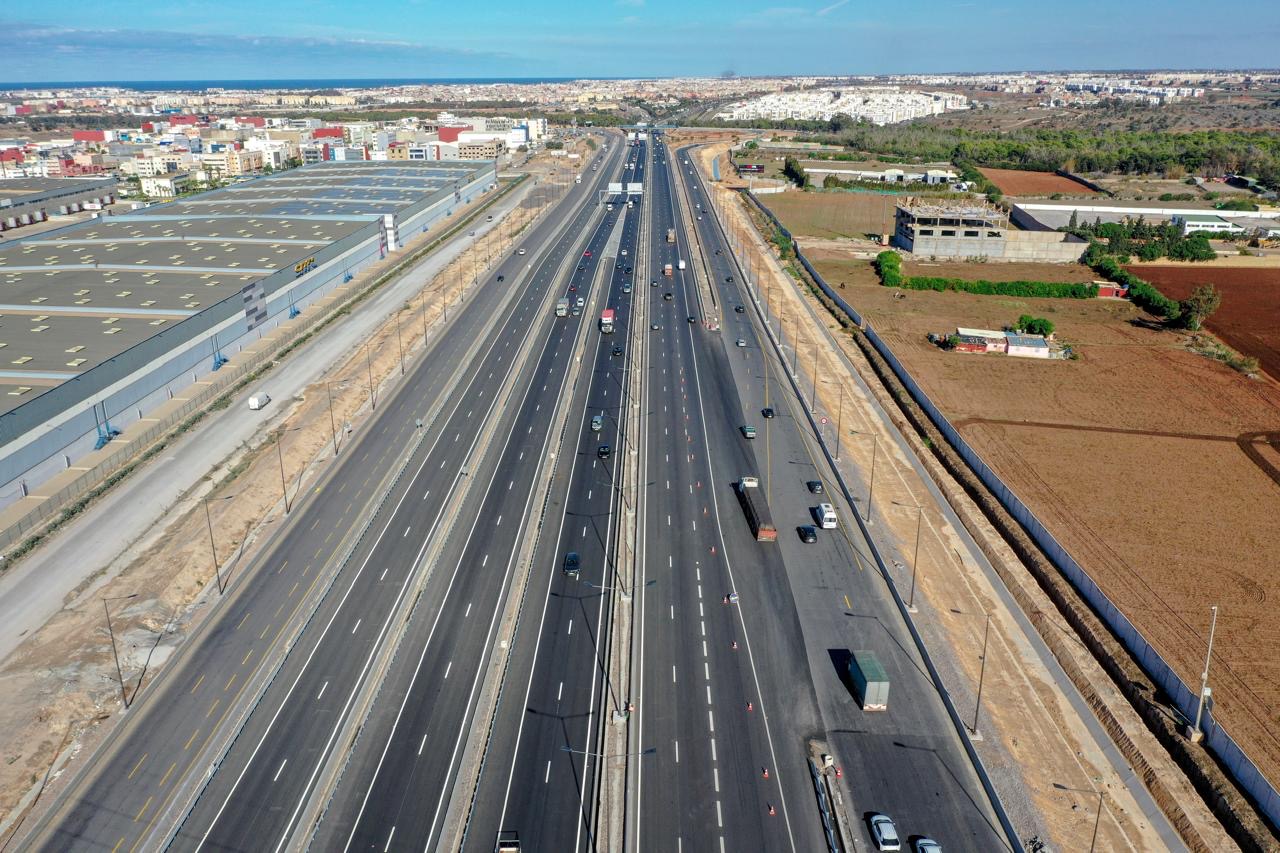
Marrakech – Morocco’s National Highway Company (ADM) has completed the transformation of the Ain Harrouda highway junction north of Casablanca. The project cost MAD 750 million ($75 million) and was delivered ahead of the original schedule.
Early delivery allows the transportation network to handle increased traffic volumes during peak economic activity periods.
The junction handles approximately 140,000 vehicles daily, making it one of Morocco’s busiest highway sections. It connects the Mohammedia West interchange to the Ain Harrouda bifurcation and serves north-south transit, Casablanca highway access, and the Mohammedia metropolitan area, including its industrial zone.
ADM implemented complete traffic flow separation to eliminate crossover points. The design increases capacity at the Mohammedia West interchange through additional lanes and connecting ramps. Construction included 11 engineering structures with three underpasses and eight overpasses.
Road capacity expanded to eight lanes per direction in some sections. An elevated intersection replaced the existing Mohammedia industrial zone roundabout. A new connection links the urban highway to Casablanca’s ring road for southbound traffic from the economic capital.
Traffic organization provides specific routes for each destination. Vehicles from Rabat can access Mohammedia through the West interchange, take the urban highway via a dedicated underpass, or use Casablanca’s ring road by passing over the underpass. Mohammedia traffic connects directly to Rabat, the urban highway, or Casablanca’s ring road without crossovers.
Drivers from Casablanca’s urban highway use a new dedicated ramp for direct routes to Marrakech or Mohammed V Airport. They can reach Rabat or Mohammedia through separate lanes. Ring road users take the right lane for Mohammedia or the left lane for Rabat.
The infrastructure includes ground-level lighting for nighttime visibility and barrier systems meeting international safety standards. These features provide vehicle protection in case of lane departures.
Funding came from the Ministry of Equipment and Water, ADM, the Ministry of Economy and Finance, and the Casablanca-Settat Regional Council. The project follows the completion of the Sidi Maarouf junction at Casablanca’s southern entrance.
The junction serves the Casablanca-Mohammedia corridor, supporting traffic flow to the industrial zone and metropolitan area. Construction was managed by ADM with its infrastructure subsidiary, ADM Infrastructure, and local authority coordination despite the challenging location at a major traffic intersection.