


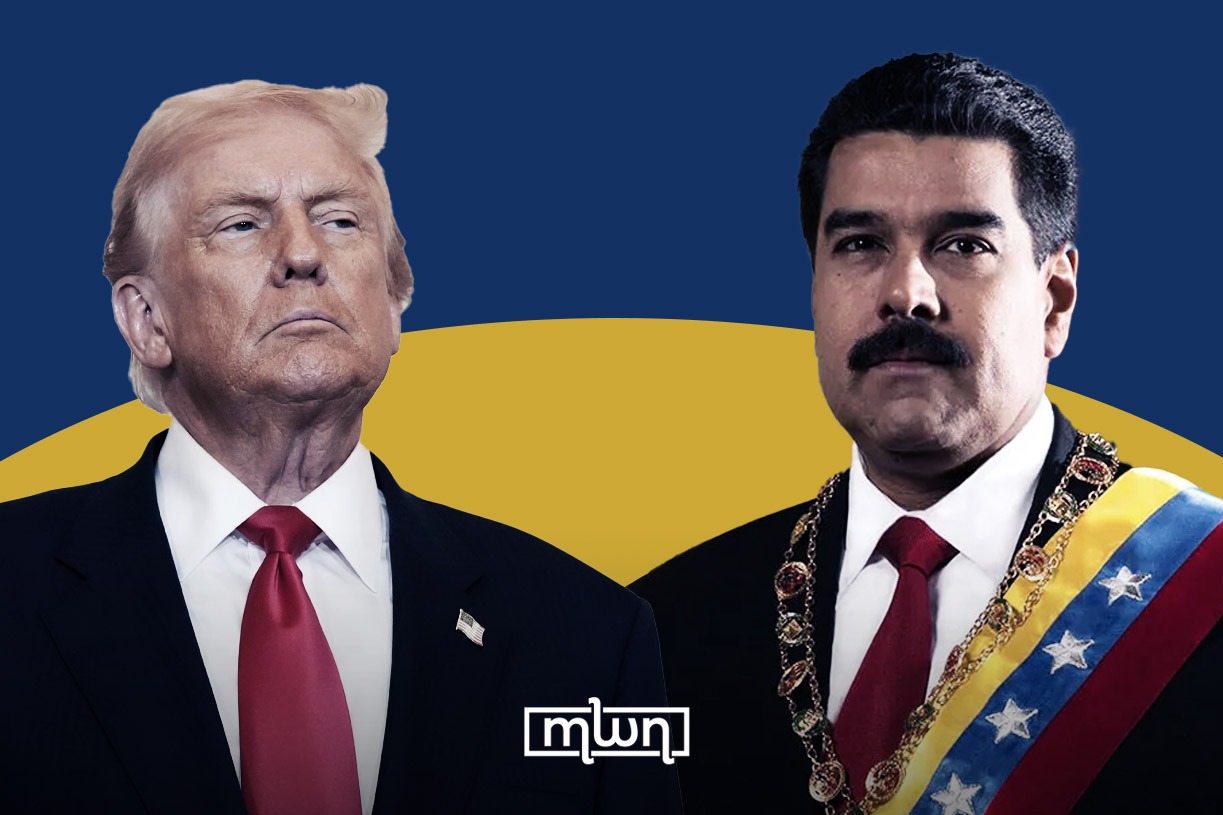
Rabat – The US carried out a sudden, large-scale military strike inside Venezuela in the early hours of Saturday. President Donald Trump announced on social media that the strikes had led to the “capture” of Venezuelan President Nicolas Maduro and his wife and that they had been flown out of the country.
The move shocked the region and set off frantic exchanges between governments, international organizations, and analysts trying to grasp what happened and what comes next.
This operation did not happen in a vacuum. For months, Washington had stepped up pressure on Caracas by accusing the Maduro government of supporting drug trafficking and ignoring democratic norms.
The US carried out naval and aerial operations in the region and repeatedly warned it was prepared to use force if necessary. That campaign, coupled with years of sanctions, diplomatic isolation, and contested elections, helped create the tense atmosphere that preceded today’s strike. Many analysts, including Christopher Sabatini, a senior research fellow at Chatham House, say the US move reflects a broader, more aggressive regional posture from the Trump administration.
US strikes hours after China meeting
The strike happened hours after Venezuela hosted a high-level delegation from China to strengthen economic and political ties. Maduro met with China’s special envoy for Latin America and senior officials to reaffirm cooperation across hundreds of agreements, covering economic, political, and strategic areas.
Maduro thanked China for its support amid rising tensions with Washington and expressed Venezuela’s desire to deepen partnerships with nations seen as counterbalances to US influence in the region.
Venezuelan authorities described the attacks as an act of “military aggression.” Early reports from Caracas spoke of explosions and low-flying aircraft, with parts of the capital left without electricity and residents running into the streets in panic.
The government declared a national state of emergency and called for citizens to resist what it called an imperial assault. At the same time, details about Maduro’s actual whereabouts have been unclear, as while the US said he was captured, Venezuelan officials demanded proof and said they did not know where he or his wife were.
The international reaction was swift and sharply divided. Countries allied with or sympathetic to Venezuela, notably Russia, Cuba, and Iran, condemned the strikes as an unlawful attack on a sovereign state and warned of dangerous consequences.
Latin American governments were split, with Colombia, which shares a long border with Venezuela, put its security forces on alert and prepared for possible refugee flows, while other regional leaders called for calm and immediate diplomatic action. Many European governments preferred not to take sides and instead vaguely urged restraint and stressed that any response must follow international law.
“The EU has repeatedly stated that Mr Maduro lacks legitimacy and has defended a peaceful transition,” the EU foreign policy chief Kaja Kallas said, adding that “under all circumstances, the principles of international law and the UN Charter must be respected.”
US motives and strategy
Experts warn of a longer-term fallout, as military action inside Venezuela raises legal questions under international law and risks setting precedents that could weaken norms of sovereignty. Venezuelan political analyst Carlos Pina said the US strikes marked a major turning point in tensions between Washington and Caracas, as they showed that the Trump administration was now willing to move from threats and pressure to direct military action.
Speaking to Al Jazeera, he explained that the air strikes made clear Trump’s readiness to push Maduro as far as possible to force him out of power. However, Pina also noted that despite the attacks, Venezuela had entered a period of what he described as a “tense calm,” with the government condemning the US action but not yet announcing a clear next step, which leaves the country in a fragile and uncertain situation.
The operation could also deepen forces inside Venezuela that prefer armed struggle over political compromise, which would increase the risk of wider conflict or even civil war.
In addition, any surge in fighting could trigger new waves of refugees to neighboring countries already stretched thin by previous migration from Venezuela. The event may also harden global rivalries, with Russia and China possibly using the strike to justify closer ties with Caracas or to push back diplomatically against Washington.
Venezuela has the largest proven oil reserves in the world, and much of its oil has been exported to countries seen as rivals by the US, like China. Some analysts argue that Washington sees Maduro’s government as a barrier to securing stable access to these resources, especially given the sanctions and tensions over Venezuelan oil exports.
French politician Jean-Luc Mélenchon condemned the US military strike on Venezuela, saying Trump “seizes Venezuela’s oil, violating its sovereignty through an old-fashioned military intervention and the outrageous abduction of President Maduro and his wife.”
He criticized the Trump administration for using drug trafficking as a pretext to seize Venezuela’s oil and undermine international law, comparing the operation to other recent interventions in Ukraine, Gaza, and the Democratic Republic of Congo.
Trump and other US officials have framed their actions around drug trafficking and regional security. But critics say that economic and energy interests, including controlling oil supply and weakening alliances with China, Russia, and Iran, are also likely driving factors.


