
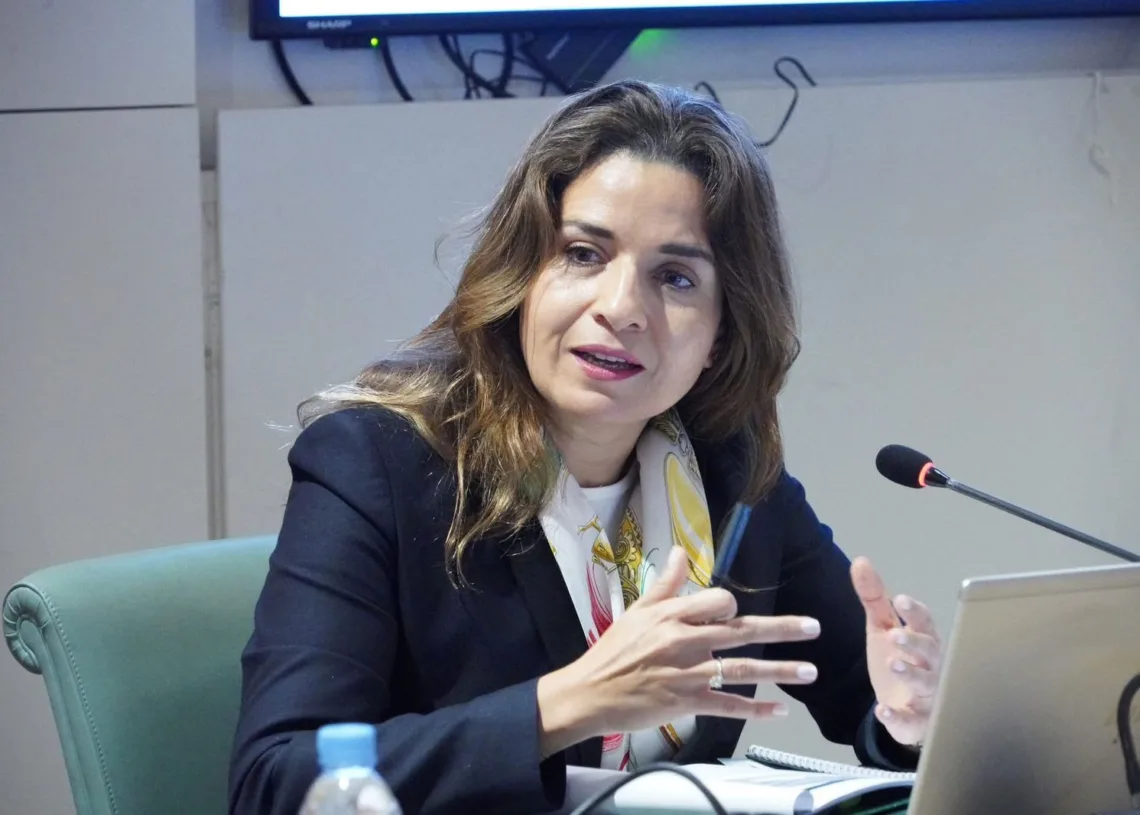
Rabat – Morocco’s decision to turn the National Office of Hydrocarbons and Mines (ONHYM) into a joint-stock company shows a broader reassessment of how the state protects its energy security in an unstable world, Energy Transition Minister Leila Benali told Parliament today.
Addressing lawmakers, Benali described the reform as a political and economic choice shaped by recent shocks that tested Morocco’s resilience.
She argued that global energy turmoil and shifting geopolitical balances exposed structural weaknesses that the country can no longer afford to ignore.
For several years, Morocco relied heavily on external partners for natural gas and key segments of its energy infrastructure.
That reality, the minister said, became impossible to overlook after gas supplies stopped in 2021, at a time when international markets faced intense pressure due to the war in Ukraine.
The disruption forced the state to act under severe constraints, with limited room for error.
Benali recalled that the interruption did not only raise technical concerns. It placed industrial activity, essential services, and thousands of jobs at risk.
Public authorities had to respond quickly to prevent broader economic damage, which led to the rapid reorganization of national gas infrastructure under direct state control.
Within this context, the government now seeks to equip ONHYM with a legal status that allows faster decision-making and stronger financial and operational capacity.
Benali insisted that the reform does not signal a retreat of the state from strategic sectors.
Instead, it aims to reinforce public authority through more efficient tools, particularly as minerals and energy resources become central to global competition.
She noted that several countries, including in Africa, adopted similar institutional models to strengthen public oversight while improving performance.
Morocco, she said, follows that path with a clear objective: secure long-term energy autonomy while preserving national control.
The minister concluded that the draft law lays the groundwork for a more resilient energy system, one that shields the national economy from external shocks and supports Morocco’s position in an increasingly contested global energy landscape.