 Join on WhatsApp
 Join on Telegram
The adoption, on 31 October 2025, of United Nations Security Council Resolution 2797 marks a decisive milestone in the evolution of the Moroccan Sahara issue. For the first time, a UN resolution explicitly recognizes the autonomy plan proposed by Morocco in 2007 as the only credible basis for a lasting political settlement, thereby acknowledging the deadlock of earlier approaches—most notably the self-determination referendum long advocated by Algeria but never realistically implementable.
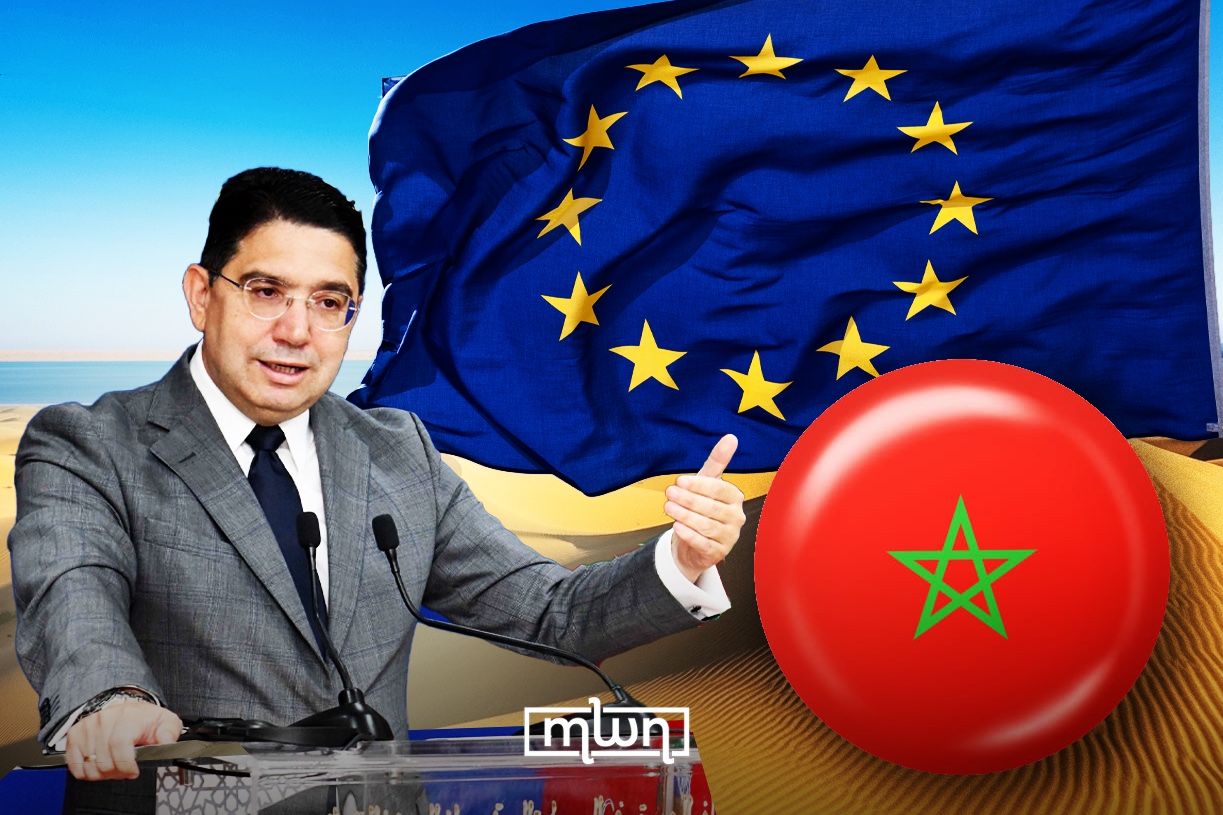
This major shift has been further reinforced by an equally significant evolution in the European position. For the first time, the 27 Member States of the European Union have adopted a unanimous common position in support of the parameters set out in Resolution 2797. Such convergence is unprecedented since the dispute was placed on the United Nations agenda in 1975, and it substantially strengthens the political legitimacy of the current UN framework.
This European consensus was formalized on 30 January 2026, during the 15th session of the EU–Morocco Association Council, at which the Union recognized the Moroccan autonomy plan as the sole basis for political negotiations conducted under UN auspices. In the joint communiqué issued at the conclusion of the meeting, the EU expressed its readiness to support efforts aimed at clarifying the concrete modalities of effective autonomy under Moroccan sovereignty, while reaffirming its backing of the role played by the UN Secretary-General.
At the diplomatic level, Resolution 2797 also received unanimous support from European members of the Security Council, including states that had traditionally adopted a cautious stance on this issue. This convergence reflects a notable evolution in the European perception of the conflict, now approached through the lenses of political realism, regional stability, and the search for a pragmatic solution.
In parallel, the European Parliament has endorsed several trade and sectorial agreements that include products originating from the southern provinces, confirming their preferential access to the European market. This recognition, consistent with the EU’s political position, contributes to consolidating the integration of the Moroccan Sahara into Euro-Mediterranean exchanges.
European alignment comes at a time when the region faces mounting security, economic, and geopolitical challenges. Cooperation between Morocco and the European Union is already well developed in strategic areas such as agriculture, energy, fisheries, counterterrorism, migration management, and higher education. Recognition of the Kingdom’s sovereignty over its Sahara is likely to further strengthen this cooperation by providing greater visibility and stability to existing and future partnerships.
By establishing autonomy under Moroccan sovereignty as the central reference of the UN process, the European Union has put an end to longstanding ambiguities that had weakened the clarity of its position. This development fully aligns with the diplomatic momentum driven by the Kingdom in favor of recognizing the Moroccan character of the Sahara and achieving a peaceful, negotiated settlement to the conflict.
European alignment with Resolution 2797 therefore represents not merely a diplomatic advance; it paves the way for a renewed Euro-Moroccan partnership, grounded in a shared vision of regional stability, sustainable development, and strategic cooperation. In an increasingly unstable international environment, this clarification emerges as a key factor of predictability and mutual trust.