Marrakech – In a move that caught observers off guard, Morocco’s Ministry of Energy Transition and Sustainable Development announced Monday it is suspending the $1 billion liquefied natural gas terminal project at Nador West Med port, just days after a royal meeting placed the facility at the center of the country’s energy sovereignty strategy.
The ministry cited “new parameters and hypotheses” related to the project as the reason for halting the receipt of candidature files and the opening of received offers.
The suspension affects the entire gas infrastructure initially planned, including the LNG terminal, its connection to the Maghreb-Europe pipeline, and network extension to industrial zones in Kenitra and Mohammedia.
The decision comes despite record interest from operators. Approximately 50 gas companies had expressed interest in the project after competitive bidding notices were published on December 5. The preselection deadline for the project was January 30, with bid opening scheduled for February 2.
The ministry had launched two international tenders totaling MAD 9.542 billion ($954.2 million) for the floating storage and regasification unit (FSRU) and national pipeline network. The impact on the separate tender for the FSRU to be moored at Nador remains unclear.
The timing raises questions about the government’s energy strategy. The suspension occurred just days after King Mohammed VI presided over a working meeting at Casablanca’s Royal Palace on January 28, specifically dedicated to the Nador West Med port and industrial complex. Energy Transition Minister Leila Benali attended the meeting.
During that royal session, the LNG terminal was presented as an essential component responding “directly to the kingdom’s energy sovereignty requirements.” The royal cabinet’s press statement described “the kingdom’s first liquefied natural gas terminal, with an annual capacity of five billion cubic meters.”
The project included accommodation for Q-Flex methane carriers with a maximum capacity of 215,000 cubic meters.
The terminal was designed for an annual regasification capacity of around 5 billion cubic meters – more than four times Morocco’s current consumption of approximately 1.2 billion cubic meters per year – with expansion potential during peak demand periods.
This generous sizing aligned with Morocco’s long-term vision to increase national gas consumption to 12 billion cubic meters by 2030, within a MAD 35 billion ($3.5 billion) global program including Atlantic coast terminals.
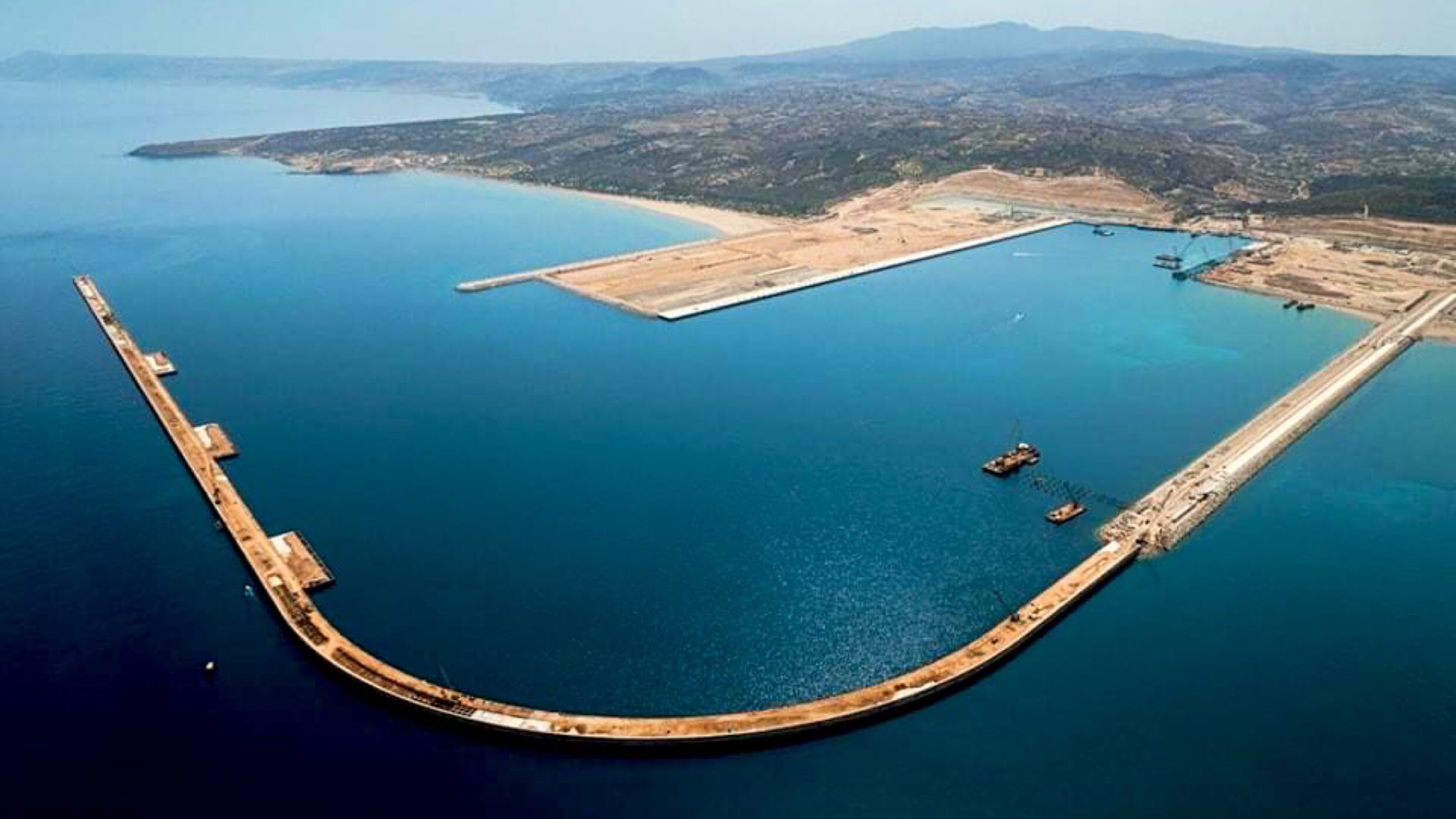
Despite the gas component suspension, the Nador West Med port complex continues its development. The project, which mobilized MAD 51 billion ($5.1 billion) in public and private investments, should enter operational phase in the fourth quarter of 2026.
Positioned as a deliberate attempt to replicate the Tanger Med model, it is expected to emerge as a major strategic logistics hub – reshaping Mediterranean trade flows and intensifying competition with established Spanish ports, a prospect that has quietly unsettled maritime and political circles in Spain.
Basic port infrastructure is completed, including 5.4 kilometers of breakwaters, four linear kilometers of quays, and four energy stations.
The port will start with annual capacity of 5 million containers and 35 million tons of liquid and solid bulk, with potential extension to 12 million containers. Confirmed private investments reach MAD 20 billion ($2 billion), with several international operators installing on 700 hectares of activity zones planned in the first phase.
The ministry indicated it would “communicate any developments concerning this project and the competition process” without specifying a timeline.
Read also: Morocco to Open Major Deepwater Ports: Nador West Med in 2026, Dakhla Atlantique in 2028