
 Join on WhatsApp
 Join on Telegram
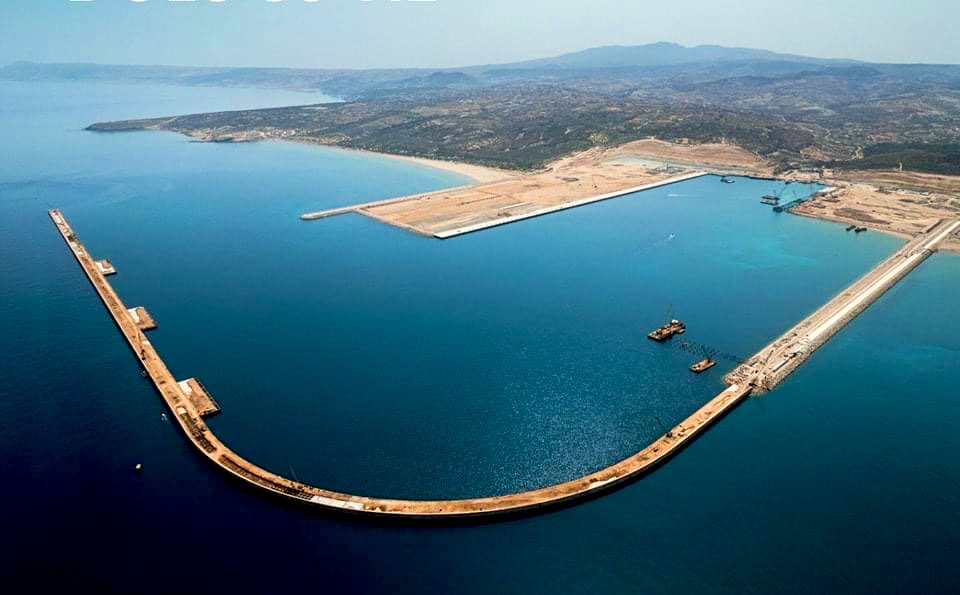
Marrakech – Brussels has committed over €300 million to finance Morocco’s second megaport in the Strait of Gibraltar, Nador West Med, triggering panic across Spanish ports. The project, set to replicate Tanger Med’s triumphant model, will be operational by 2030 with a total investment of €730 million.
According to Spanish media, the European Bank for Reconstruction and Development (EBRD) has been instrumental in backing the initiative. In March alone, it approved a €110 million loan, adding to two previous loans granted in 2015 and 2022, totaling nearly €200 million.
The bank has also provided direct aid: €5 million for launching the future free zone and €5.5 million for environmental infrastructure.
The new terminal aims to handle between 3.5 and 5.5 million containers annually – matching Algeciras port – plus up to 25 million tons of hydrocarbons. Morocco has advanced this megaproject with minimal environmental restrictions and strong social support, while Spanish competitors struggle under the weight of EU regulations.
This situation has sent shockwaves through Andalusia, where ports like Málaga, Motril, Almería, and especially Algeciras face crushing competitive disadvantages. European regulations impose strict environmental requirements that Morocco doesn’t have to meet, creating an uneven playing field that Spanish operators cannot overcome.
One example of these disparities is the ETS carbon emissions tax that has taxed ships since 2024. Several shipping companies have already found ways to bypass this tax by stopping in Tangier, where large container ships unload and transfer goods to smaller vessels that complete the journey to Algeciras with lower surcharges.
Melilla fears economic encirclement by Nador
The Government of Melilla has frantically criticized the EU for financing the Nador West Med megaport. “They put every possible obstacle in our way and none in Morocco’s way,” complained Daniel Ventura, Melilla’s Environment Councilor, in a recent press conference.
He also claimed that some of the waste ending up in Melilla’s waters comes from Nador’s port, which borders the occupied enclave.
Gerardo Landaluce, president of the Port Authority of the Bay of Algeciras, has warned about the consequences of this asymmetry. “Whoever controls transshipment controls the logistics chain,” he repeatedly states at international forums.
While Algeciras desperately seeks reinforcement with better rail and road connections, Nador West Med continues its rapid development just 50 kilometers from Melilla.
The strategic positioning of Nador West Med is already taking shape. Located in Betoya Bay, less than 250 nautical miles from the Strait of Gibraltar on main East-West shipping lanes, Phase 1 includes a 4.2-km main breakwater, 1.2-km counter-dike, and an Eastern Container Terminal with 1,520 meters of quay, 18-meter draft, and 3.4 million TEU design capacity under a 25-year concession to Marsa Maroc.
The port is designed for multiple functions, including a three-berth hydrocarbon terminal with approximately 25 million tons per annum capacity, a 360-meter coal quay, plus general cargo and Ro-Ro facilities. This positions Nador West Med as both an energy gateway and a container hub with the potential to expand to 5 million TEU.
Tanger Med already dominates Mediterranean trade routes
Spanish stakeholders are already reeling from the impact of Tanger Med. In January, Danish shipping giant Maersk redirected its MECL service route from Algeciras to Tanger Med, improving transit times by five days. This shift coincided with new EU carbon regulations that could cost vessels up to €160,000 extra per trip.
The volume gap is already substantial, with Tanger Med now handling over twice Algeciras’s 2024 container throughput and ranking third worldwide in port performance. Algeciras warned as early as 2021 that EU regulations could divert up to 60% of its transshipment to Tanger Med.
As Nador West Med advances, connectivity improvements continue. In July, ONCF launched the Selouane-NWM rail spur, integrating the port into national freight corridors. The port will also host Morocco’s floating LNG terminal, with commissioning targeted for 2026.
With Tanger Med already established as the Mediterranean’s leading container port and Africa’s largest port facility, and Nador West Med rapidly developing near Melilla, Spanish ports are scrambling to form a common front against Morocco’s unstoppable maritime rise – a desperate measure that appears too little, too late to save the economic future of the occupied enclave.
Read also: Tanger Med Port Launches $500 Million Expansion of Truck Terminal to Double Capacity