
 Join on WhatsApp
 Join on Telegram
Rabat – After more than a month of suspended court appearances and halted services, Morocco’s lawyers will return to work next week.
The Association of Bar Associations announced that it will lift its nationwide strike starting Monday, following direct talks with the head of government over a disputed draft law.
The strike began on January 7 in protest of Bill 66.23, which seeks to reorganize the legal profession. The Government Council approved the text on January 8, a move that triggered strong opposition from bar associations across the country.
Direct talks with the head of government
The turning point came after Prime Minister Aziz Akhannouch stepped into the dispute. During a meeting held on Wednesday, February 11, the association’s bureau reviewed the outcome of discussions between its president, El Houcine Ziani, and the Prime Minister.
According to Ziani, the two sides agreed to form a joint committee under the supervision of the Prime Minister. The committee will include representatives of the association and will examine the draft law through what he described as a responsible and constructive dialogue.
Authorities have decided not to refer the bill to Parliament until the committee completes its review. The first session is scheduled for Friday. For many lawyers, this pause offers a chance to revisit provisions they consider problematic.
Why lawyers took to the streets
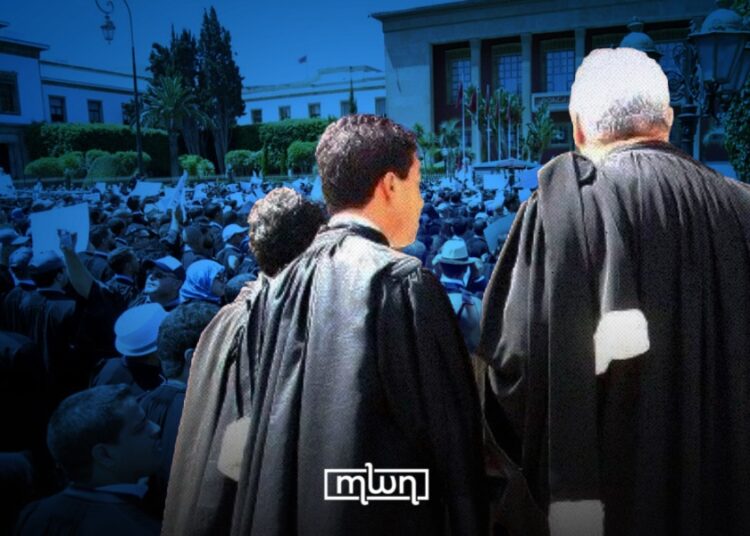
Tensions escalated after the government adopted the draft. On February 6, lawyers gathered outside Parliament and called for the withdrawal of the bill. They argue that certain provisions risk weakening the profession’s independence and limiting its constitutional role within the justice system.
At the heart of the dispute is access to the profession. The draft law requires candidates to hold a master’s degree or an equivalent postgraduate qualification in legal sciences. It also imposes an entrance exam to a training institute, followed by a mandatory training period. The proposed age limit sets eligibility between 22 and 40 years at the time of the entrance exam.
Lawyers question whether these conditions strike the right balance between merit and equal opportunity.
Another sensitive issue concerns the link between the right to practice and the payment of taxes and professional contributions. Many within the profession fear that such a measure could restrict a lawyer’s ability to work in the event of administrative disputes or delays.
They also express concern over new administrative obligations and oversight mechanisms that, in their view, affect the core principle of independence. Bar representatives argue that the profession did not receive adequate consultation during the drafting process.
Reform debate continues
The Ministry of Justice defends the bill as a necessary update to the legal framework that governs lawyers. Officials state that clearer rules for entry and practice will improve governance standards and strengthen the quality of legal services.
The newly established committee now faces a delicate task of reconciling calls for reform with demands to protect professional autonomy. Its conclusions will determine whether the draft law moves forward in its current form, undergoes revision, or enters a new phase of negotiation.
For now, courtrooms will reopen to lawyers next week, but the broader debate over the future of the profession remains far from settled.