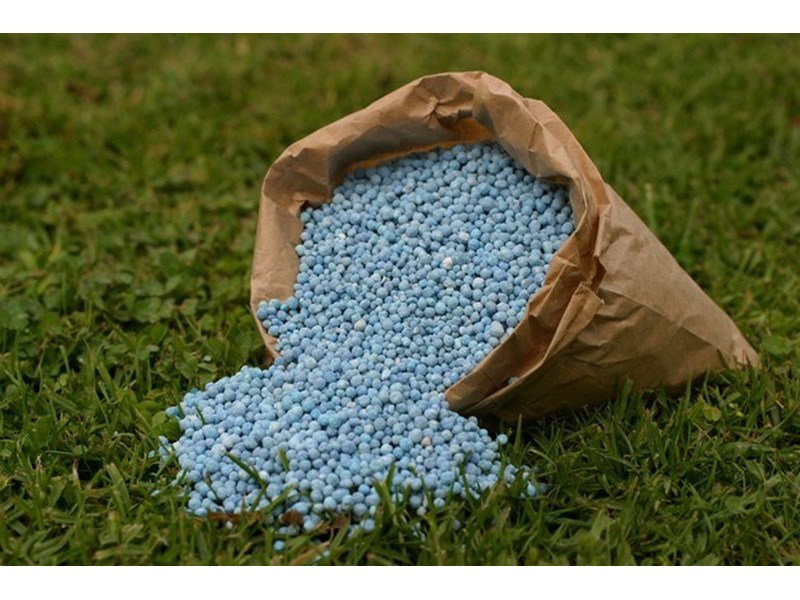
Marrakech – Morocco’s OCP Group sold 90,000 tonnes of phosphate fertilizers to Latin American markets for April shipment. The sales come as the Middle East war disrupts global supply chains through the Strait of Hormuz.
According to Argus Media, OCP sold 50,000 tonnes of MAP and 10,000 tonnes of TSP to Latin America excluding Brazil at $810-820/t cfr and $645-650/t cfr, respectively. It also sold 30,000 tonnes of MAP to Brazil at $800-805/t cfr. The MAP prices net back to $775-790/t fob Morocco while TSP nets back to $615-625/t fob.
Saudi Arabia’s Maaden separately reported selling 15,000 tonnes of MAP to South America at $815-820/t cfr but did not explain how the cargo will ship, given that Saudi exports leave from Ras Al-Khair and must pass through the Strait of Hormuz.
Morocco as a reliable supplier
The sales reflect Morocco’s growing role as a reliable supplier at a time when war-related disruptions are squeezing fertilizer markets.
The Strait of Hormuz, which Iran has declared closed, carries roughly a third of global seaborne fertilizer trade – about 16 million tonnes – according to UN Trade and Development (UNCTAD). Gulf producers face direct shipping risks that Morocco, exporting from its Atlantic coast, does not.
The disruption goes beyond finished fertilizers. According to the March 2026 NDSU Agricultural Trade Monitor, Arabian (Persian) Gulf countries account for roughly 43% of seaborne urea exports, approximately 44% of seaborne sulfur trade, and more than a quarter of global ammonia exports. Sulfur is a critical feedstock for phosphate fertilizer production.
Morocco’s OCP depends on approximately 3.7 million metric tonnes of sulfur imports from the Gulf annually. The NDSU report warned that the Hormuz closure creates a cascading effect – blocking not only finished fertilizers but also the raw inputs that producers like OCP need to maintain output.
Morocco is also extending support beyond commercial sales. The country pledged a donation of 1,000 tonnes of fertilizers to Panama through the Moroccan Agency for International Cooperation (AMCI).
The donation, announced earlier this month by Panamanian Foreign Minister Javier Martínez-Acha, will be made on an annual basis and will target small-scale farmers. AMCI will also provide technical assistance to Panama in developing a soil fertility map.
India recently secured 2.5 million tonnes of fertilizer supply from Morocco as part of its 2025-2026 import strategy. It also secured 3.1 million tonnes from Saudi Arabia and 3.01 million tonnes from Russia. The Indian government said these imports are part of its approach to mitigate supply risks and ensure uninterrupted availability.
OCP’s largely promising prospects for 2030-2040
OCP reported strong financial results for 2025. Revenues rose 17% to reach MAD 114 billion ($11.4 billion). Fourth-quarter revenues alone exceeded MAD 29.5 billion, a 6% increase year-on-year.
The group attributed the growth to favorable market conditions and recovery in demand, especially in India. Capital expenditure exceeded MAD 9.1 billion in the fourth quarter as the group continued expanding production capacity.
On the regulatory front, the United States dismissed its appeal against OCP in a long-running countervailing duty case on March 4. The case dates back to 2021 when the Department of Commerce imposed a 19.97% countervailing duty on phosphate fertilizers from Morocco following a petition by Florida-based Mosaic Company.
The American Farm Bureau Federation (AFBF) has now called on President Donald Trump to temporarily suspend countervailing duties on fertilizer imports as urea prices surged nearly 25% since air strikes began on February 28. The five-year sunset review of the CVD order is now underway.
Morocco is also positioning itself in low-carbon fertilizer production. The World Economic Forum (WEF) noted that the country’s phosphate reserves and expanding clean-energy infrastructure make it a key player in sustainable food systems.
OCP plans to raise production capacity from 12 million tonnes to 20 million tonnes by 2027 and targets carbon neutrality by 2040. Solar and wind accounted for about 22% of Morocco’s electricity generation in 2023, with a government target of over 52% by 2030.