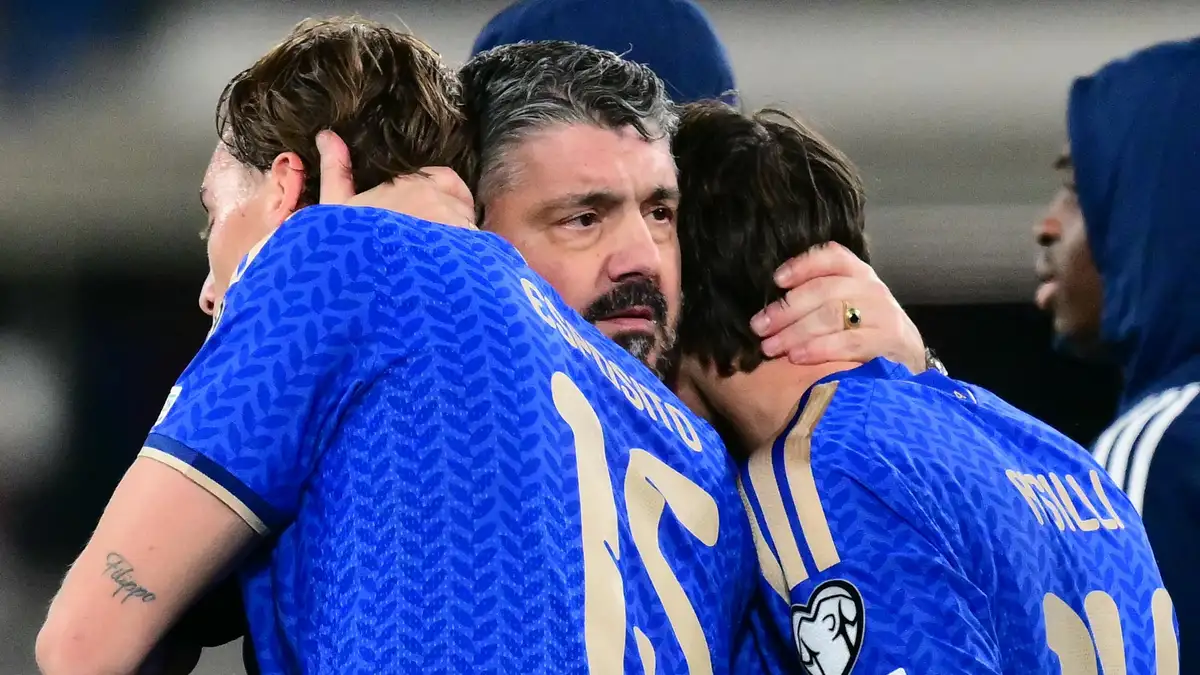
For the third consecutive World Cup cycle, the four-time champions will be absent from football’s biggest stage. After a 1-1 draw against Bosnia and Herzegovina in Zenica on March 31, Italy collapsed 4-1 in a penalty shootout, confirming their failure to qualify for the FIFA World Cup 2026. It is an unprecedented fall for a nation that once defined international football.
Winners in 1934, 1938, 1982, and 2006, Italy are now the first four-time champions to miss three consecutive World Cups (2018, 2022, 2026). From global powerhouse to repeated absentee, the fall is no longer a blip but more of a pattern.
A devastating night in Zenica
Italy’s road to disaster was already fragile. After finishing second in their qualification group behind Norway, they were forced into the harder playoff route, territory that has haunted them in recent years.
In Zenica, there was a flicker of hope. Moise Kean fired Italy into the lead, momentarily lifting the weight of history off their shoulders. But that hope unraveled quickly.
Defender Alessandro Bastoni was sent off just before halftime, leaving Italy with ten men and a mountain to climb. Bosnia grew into the match, sensing vulnerability. Late in the game, Haris Tabaković struck the equalizer, dragging the tie into penalties.
What followed was a collapse that felt inevitable. Italy scored just once from the spot. Bosnia converted four. Another World Cup dream, gone.
The numbers are brutal. Italy have not reached a World Cup knockout stage since 2006. A generation has passed without a meaningful impact on the tournament they once dominated.
Gennaro Gattuso, the Italian head coach, shared his thoughts about the number of African teams at the 2026 World Cup.
“Back in 1994, having two African countries at the World Cup was already enough. But now seeing nine African nations going to the World Cup feels like things… pic.twitter.com/C4hNBBPBjx
— GlobalSouthNews (@GlobalSouthNew) November 16, 2025
Gattuso’s racist comments make it worse
The fallout from this failure extends beyond the pitch. In the build-up to the tournament, coach Gennaro Gattuso created outrage with racist comments about Africa’s expanded World Cup representation. He described the added allocation of places to African nations as “unjust,” argued that Europe’s path was harder, and suggested that even a smaller number of African teams had once been “enough.”
Dismissing the continent’s bigger role in the World Cup as “too much” really shows a mindset that still thinks Europe is the only thing that matters in football. The issue goes beyond one coach’s words, it actually points to a much deeper issue of bias. This kind of outdated thinking keeps popping up in football conversations, even as the game gets more global and competitive everywhere else.
Regardless of what Gattuso and his associates think, the game is moving on. The 2026 World Cup will feature a record number of African nations. Proof of growth, merit, and honestly long-overdue recognition. And while the rest of the world celebrates this expansion, one reality cuts through the noise: Italy will not be there. The brutal irony.
While Gattuso questioned Africa’s place at the World Cup, Italy did not even qualify for it.
African football has been fighting for its seat at the table for decades, pushing past systemic hurdles, tight budgets, and those same old tired stereotypes. Today, the continent is pumping out world-class talent and national teams that are legit threats to the old guard. Expanding their World Cup spots isn’t a ‘favor’ or an act of charity. It’s finally recognizing what they’ve earned on the pitch.
Gattuso’s comments, whether he was just trying to shift the blame for his team’s level or not, really just showed how some people in football are still living in the past. Clinging to these old, outdated ideas while the rest of the football world has already moved on and evolved.
A national crisis
Italy’s failure to qualify is a full-blown national crisis at this point. Missing out on the 2026 World Cup is the clearest sign yet of a total structural collapse. The downfall of the Nazionale isn’t an accident but seems to be a systemic failure. Going from being European champions in 2021 to missing three straight World Cups (2018, 2022, 2026) exposes deep cracks at every single level of the Italian game.
The problems are layered. Youth development has declined, with too few young Italian players becoming regular starters and academies often criticized for being overly defensive in philosophy. Talented players increasingly leave, while domestic clubs struggle financially to compete with Europe’s elite. On the pitch, the psychological weight of the blue shirt has become a burden, compounded by the absence of true leaders since the era of Leonardo Bonucci and Giorgio Chiellini.
Above it all, the Italian Football Federation appears conservative, unstable, and unable to implement meaningful reform.
Italy is still living in the memory of its glorious past, but modern football has moved on without it. Technically, physically, and in terms of development, the game has evolved, and Italy has been left behind.
The sport is changing, becoming more global, more competitive, and less centered on traditional powerhouses. And it raises a final, uncomfortable question: When will voices like Gennaro Gattuso’s stop questioning Africa’s place in the World Cup, and start confronting why Italy cannot even earn its own?
Read also: Historic: 10 African Countries are Qualified to Play in 2026 World Cup