 Join on WhatsApp
 Join on Telegram
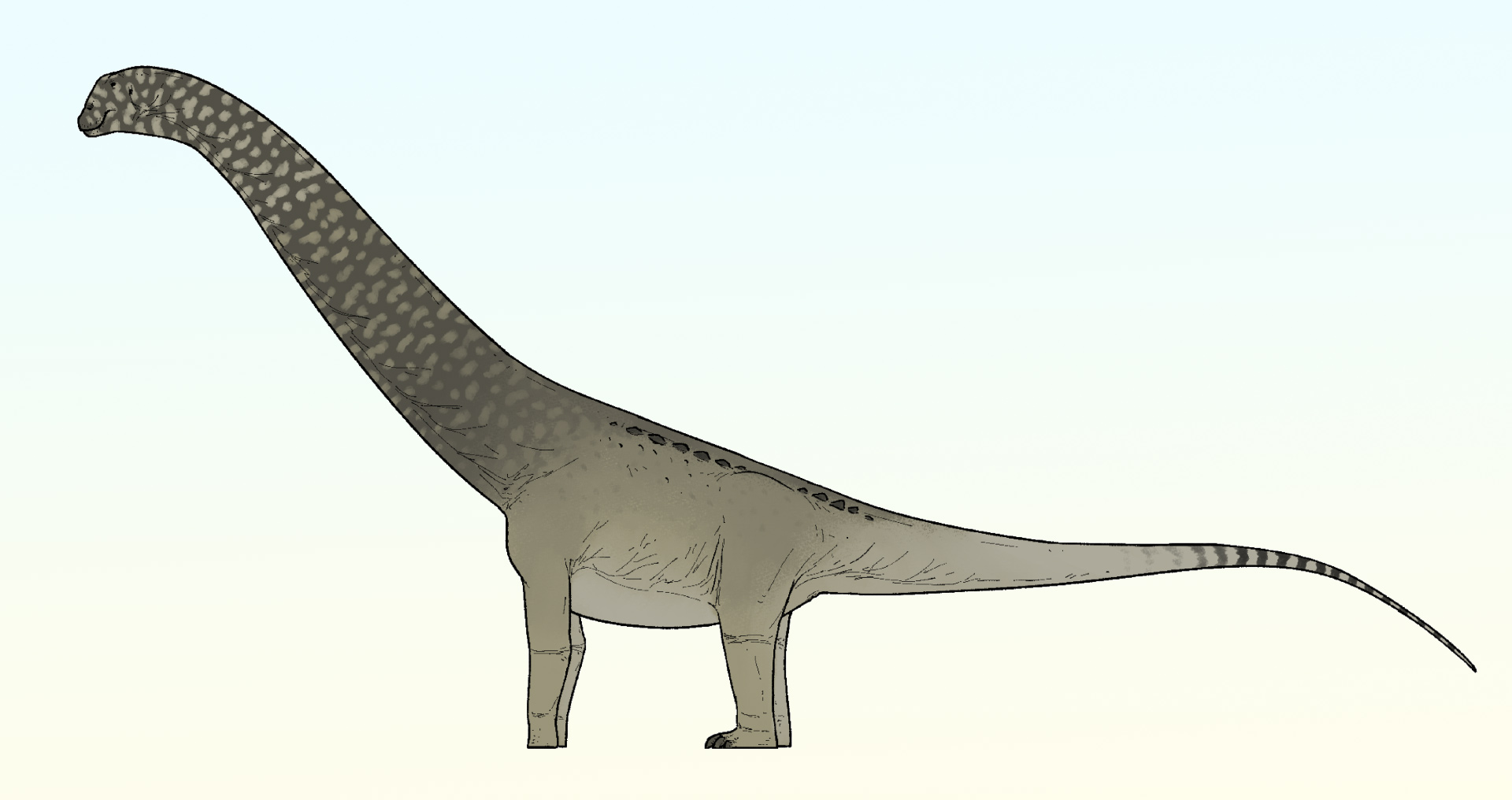
Marrakech – The phosphate deposits of Morocco’s Khouribga Province continue to reshape what scientists know about the final chapter of the age of dinosaurs. This time, a team of paleontologists has identified a completely new species of titanosaur sauropod – a long-necked, plant-eating dinosaur – from the late Maastrichtian stage of the Cretaceous period, roughly 70 million years ago.
The new species, named Phosphatotitan khouribgaensis, was recovered from the Sidi Chennane mine in the Oulad Abdoun Basin. Its name references both the phosphate beds and the Khouribga Province where it was found. The discovery was published on April 22 in the journal Diversity.
The fossil material includes dorsal, sacral, and caudal vertebrae, along with parts of the pelvis. It comes from the lower part of Couche III, making it the first dinosaur known from that specific stratigraphic level. All previously described dinosaurs from Morocco’s phosphates came from the upper part of Couche III, which dates to the latest Maastrichtian.
What makes this find particularly significant is its unexpected family ties. Rather than resembling titanosaurs from Africa or Europe, Phosphatotitan closely matches Lognkosauria – a group previously known only from South America. The resemblance is especially strong with Patagotitan, one of the largest land animals ever recorded.
The two share several anatomical features, including short dorsal and caudal centra, expanded neural spines, and a broad pubis. Phylogenetic analysis consistently placed Phosphatotitan within a newly defined clade called Argentinosauridae, alongside Patagotitan and Argentinosaurus.
Despite its giant relatives, the Moroccan species was far more modest in size. The researchers estimated its mass at roughly 3.5 to 4 tonnes. That is less than 10% of Patagotitan’s estimated 57 to 69 tonnes. A second, unnamed titanosaur from the nearby Sidi Daoui site was estimated at around 4 to 5 tonnes.
Read also: New Giant Sea Reptile Species Discovered in Morocco’s Phosphates
The study suggests this size reduction may be linked to geographic isolation. During the Late Cretaceous, high sea levels and seaways may have turned parts of North Africa into island-like landmasses. Smaller landmasses tend to produce smaller animals – a well-documented pattern known as island dwarfism.
The research team was led by Nicholas R. Longrich of the University of Bath and Nour-Eddine Jalil of the Museum of Natural History of Marrakech and the Muséum National d’Histoire Naturelle in Paris. Other contributors came from Argentina, Germany, Spain, and France.
The South American connection likely traces back to a time when Africa and South America were still joined as part of the supercontinent Gondwana. The two landmasses separated around 115 to 105 million years ago.
The authors noted that “the close relationships of Morocco’s titanosaurs and abelisaurids to South American species may reflect a wide distribution of these clades prior to the opening of the South Atlantic.”
The study also indicates how distinct Morocco’s dinosaur fauna was compared to the rest of Africa and even Europe. Morocco’s late Cretaceous ecosystem included three species of lambeosaurine hadrosaurids, abelisaurid predators, and now at least two argentinosaur titanosaurs. Egypt, by contrast, had saltasaurid and lirainosaurine titanosaurs – entirely different lineages.
“The latest Cretaceous Gondwanan dinosaur faunas were highly endemic due to a combination of continental fragmentation, extinction, and dispersal,” the authors wrote.
This high degree of regional uniqueness, they argued, means that global dinosaur diversity before the mass extinction event 66 million years ago is likely far greater than current fossil records suggest.
“The high degree of endemism in latest Cretaceous dinosaurs means that our understanding of dinosaur diversity is likely to be highly incomplete,” they concluded.