Casablanca – As GITEX Future Health Africa 2026 unfolds in Casablanca, discussions are already moving beyond healthcare technology to address deeper structural challenges shaping the continent’s health systems.
While innovation and AI remain central to the event, the conversations highlight the broader issue of Africa’s continued dependence on external systems, funding, and supply chains.
On the first day, the GITEX Future Health Executive Summit takes center stage, with a strong focus on health sovereignty and the need to build more autonomous and resilient systems in Morocco and across Africa.
The discussions explore not only access to cutting-edge technologies but also the policies, financing models, and regulatory frameworks required to ensure their effective use.
Within this context, a keynote discussion brought together Heikel Jaafar, General Director of Strategy, Development, and International Relations at the Mohammed VI Foundation for Science and Health (FM6SS), and Mondher Letaief, Representative of the World Health Organization (WHO) in Morocco.
Held under the title “Health Sovereignty: The Economic Backbone of Africa,” the exchange highlighted one of the most pressing challenges facing the continent today: the need to move away from structural dependency toward more self-sustained health systems.
Rethinking health sovereignty
Letaief placed strong emphasis on system resilience and its close connection to health sovereignty, particularly in times of crisis. But resilience, he argued, cannot be achieved without a certain level of control over key components like financing and production.
“We are talking about system resilience, we are talking about universal health coverage, but this must be accompanied by a certain health sovereignty to be able to guarantee system resilience,” he said.
And this is not a distant story. Just a few years ago, the world was brought to a halt by COVID-19, a moment that quickly turned into a real test for health systems everywhere.
Letaief pointed to the pandemic as a defining moment that exposed the limits of dependency. “The COVID crisis has shown us how much sovereignty and the availability of vaccines are important issues of health security for the country.”
In that sense, health sovereignty stops being an abstract idea and becomes something far more concrete: a country’s ability to act when it matters most, to secure what it needs, and to keep its system standing when pressure hits.
Three pillars that make or break the system
At the core of Letaief’s intervention was a simple yet structured idea: health sovereignty does not rest on a single reform but on three interconnected pillars that shape how a system functions in practice.
The first is financing. For him, the question is not only about how much is spent on health, but where the money comes from. A system that relies heavily on external support, he suggested, remains exposed. What is needed is more stable and domestic financing that can sustain long-term planning and reduce dependency.
Rather than treating them in isolation, he insisted on the need to advance them together. Focusing solely on financing or pushing governance ahead of the others would not be effective unless the three components move in parallel.
“It’s useless to have the financing alone, to improve the governance before the financing is well adapted, and also the production,” he maintained.
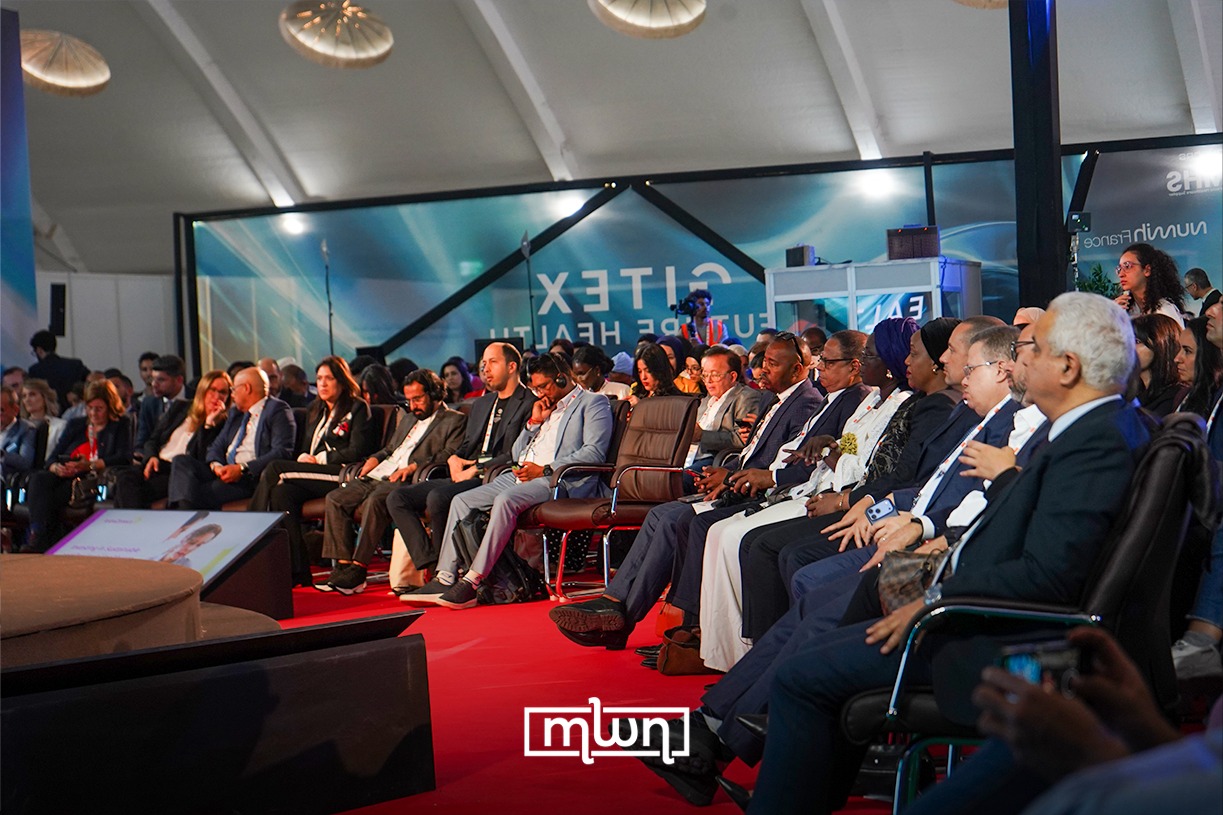
On the financing side, he pointed to a basic requirement: stability. More importantly, he stressed the need to reduce dependence on external sources, calling instead for stronger domestic financing to support more sustainable health systems.
Production came next in his reasoning, described as a major structural issue. The focus, he explained, is on developing local production capacity while ensuring alignment with international standards, particularly in terms of quality, safety, and efficiency.
When it comes to governance, Letaief shifted the focus toward how systems are organized in practice. He referred in particular to regulation and provisioning, including public procurement mechanisms that help shape how medicines and vaccines are identified, selected, and distributed, with attention to quality and safety.
Beyond these three areas, he also drew attention to a deeper challenge affecting health systems: the shortage of health professionals. Issues such as brain drain, training gaps, and retention were all cited as key constraints that require stronger investment in human resources.
He also referred to Morocco as an example of a country advancing toward higher levels of system maturity in these domains.
In this sense, Morocco is gradually positioning itself as a reference point within the broader conversation on health sovereignty in Africa.
Within the context of GITEX Future Health Africa 2026, this positioning reinforces the broader ambition of the summit: not only to discuss health sovereignty, but to highlight emerging examples of how it can be translated into practice.