
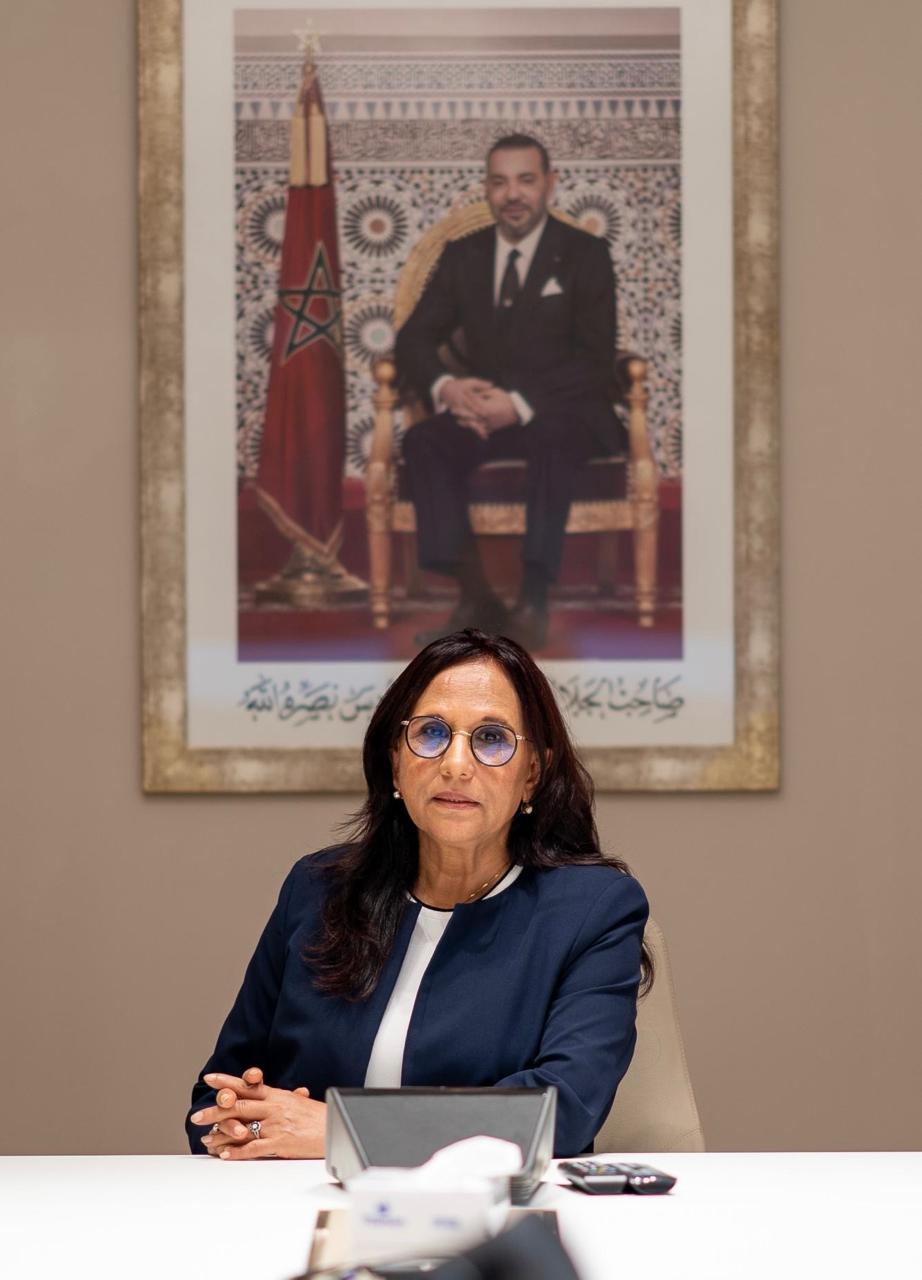
Rabat – Amina Bouayach, president of CNDH, has called for the effective participation of migrants in shaping the policies and mechanisms that govern migration, stressing that a rights-based approach cannot be achieved without directly involving those most affected.
Speaking on Friday in New York City during a side event of the 2nd International Migration Review Forum (5-8 May), Bouayach underlined that the principle of “nothing about us without us” is not a slogan, but a fundamental requirement for human rights-based migration governance.
The event brought together policymakers, UN experts, human rights defenders and representatives of civil society and international organizations to discuss global migration challenges and governance frameworks.
In her intervention, Bouayach – who also serves as president of the Global Alliance of National Human Rights Institutions (GANHRI) – highlighted the essential role national human rights institutions play in protecting migrants’ rights across regions.
She explained that their work relies on field engagement with migrants, including border visits, monitoring conditions in detention centers, and providing multilingual information to ensure accessibility.
Read also: CNDH Examines Migration as a Driver of Cultural Diversity
Bouayach also emphasized that these institutions help build trust through structured dialogue with civil society organizations and migrant associations, while strengthening complaint mechanisms and access to remedies, with attention to the specific vulnerabilities of both migrant women and men.
The Moroccan rights official presented several international experiences illustrating the growing importance of migrant participation in policy design, highlighting Morocco’s own experience in migration governance.
She cited Morocco’s migrant regularization program as a participatory and multi-stakeholder model, which involved national institutions, civil society organizations, and migrants themselves through national and local committees for monitoring and appeals.
She also pointed to Morocco’s response during the COVID-19 pandemic, when migrants were actively involved in awareness campaigns through video messages in African languages and dialects. This helped improve access to information – particularly for migrant women – while reinforcing preventive health measures.
From Morocco and Africa to Europe, the Americas, and the Asia-Pacific region, Bouayach stressed that national human rights institutions play a key role in promoting and protecting rights, monitoring violations at borders, documenting forced returns, and supporting victims of trafficking and labour exploitation.
She concluded that these experiences demonstrate the growing contribution of national human rights institutions to building more humane and effective migration governance systems that better reflect realities on the ground.