
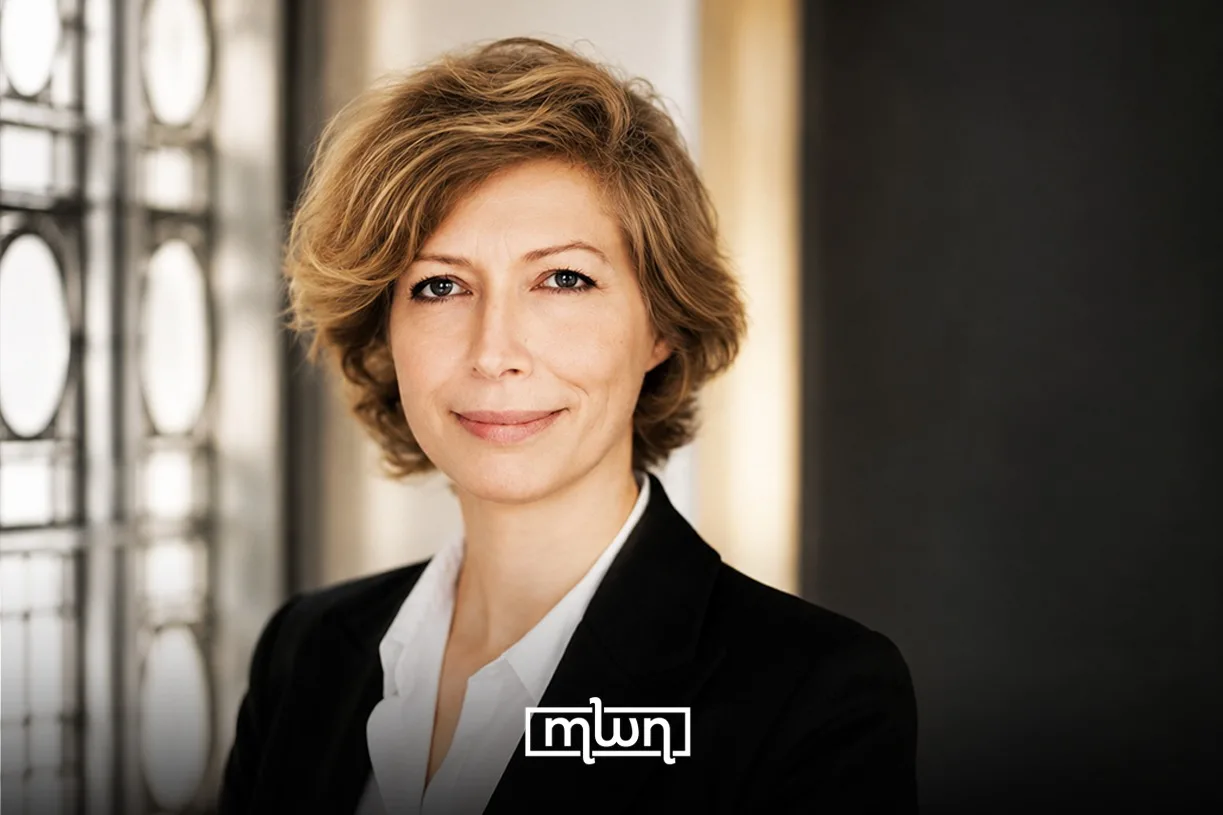
The new head of the Arab World Institute (IMA) in Paris, Anne-Claire Legendre, has expressed strong appreciation for Morocco’s cultural landscape, describing it as dynamic and steadily evolving under the leadership of King Mohammed VI.
She also signaled a clear intention to deepen cooperation with Moroccan cultural institutions, calling the partnership between the two sides both historic and strategic.
Speaking to MAP ahead of a planned visit to Morocco in June, Legendre said her first trip since taking office will serve to reinforce an already long-standing relationship between the institute and the North African country. She also noted that Morocco occupies a central place in the institute’s cultural program for 2026-2027.
She pointed to what she described as a growing cultural energy across the country, referring to major recent projects such as the Royal Theatre in Rabat as part of a wider national cultural shift. According to her, this momentum extends beyond major cities and appears in the expansion of museums and cultural spaces across Morocco.
“What stands out today in Morocco is the depth of its cultural life and the scale of its artistic expression,” she said. She added that a similar interest in Moroccan culture can also be seen within French institutions, reflecting a shared space of cultural exchange.
Legendre said her upcoming visit forms part of a broader effort to give new direction to French-Moroccan cultural relations. She described the partnership with Moroccan institutions such as the Academy of the Kingdom of Morocco as long-standing and productive, particularly in areas linked to historical research and cultural dialogue.
She also expressed appreciation for the academy’s continued support of initiatives linked to the Arab World Institute’s History Days, which honor research on the Mediterranean, North Africa and the Middle East.
She highlighted existing cooperation with Morocco’s National Foundation of Museums and confirmed plans for a major exhibition scheduled for September. The exhibition will explore traditions linked to marriage across cultures, with a significant Moroccan presence through objects loaned from national collections.
Legendre also outlined future areas of collaboration. These include joint exhibitions, closer ties with African cultural spaces, and a proposal to invite Morocco as guest of honor at the institute’s Andalusian music festival set for late May and early June.
Beyond institutional projects, she expressed interest in strengthening links with Moroccan artists and curators, particularly those working in contemporary creation, as a way to broaden the institute’s cultural reach.
On her priorities at the helm of the institution, she said she plans to give greater space to Arabic language teaching in France. She described Arabic as one of the most widely spoken languages in the country and said demand for access to it continues to grow among younger generations and families with ties to the Arab world.
She also said the institute aims to widen access to Arabic-language books and promote Moroccan literature, in Arabic and French, as part of a broader effort to strengthen cultural literacy.
Her second priority, she added, is to open the institute further to younger audiences through contemporary artistic expression. She said such engagement helps build connections between societies and supports a more grounded form of cultural dialogue between France and the Arab world.
MWN with MAP