 Join on WhatsApp
 Join on Telegram
Rabat – While some media outlets highlight that Algeria has finally welcomed UN Security Council Resolution 2797 of October 2025, the Algerian regime continues to cling to its outdated narrative, stubbornly portraying itself as a “neighboring country” to both parties in the Western Sahara dispute.
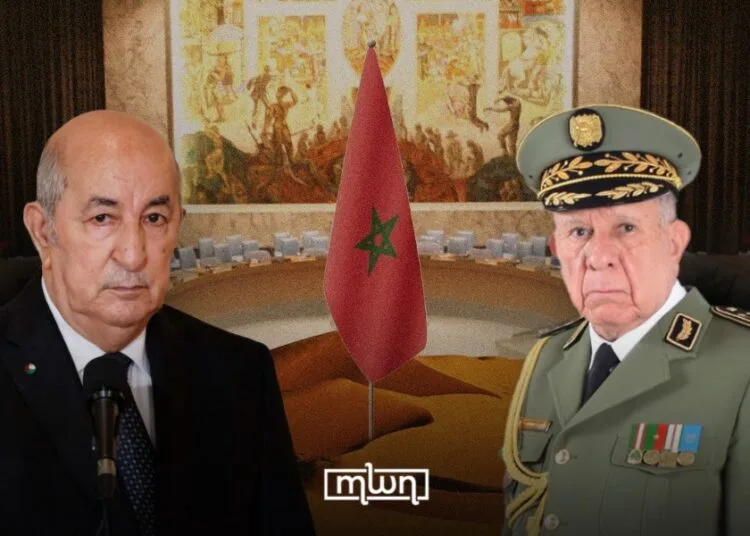
Algeria’s Foreign Affairs Minister Ahmed Attaf revived the same tired discourse last week, claiming that Algeria “warmly welcomes” the negotiation process launched through the US-facilitated talks between Morocco and the Polisario under UN supervision.
“The recent developments witnessed in this file affirm the soundness of what Algeria has demanded and worked for over the past five decades, as it has continuously called for the necessity of direct negotiations between the two parties to the conflict: the Kingdom of Morocco and the Polisario Front,” Attaf said.
He went on to welcome the launch of the negotiations, describing Algeria—like Mauritania—as a neighboring country to the parties to the dispute and an “observing party” in the political process.
Attaf then repeated Algeria’s shattered dreams regarding its self-determination narrative, insisting that this position aligns with all relevant UN resolutions, including the most recent UN Security Council Resolution 2797.
Attaf claimed he welcomes the same resolution that Algeria opposed and abstained from voting, while also criticizing the penholder – the US- for alleged bias, claiming the text is in favor of Morocco’s position.
Furthermore, Attaf seems to have forgotten—or deliberately chosen to ignore—that the same resolution he cited has explicitly ended the ambiguity that the Algerian regime spent decades exploiting to defend its self-proclaimed status as a mere “observer.”
Resolution 2797 clearly identified all actors—including Algeria—as main parties to the dispute, dismantling the regime’s long-standing political fiction.
This was also reiterated by UN envoy Staffan de Mistura in a briefing following the adoption of Resolution 2797 last year.
“It’s a very detailed resolution – every word was carefully chosen and negotiated. There are several key points: The parties are clearly identified as Morocco, the Polisario, Algeria, and Mauritania,” de Mistura said last year.
Read Also: Morocco’s Sahara Cause Deserves Academic Chairs, Not Just Diplomatic Cheers
Algeria’s regime, which has long refused to acknowledge its responsibility as a central actor in the conflict, spent decades pretending that a solution should be negotiated only between Polisario and Morocco.
However, Resolution 2797 stressed the importance of Algeria’s involvement in the upcoming discussions without preconditions or delay, in order to facilitate a mutually agreed-upon political solution with Morocco’s Autonomy Plan as the basis for negotiations.
What Attaf also failed to clarify in his speech—a speech that simultaneously clings to old narratives while trying to ease tensions amid Polisario’s recent terrorist attacks and the international community’s growing support for Morocco’s Autonomy Plan—is that Resolution 2797 represents a true breakthrough.
It puts an end to Algeria and Polisario’s outdated claims of “self-determination,” declaring the Autonomy Plan the genuine framework and basis for negotiations.
Instead, Attaf attempted to portray the current negotiations as if they were the result of Algeria’s own demands—this, despite Algeria having continuously backed the Polisario in all its acts, including aggressions against Morocco’s sovereignty, in a failed attempt to undermine Morocco’s regional leadership and its strategic role as a gateway to Africa and Europe.
Attaf’s statements further expose the regime’s double standards and the incoherence of its position, clinging to an “I did this” narrative marked by narcissism—while ignoring that Morocco’s diplomacy will never accept ambiguous wording or manipulative framing.
For Rabat, the negotiations are strictly between Morocco and Algeria, not with the Polisario, which has no legitimate mandate to represent Sahrawis.
Morocco has repeatedly emphasized that Algeria created the conflict, created the Polisario, and funded separatism targeting its southern provinces.
Therefore, any legitimate solution requires Algeria’s direct involvement, and not its denial of responsibility.
Attaf’s speech only further demonstrates how Algeria’s regime misunderstands—or purposely sidesteps—Rabat’s diplomatic clarity, hiding behind distorted interpretations of Resolution 2797 while ignoring its own political responsibility in backing the Polisario, a group that many countries—especially the United States—now recognize as a growing security threat to the region.