
 Join on WhatsApp
 Join on Telegram
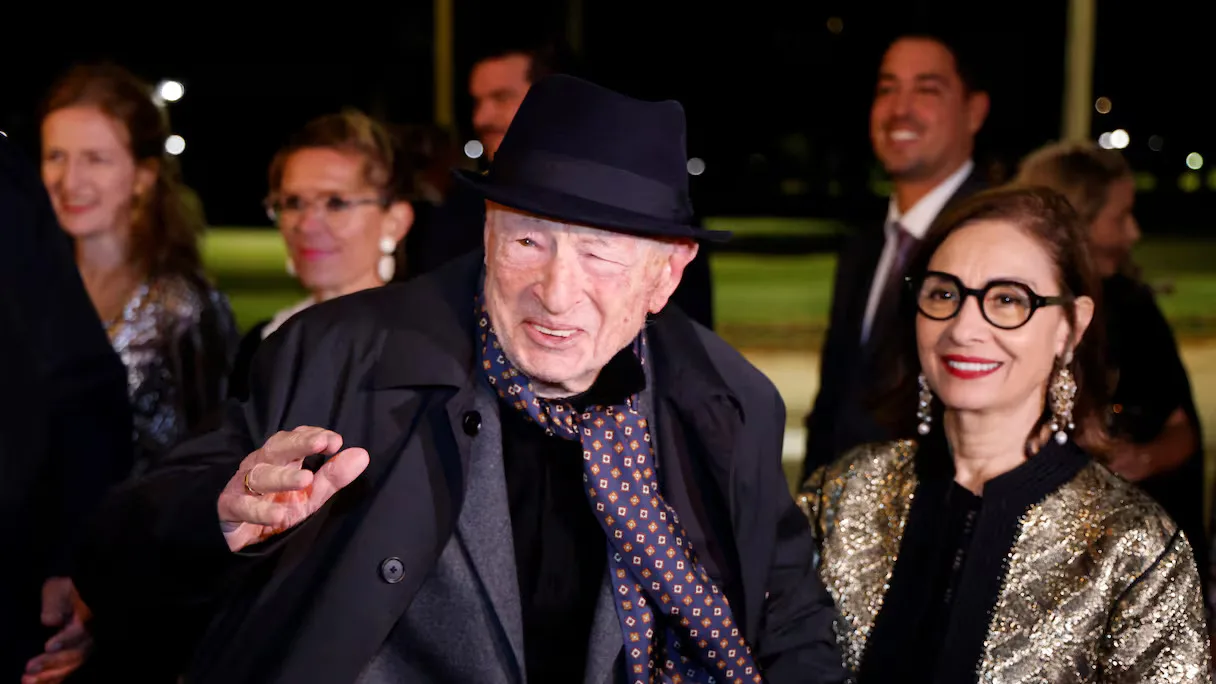
Casablanca — French philosopher and sociologist Edgar Morin, one of the world’s most influential thinkers and the architect of the concept of “complex thought,” died in Paris on May 29 at the age of 104. His death was announced by his wife, Moroccan sociologist and urban planner Sabah Abouessalam-Morin.
Born David-Salomon Nahoum in Paris on July 8, 1921, Morin’s life spanned more than a century of political, social, and intellectual change. During World War II, he joined the French Resistance and adopted the pseudonym “Morin,” a name he later made official. He served as a lieutenant in the French Forces and worked for the French Military Government after the war.
His academic path was unconventional. Despite never completing a doctoral thesis, he joined France’s National Center for Scientific Research (CNRS) in 1950 and eventually became a research director. Over the decades, he became known for challenging rigid academic boundaries and exploring subjects ranging from mass culture and sociology to politics, biology, and philosophy.
A thinker who found a second home in Morocco
Morin’s connection with Morocco became one of the defining aspects of his later life.
A turning point came in 2009 when he met Sabah Abouessalam during the Fez Festival of World Sacred Music. Their relationship grew from both intellectual exchange and personal understanding. They shared a similar childhood experience, having each lost a parent at the age of ten. The couple married in Paris in January 2012.
Together, they co-authored “Vivre le Maroc, relier le Nord et le Sud” in 2011. In the essay, they argued that Morocco could serve as a bridge between the global North and South, combining modern institutions with traditions of solidarity, hospitality, and community life.
Morin spent several months each year in Marrakech, which became his preferred place for writing and reflection. He often described Morocco as his “country of the heart.” In July 2025, he celebrated his 103rd birthday in Marrakech and presented his book “Y a-t-il des leçons de l’Histoire?” there.
His ties with the country were also recognized officially. King Mohammed VI awarded him the Wissam Al Kafaa Al Fikria, or Order of Intellectual Merit, in 2014. Morin later attended a royal state dinner in Rabat during French President Emmanuel Macron’s visit in October 2024.
From complexity theory to Moroccan universities
Morin’s most influential contribution was the development of “complex thought,” an approach that challenged the tendency to break problems into isolated parts. Instead, he argued that social, political, environmental, and human issues must be understood through their interconnections.
His ideas found a strong audience in Morocco. He served as an adviser to the Moroccan Ministry of National Education, promoting more interdisciplinary learning. In 2023, his book “Enseigner à vivre” was translated into Arabic as “Madrassat Al Hayat” with support from the French Institute of Morocco.
That same year, at the age of 101, Morin traveled to Mohammed VI Polytechnic University (UM6P) in Benguerir to deliver the keynote address at the university’s Science Week. The institution has incorporated elements of his thinking through its Chair of Complexities and Humanities.
Following news of his death, tributes arrived from across France and beyond. French President Emmanuel Macron commended him as a Resistance fighter, thinker, and defender of humanity, while UNESCO honored his role in advancing complex thought and transdisciplinary education.
For many in Morocco, Morin was more than an observer. Through his writings, partnerships, and decades-long engagement with the country, he became a prominent intellectual figure whose ideas were closely linked to Moroccan debates on education, development, and society.
Morocco World News is also on X — check out our latest posts now! Get MWN on iOS and Android for instant access to breaking news.