
 Join on WhatsApp
 Join on Telegram
Rabat – The UK-Morocco Business Forum opened Tuesday in Rabat with a clear sense of momentum, as British companies and Moroccan officials gathered to discuss cooperation opportunities as Morocco continues preparations for the 2030 FIFA World Cup.
Around 50 British firms took part in the two-day forum, which brought together business leaders, public officials, and representatives from both countries. The event focused on sectors including infrastructure, transport, security, sports, and the wider economy, with both sides presenting the World Cup as a chance to accelerate modernization across the country.
The World Cup as a tool for national change
For Moroccan Industry and Trade Minister Ryad Mezzour, the World Cup is not just a football tournament; it is a national project. “We are using the World Cup to transform the country,” he told the forum, explaining that Morocco wants the event to improve transportation, health services, and public infrastructure not only in the host cities, but across the whole country.
Mezzour also used the moment to push for a deeper economic relationship with the United Kingdom. He said the two countries should move beyond basic trade and build stronger cooperation in industry, technology, and investment. Morocco is already discussing new memorandums of understanding, easier business processes, industrial zones, engineering partnerships, and ways to support joint investment, he announced.

The minister also pointed to Morocco’s growing industrial base, saying the country is now one of Africa’s strongest industrial performers. He described Morocco as a place with major potential in car manufacturing, aviation, port development, renewable energy, and skills training.
“I hope history will call this period the Moroccan Miracle,” Mezzour said, comparing the country’s current moment to the kind of large-scale transformation that once changed South Korea’s economy in the 1960s.
His remarks spoke of a country trying to present itself as more than a future World Cup host. Morocco wants to be seen as a serious industrial and economic partner, with a growing role in global supply chains and regional development.
Chris Bryant, the UK Minister of State for Trade, echoed that message and stated that trade and partnership must lead to concrete results. Speaking at the event, he said, “There is blessing in movement,” using the Arabic phrase fi al-harakah barakah to underline the importance of action over talk.
“It’s all very well for us to have conversations,” he said, “but actually what really matters is whether we make a difference, whether we get things moving, whether we get things done.”
Bryant made clear that he sees Morocco as an important strategic partner. He described the country as a “gateway” between Africa and Europe and said this moment represents a major opportunity for both sides. He also stated that the UK has long-standing ties with Morocco and should now build on them in a more active way.

Bryant said countries are stronger when they work together rather than turning inward, and stressed the importance of turning dialogue into action. He also said major sporting events like the World Cup should deliver long-term benefits beyond football, including improvements in transport, safety, urban planning, tourism, and public life.
He drew a comparison with the London Olympics, saying the event was important beyond the games themselves, but because of the wider cultural and social impact. It helped transform an area, encourage more people into sport, and leave a lasting legacy.
That same idea is central to Morocco’s World Cup message. Mezzour said the tournament will be used to improve services in the six host cities, but also in 24 other cities that will receive teams or play supporting roles. He said the government is also working on a wider program to transform public services and local development across the country, including roads, small hospitals, and basic infrastructure.
Mezzour’s comments suggest that Morocco is using the World Cup as a planning tool for driving change nationwide.
UK’s major event expertise
As such, the UK side is presenting itself as a partner in that process. A new UK Capability Guide, released for the forum, describes the United Kingdom as a trusted partner for Morocco’s 2030 World Cup plans. It spotlights British experience in major event delivery, infrastructure, planning, operations, security, and legacy design.
The guide says the UK offer is based on three main commitments: knowledge transfer, project delivery, and innovation. It also emphasizes complementarity, meaning British firms should work alongside Moroccan institutions and businesses rather than replace them.
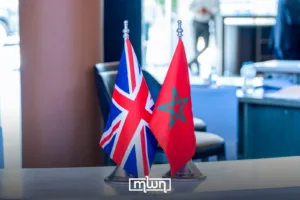
It points to past UK experience in hosting a global sporting event such as the 2012 Olympics. It further cited the Heathrow Airport development, the King’s Coronation, and Qatar 2022 as examples of British expertise in managing major projects under pressure. It concluded by highlighting British prowess in architecture, engineering, security, crowd management, transport, digital simulation, and event readiness.
Across a series of panels and sessions during the next two days, investors and business leaders from both countries will explore key areas of cooperation and discuss how to strengthen long-term economic partnerships and support major upcoming projects in both countries.