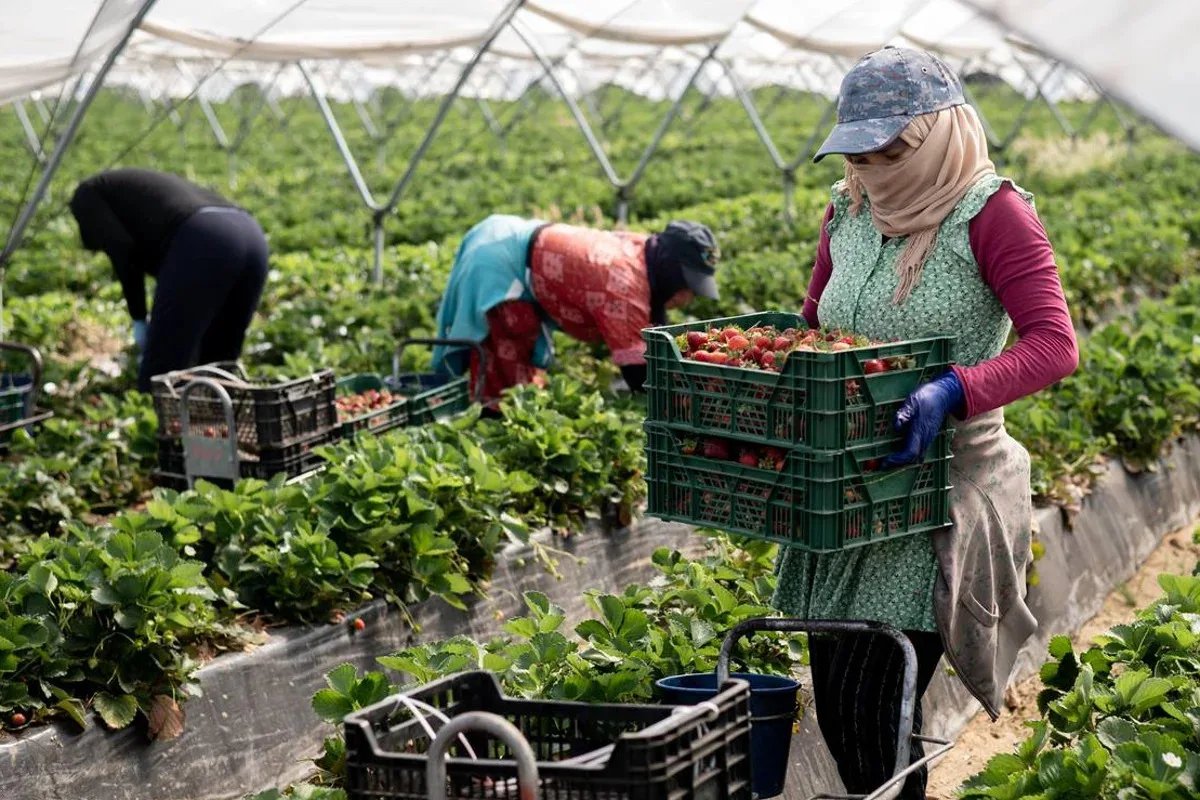
Marrakech – A Moroccan seasonal agricultural worker has died in the southern Spanish province of Huelva, reigniting fierce condemnation of the grueling and perilous conditions endured by thousands of migrant women in Spain’s farming sector.
According to Spanish media, the worker, identified as Hakima, a mother of four from the Moroccan city of Sidi Kacem, had arrived in Spain barely 40 days earlier to join the annual agricultural campaign.
Colleagues reported that she returned to her accommodation after an exhausting shift, showered, prepared food for the next workday, and went to bed. A forensic report determined she died at approximately 1 a.m. late last month.
The Moroccan Union of Labor (UMT), through its National Federation of the Agricultural Sector’s Women’s Organization, attributed the death to heatstroke caused by severe temperatures. The union noted that the same cause killed another Moroccan agricultural worker in 2019.
In a public statement, the Andalusian Association for Human Rights (APDHA) declared: “No one should lose their life trying to earn a living for themselves and their family. Behind every piece of fruit that reaches our tables are people who sustain a fundamental economic sector, often under conditions marked by physical hardship, precarity, and insufficient protection.”
APDHA called on authorities to treat health protection, occupational risk prevention, and dignified working conditions as non-negotiable priorities. “Her death cannot become just another statistic,” the organization warned.
The Moroccan union issued a blunt rebuke. “Working conditions that have reached the point of costing lives are situations that cannot be silenced,” the UMT declared.
It condemned all forms of violations, violence, and discrimination targeting seasonal agricultural workers and described the situation as a reckless disregard for the workers’ lives and dignity. The UMT revealed it had raised these concerns on multiple occasions and contacted relevant Moroccan and Spanish authorities – to no avail.
The union demanded that the Ministry of Employment and the National Agency for Employment Promotion (ANAPEC) act immediately. It called for strict monitoring of contractual obligations in coordination with Spanish authorities and the effective enforcement of international labor conventions, particularly those issued by the International Labour Organization (ILO) and those shielding women from violence, discrimination, and harassment.
The UMT further stressed the urgent need to guarantee decent living and working conditions for rural women across Morocco. It warned that persistent deprivation and vulnerability force women to leave their country in search of a better life – under circumstances that can prove fatal.
Social organizations and labor rights activists have launched a campaign to locate Hakima’s family in Sidi Kacem. They aim to provide information about the circumstances of her death, assist in obtaining medical documentation, and explore possible legal action.
Groups involved in the effort insist her death cannot be examined in isolation, pointing to exhausting work hours, extreme heat, precarious housing, and the deep vulnerability tied to the workers’ migration status. They are urging anyone with contact to her family to come forward.
Hakima’s death leaves four children orphaned. Rights organizations and unions are pressing public authorities and agricultural companies to urgently reinforce labor and health protections to prevent further tragedies in Spain’s fields.
Read also: Moroccans Make Up 81% of Spain’s Seasonal Workforce Recruited in 2025