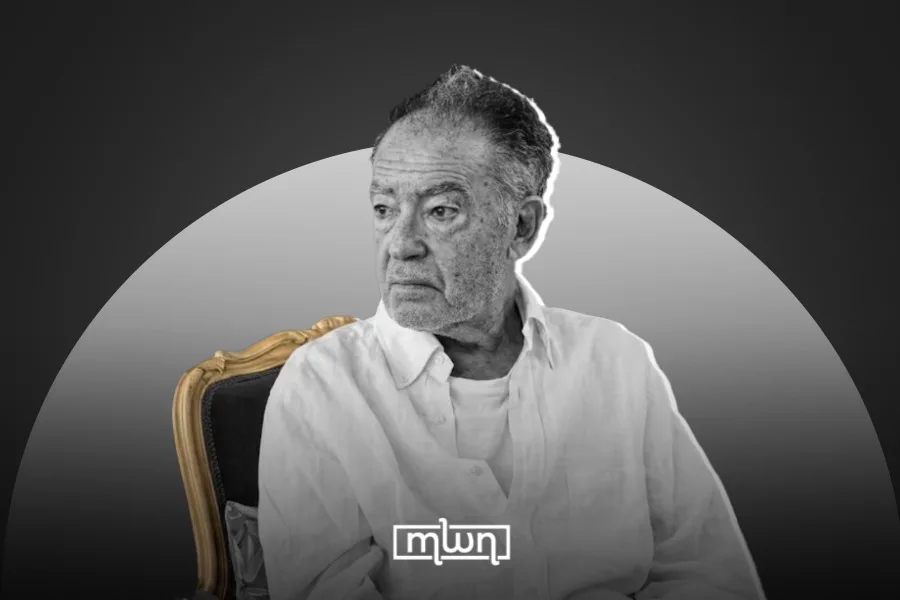
Rabat – Morocco’s cultural scene has lost one of its most distinctive voices. Painter Saad Hassani died at the age of 77 after a long illness, leaving behind decades of work that shaped the country’s contemporary art landscape.
Sources close to the family told Le360 that Hassani faced repeated hospital stays in recent months. As his condition worsened, he chose to remain at his home in Casablanca, where he died among relatives.
His death closes the chapter on a career that stood apart. Hassani did not follow the formal route of art schools. He taught himself, tested his limits, and built a language that refused easy categorization. While he formed ties with figures linked to the Casablanca School, he never allowed that proximity to define him.
He entered the art world early. At 18, he presented his first solo exhibition, a sign of a path that would not wait for approval. His work drew from Art Brut, echoes of the School of Paris, and traces of Abstract Expressionism. Travel across Europe also shaped his eye. By the 1970s, his paintings reached audiences in Morocco and abroad, where critics and collectors took notice.
Casablanca remained central to his story. The city fed his imagination and gave him material to observe, question, and transform.
For Hassani, painting replaced speech. He chose restraint over explanation and let the work stand on its own terms.
Hassani remained a respected figure in artistic circles. He brought together writers, poets, and younger artists, and took part in conversations about the structure of Morocco’s art market and the place of artists within it.
His work now sits in major collections in Morocco and abroad, including the Mohammed VI Museum of Modern and Contemporary Art in Rabat.
Hassan died in Casablanca, the city that shaped much of his work. He left behind a way of seeing, one that resists noise and seeks depth.