
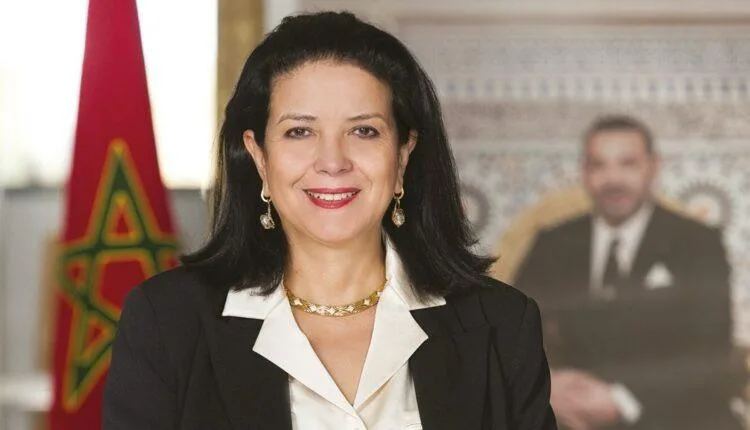
Agadir – Morocco is advancing its efforts to implement the official status of the Amazigh language, with several partnership agreements, expanded public services, and growing integration across state institutions, according to the Minister of Digital Transition and Administrative Reform, Amal El Fallah Seghrouchni.
Speaking at a communication meeting in Sale, wrapping up the Amazigh-language training session for officials from various ministries and public institutions, Seghrouchni pointed out the government’s efforts to strengthen the use of the Amazigh language in administration and public services.
The minister said the implementation process is currently supported by 73 partnership agreements signed with government bodies, constitutional institutions, and public establishments. In addition, authorities have developed 25 action plans aimed at advancing the language’s official status across different sectors.
As part of these efforts, 491 reception agents have been mobilized to assist citizens in the Amazigh language, including its three main variants: Tarifit, Tachelhit, and Tamazight, at both central and regional administrative services throughout the country.
Seghrouchni noted that the Amazigh language has also become increasingly visible in public spaces. Nearly 4,000 plaques and directional signs now include Tifinagh script, while approximately 592 vehicles belonging to public administrations display Amazigh-language inscriptions.
The minister further shared that a glossary of 7,949 administrative terms were translated into Amazigh, alongside the translation of official reports, information documents, and content published on institutional websites.
In the education sector, Seghrouchni pointed to creating an online learning platform for Amazigh language instruction in partnership with the Ministry of National Education, Preschool, and Sports.
Throughout the meeting, officials outlined the integration of Amazigh across several sectors, including the judiciary. The director of the Royal Institute of Amazigh Culture (IRCAM), Ahmed Boukouss, noted that Amazigh-speaking agents have been deployed in courts to assist litigants in judicial services in the language.
However, Boukouss stressed the need to expand the use of the language in key public facilities, including hospitals, security centers, local authorities, and educational institutions. He also encouraged the use of the Amazigh language in artificial intelligence tools and automatic technologies using the Tifinagh script.