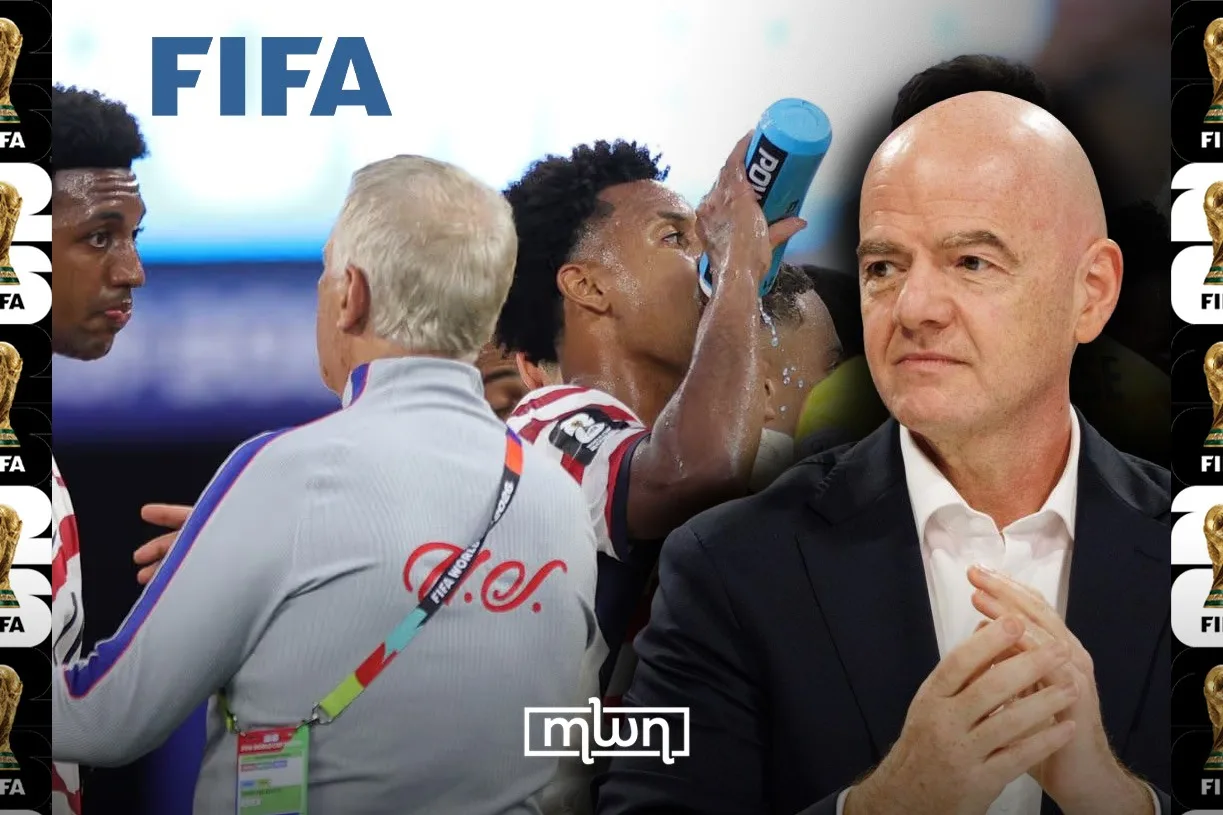
Rabat – Mandatory hydration breaks have become an unavoidable part of the 2026 FIFA World Cup experience – and not everyone is happy about it.
Introduced by FIFA to help players cope with high temperatures and humidity across the United States, the three-minute stoppages now take place around the midway point of every half, regardless of weather conditions, to “ensure equal conditions” for all teams.
But only days into the tournament, frustration is already building among players and viewers alike. Fans believe the breaks are disrupting matches and creating extra space for commercials.
Netherlands captain Virgil van Dijk became one of the first major players to publicly question the format.
“I watch almost every match, and every time we go to commercials during the water breaks, it becomes a bit annoying for me,” van Dijk said. “If the weather is really hot, then obviously it’s good to have those breaks, but every match should be evaluated individually.”
Hydration breaks are not new in football. FIFA first formally introduced cooling breaks during the 2014 FIFA World Cup in Brazil, where extreme heat and humidity raised concerns over player safety. Similar pauses were later used selectively in major tournaments when temperatures crossed specific thresholds.
The difference in 2026 is scale and consistency.
This time, the stoppages are mandatory in every World Cup match, even in games played under moderate weather conditions – a move critics argue has transformed them into convenient commercial windows rather than emergency cooling measures.
Online reaction has been particularly sharp.
“Virgil exposing the hydration = ad break scam. FIFA turning football into NFL quarters for cash. Real ones know!” one user wrote on X.
“Everyone should booooo during the hydration breaks at the stadium,” another fan posted on X.
Others accused FIFA of slowly Americanizing football’s uninterrupted flow – one of the sport’s defining characteristics.
“Do you guys see what America is doing to my sport? We’ve got ad breaks during games now,” another post read. “This shouldn’t be normalized, or the sport will be ruined.”
The backlash also reflects broader concerns about the growing commercialization of football, especially at a World Cup already heavily shaped by broadcast demands, expanded formats, and entertainment-focused presentation.
For now, FIFA continues to frame the breaks primarily as a health measure. But as criticism mounts from both inside and outside the game, the debate surrounding the World Cup’s newest interruption is unlikely to cool down anytime soon.