 Join on WhatsApp
 Join on Telegram
As the FIFA World Cup 2026 unfolds across North America, with Morocco once again capturing the world’s attention on football’s biggest stage, plans for the next World Cup are already well underway. Looking to 2030, Morocco, Spain, and Portugal face a unique path.
The global event sits at the historic intersection of Africa and Europe, shaped by centuries of exchange across the Mediterranean. Migration, trade, diaspora, language, cultural circulation, and a shared love of football have long connected these societies.
Morocco’s national trajectory
For many Moroccans, the moment also carries deeper national significance. The tournament arrives during a period of deep transformation across the North African country under the long-term vision of King Mohammed VI, reflecting decades of investment, infrastructure development, industrial growth, and economic modernization.
It also marks a profound generational evolution. The movement, labor, ambition, and cultural transmission of Moroccans across generations, both within Morocco and throughout the global diaspora, have forged a period of great national pride.
This moment offers an opportunity for Moroccans to stand confidently in their country’s development, enterprise, and ingenuity, honoring past sacrifices, while rising to the scale of the times.
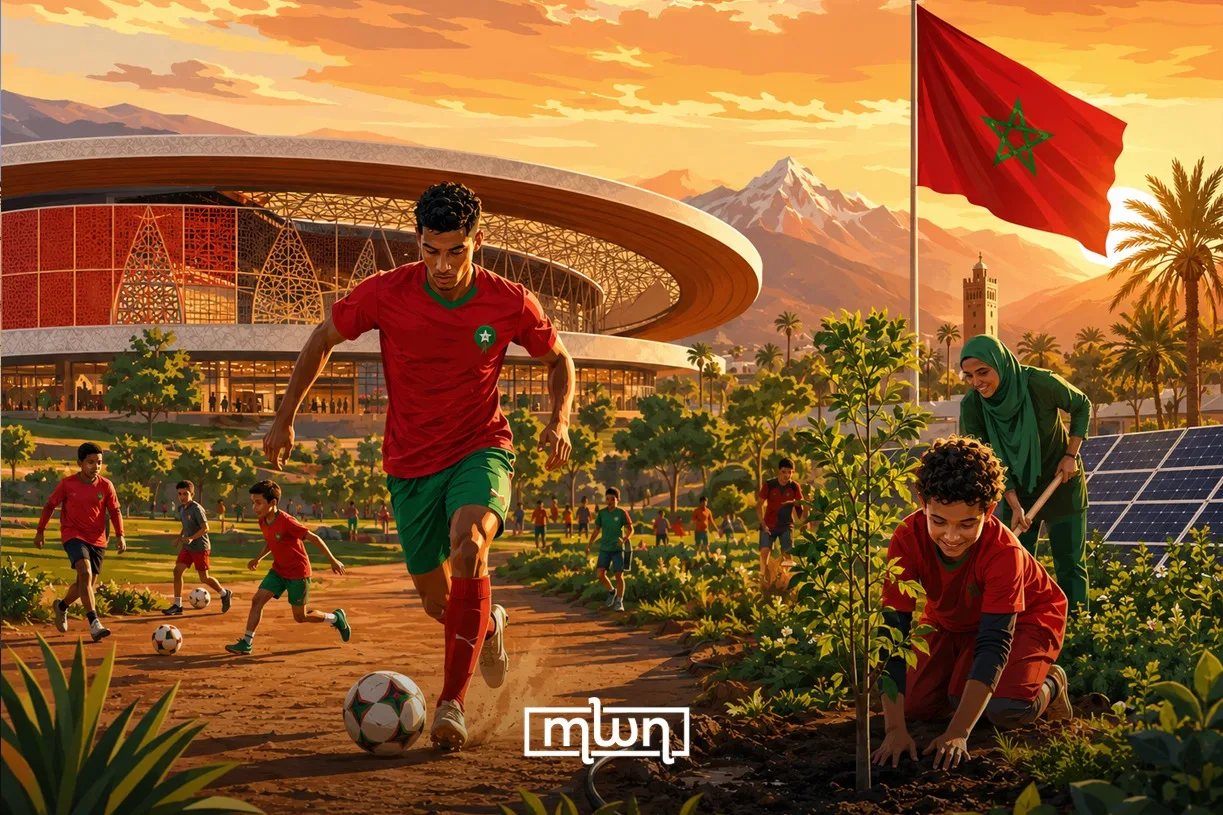
Simultaneously, the progression points toward a new blueprint for economic development, where industrial capability, infrastructure, environmental stewardship, cultural openness, sport, human development, and quality of life are treated as interconnected priorities rather than separate ones.
The World Cup 2030 then becomes a major platform through which this broader national trajectory will be experienced domestically and projected internationally. Delivering on these ambitions requires more than logistical precision, and demands, instead, a high-level of coordination, cultural understanding, and capabilities commensurate with the stakes involved.
Yet, the real legacy of the tournament will not be measured through stadiums, infrastructure, high-speed rail, or tourism figures alone. It will also depend on whether the investments generated translate into lasting societal, economic, and developmental outcomes.
A broader understanding of sports
This broader understanding of sport has already begun to shape public policy internationally. The UK Government’s strategy paper, “Sporting Future: A New Strategy for an Active Nation,” the first major strategy of its kind in the UK, marked an important shift away from measuring sport primarily through participation figures and medal counts toward a wider framework centered on physical wellbeing, mental wellbeing, individual development, social and community development, and economic development.
For the World Cup 2030, the implications extend well beyond sport policy itself. Outcomes will hinge on whether populations understand and feel connected to the wider trajectory surrounding the tournament.
The next generation of global sporting events
This reflects a shift in how major global sporting events are understood by governments and institutions alike. As the world enters a more multipolar era and emerging economies assume greater influence, the next generation of global sporting events will increasingly function not only as international tournaments, but as platforms for development, diplomacy, national branding, and long-term positioning.
For Morocco, Spain, and Portugal, the World Cup 2030 therefore represents far more than football alone. It is an act of stewardship where nations become custodians of major cultural, economic, and symbolic assets.
Communication as infrastructure
In that context, communication can not be treated simply as branding, marketing, visibility, or promotion. It is part of the deep underlying infrastructure of development itself, weaving together institutions, populations, participation, public trust, cultural understanding, and the shared passion surrounding football into a coherent national project capable of translating growth into broader societal outcomes.
Beyond the final whistle
For Moroccans, whose passion for the national team has become a powerful expression of collective pride both in Morocco and across global Moroccan diasporas, the true measure of success will lie in whether the investments and opportunities generated through the World Cup 2030 leverage their strengths, and bolster national capability, entrepreneurship, local participation, domestic value creation, long-term stewardship, and Morocco’s ability to define its own trajectory, ensuring that the benefits generated support both current and future generations invested in the North African country’s success.
It will also depend on the ability of Morocco, Spain, and Portugal to deepen coordinated models of regional exchange, mobility, and cultural connectivity across a broader Afro-European corridor. As the World Cup 2026 demonstrated, none of this happens automatically. It requires an integrated approach capable of extending impact well beyond the final whistle.