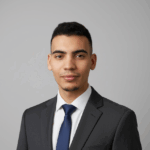

Marrakech – Bloomberg on Monday reported that Fouzi Lekjaa, whom the American outlet described as “the man who helped transform Morocco’s football team into a serious World Cup contender,” is being courted by two of the kingdom’s main political parties to become their leader ahead of the September 23 parliamentary elections.
The report, which dubbed him “Morocco’s World Cup Czar,” added that the courtship positions him as a potential candidate for prime minister – the head of government in Morocco’s constitutional framework.
The next cabinet is expected to serve from 2026 through 2031, a mandate that will encompass the 2030 FIFA World Cup on Moroccan soil. The political grapevine has already found a name for it: the World Cup government.
The claim mirrors weeks of intense and relentless speculation across Moroccan media. Some commentators have gone as far as projecting a trajectory that leads the budget minister and the Royal Moroccan Football Federation (FRMF) president straight to the Primature.
At the center of the courtship stands the Authenticity and Modernity Party (PAM). Secretary General Samir Goudar publicly confirmed his party’s pursuit of Lekjaa, calling it “an honor” to attract a figure of his caliber. He indicated the dossier was being handled by party leader Fatima Ezzahra El Mansouri. She went further, revealing in an interview that she has spent the past year trying to bring Lekjaa aboard. She told Médias24 on June 9 that the party is still awaiting his response.
Lekjaa, however, shut the door firmly. Reached by Médias24 that same day, he declared: “I am not a PAM member. I am not a member of any party.” “If tomorrow I decide to exercise my constitutional right to join this or that party, to run in the legislative elections, I will announce it myself,” he added.
The National Rally of Independents (RNI) has not stayed quiet either. In an interview last week, parliament speaker and RNI figure Rachid Talbi Alami acknowledged that Lekjaa joining any party is his constitutional and personal right. He noted in the same breath that the RNI consistently seeks to attract prominent national figures. Previously, Lekjaa had been rumored close to the RNI as well – none of it ever confirmed.
None of this unfolds in isolation. On June 5, the FRMF held its extraordinary and ordinary general assemblies at the Mohammed VI Football Complex in Salé. The federation approved statutory amendments and financial reports but postponed its presidential election to September, extending Lekjaa’s tenure by several months. He has led the body since April 2014.
The September assembly will determine whether Lekjaa formally secures a fourth FRMF mandate or channels part of the mission through the Morocco 2030 Foundation, the body overseeing World Cup preparations.
He currently serves as Confederation of African Football (CAF) vice president and holds a seat on the FIFA Council – positions that have expanded Morocco’s weight within global football governance.
His track record fuels the talk and has only deepened the intrigue. Under his watch, Morocco reached the 2022 World Cup semifinals, claimed the 2025 Africa Cup of Nations (AFCON) title at home, and won the U-20 World Cup in Chile.
The 2030 co-hosting bid with Spain and Portugal, backed by an estimated MAD 190 billion ($19 billion) in public investment covering stadiums, railways, airports, and urban upgrades, remains the most consequential dossier on his desk.
‘The Lekjaa syndrome’
Yet the frenzy around his name strips bare something far deeper about Morocco’s political ecosystem. Observers note that the scramble to recruit Lekjaa betrays a structural rot within the country’s party apparatus.
Moroccan parties, once incubators of political talent that forged generations of cadres through grassroots militancy, now appear unable to produce from within the leaders voters trust to govern. They raid the ranks of technocrats, senior civil servants, and institution builders – importing credibility they can no longer generate on their own.
The pattern is not incidental. It reveals formations that have abandoned the slow, difficult work of ideological construction and elite formation in favor of a shortcut: attaching their electoral fortunes to names built elsewhere.
When a party’s most compelling pitch to voters is a figure who has never carried its membership card, it concedes that its own program, its own identity, and its own bench of leaders are not enough. The machinery that once turned activists into statesmen has ground to a halt, replaced by a desperate hunt for ready-made credibility.
Analysts have labeled the phenomenon “the Lekjaa syndrome.” It describes a political class so hollowed out, so bankrupt of organic leadership, that it must poach its most marketable names from outside its own structures. Citizens, in turn, increasingly reward execution over ideology and delivery over doctrine. The question parties face is no longer whom they can recruit from the outside. It is why they stopped producing such figures on the inside.
Whether Lekjaa enters the political arena remains unanswered. What is no longer in doubt is what the fixation itself exposes: a widening chasm between what Morocco’s parties offer and what its citizens demand.