




 Join on WhatsApp
 Join on Telegram
Benguerir — Morocco’s startups are building fast. But almost all of them are doing it on a costly infrastructure owned by someone else, governed by someone else’s laws, and optimized for someone else’s market. Azul Cloud was built to change that.
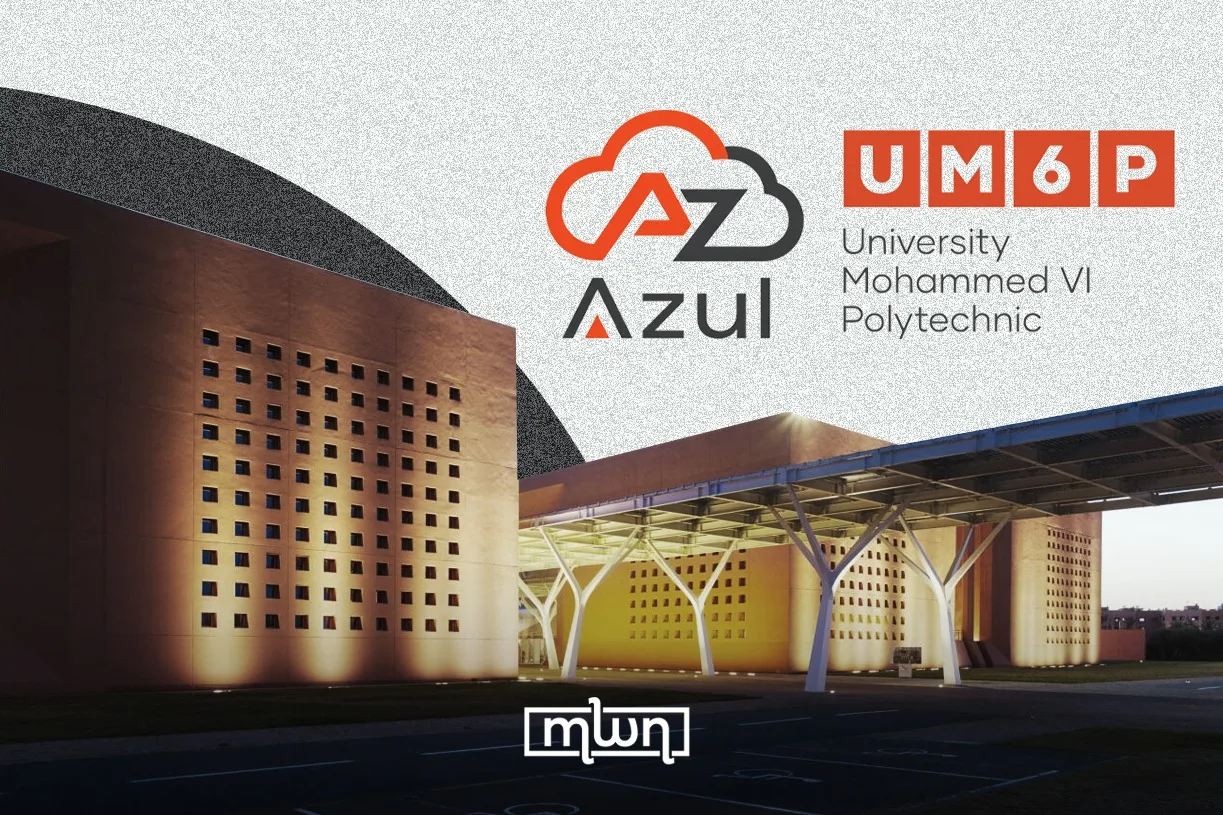
Developed at the College of Computing of the Mohammed VI Polytechnic University (UM6P) in Benguerir, Azul Cloud is the first fully sovereign, end-to-end B2C cloud platform, which has been tested internally and is now entering its public beta phase. It brings together compute and storage infrastructure, AI and machine learning services, and ready-to-use software — all designed, operated, and hosted entirely within Morocco.
What sovereign could mean for Azul Cloud
A sovereign cloud is not simply a cloud service where data is stored locally. It is a cloud environment in which data hosting, processing, governance, operational control, and technological ownership remain under a clearly defined national jurisdiction.
For Azul Cloud, sovereignty is therefore addressed across three connected layers: data, algorithms, and infrastructure.
- At the data level, the objective is to keep storage and processing within Morocco’s legal and regulatory framework.
- At the algorithmic level, users retain ownership of the models, workflows, and AI solutions they build on the platform.
- At the infrastructure level, the platform is developed, operated, and maintained by Moroccan teams, with technical decisions aligned with the needs of the Moroccan and African digital ecosystem
“ Sovereignty is not a feature you can bolt on. It has to be architecture.”
Prof Imad Kissami, College of Computing – UM6P
Tested locally, ready for the ecosystem
Azul Cloud is not a whitepaper. The platform has been built, deployed, and validated internally within the College of Computing –UM6P in Benguerir. The infrastructure is running. Services are live. And after months of internal testing, the team is ready to open the platform to a broader set of users — research laboratories, technology startups, and development teams across Morocco’s digital ecosystem at first, expanding it later to African partners and ecosystems.
“Morocco’s digital strategy cannot rely indefinitely on foreign infrastructure. Initiatives like this — built from within our own academic institutions — are exactly the kind of structural investment the ecosystem needs.”
— Prof Fahd Kalloubi, College of Computing -UM6P
Beta participants will get full access to all service tiers: raw compute and storage, AI training and inference environments, and a growing catalogue of ready-to-use software services. They will also work directly with our engineering team to shape how the platform evolves — the integrations we prioritize, the tooling we build, and the pricing that works for the Moroccan market.
Built for Morocco’s builders
Azul Cloud is designed first for founders and developers. Latency to local end users will be significantly lower than that of European- or US-hosted alternatives. And proximity to UM6P’s ecosystem creates a unique and direct pipeline for AI-solutions, talents, and cloud infrastructure for teams building on the platform.
The platform also directly answers requirements that no foreign provider can satisfy: Decree No. 2-24-921, issued in October 2024, requires organizations of vital importance to use cloud providers that preserve state control over critical digital assets. Azul Cloud meets standards by design.
“For startups working with sensitive data — in fintech, healthtech, defense technology or govtech — compliance has always been a ceiling on how fast they can move. A fully sovereign cloud that makes compliance the default removes that ceiling entirely.”
Prof LAMIAE AZIZI, College of Computing, AI-Accelerated Research Centre – OCP/UM6P
Morocco’s Digital 2030 strategy calls explicitly for a sovereign cloud layer managed by Moroccan operators. Azul Cloud is that layer — built entirely by a Moroccan university, developed by local talents and experts of technology, and now ready to be stress-tested by Morocco’s builders.
Morocco does not need to continue importing its digital future — and Azul Cloud is the proof.


