
 Join on WhatsApp
 Join on Telegram
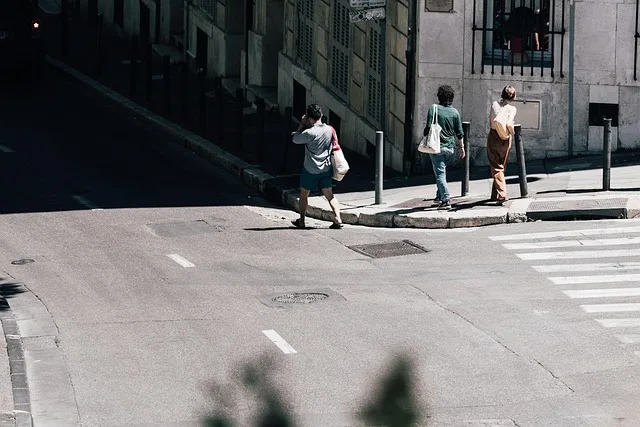
Agadir – Walking remains the primary way Moroccans travel to work, with more than one in three employed people going on foot to their jobs, according to findings from Morocco’s 2024 General Population and Housing Census (RGPH), released by Morocco’s High Commission for Planning (HCP).
The report, which examines transportation modes used by employed residents aged 15 and over, says the data provides insight into access to employment, the territorial organization of economic activity, transport infrastructure, and inequalities in commuting mobility.
“The analysis of the transportation modes used by the employed sedentary population aged 15 and over makes it possible to assess access to employment, the territorial organization of economic activities, and the level of development of transport infrastructure,” the report states.
Walking accounts for 35.8% of all work commutes nationwide, making it the country’s most common mode of transport.
Private cars rank second at 14.6%, followed by motorcycles and bicycles at 12.3%, while 10% of employed people use taxis to travel to work.
Employer- or institution-provided transportation accounts for 9.5% of commuting, whereas structured public transport remains relatively limited. Only 6% of workers commute by bus, 0.5% by tram, and 0.4% by train.
The report says this reflects both the use of organized transportation by some companies and public institutions, particularly in industrial zones or areas located far from city centers, as well as “the limitations of public transport services, characterized by insufficient geographical coverage in several territories.”
Meanwhile, 2.5% of workers rely on informal transport, indicating the continued presence of alternative mobility options, especially in areas that are not well served by organized transport networks.
Although marginal, the use of animals as a means of transportation remains present, accounting for 0.9% of commuting, mainly in rural areas where modern transport options remain limited.
The census also found that 6.8% of employed people do not travel to work at all, a situation linked to home-based occupations, remote work, or activities carried out at the place of residence.
Rural workers rely more on walking
The census pointed to notable differences between urban and rural commuting habits.
Walking is the leading mode of transport in both settings, but is significantly more common in rural areas, where it accounts for 42.4% of work trips compared with 32.7% in urban areas.
Private cars are far more common in cities, used by 18.8% of urban workers compared with 5.9% in rural areas. Taxis also see greater use in urban areas (11.7% versus 6.4%), as does employer-provided transport (11.4% compared with 5.5%).
Motorcycles and bicycles, however, play a larger role in rural mobility, accounting for 14.8% of commuting compared with 11.1% in urban areas.
Informal transportation and animal transport are also considerably more common in rural Morocco, where they account for 5.7% and 2.4% of commuting, respectively, compared with 0.9% and 0.1% in urban areas.
The report also notes that 11.1% of rural workers do not commute to work, more than double the 4.7% recorded in urban areas.
Women use organized transport more frequently
The census identifies significant differences in commuting patterns between men and women.
Walking remains the most common way to get to work for both groups, but it is more common among men (37.4%) than women (29.5%).
Women are more likely to use organized or motorized transport. According to the report, 17.6% of women commute by private car compared with 13.9% of men. Taxi use is also higher among women (17.1% versus 8.3%), as is employer-provided transport (15% compared with 8.1%).
The report says these differences “may reflect constraints related to safety, distance, or balancing professional life and family responsibilities.”
Men, meanwhile, are much more likely to commute by motorcycle or bicycle, with 14.8% using these modes compared with just 1.9% of women.
Bus use remains relatively low for both groups, but is slightly higher among women (8.4%) than men (5.4%).
Regional disparities persist
The census also points to considerable regional differences in commuting patterns.
Walking is most common in Fez-Meknes (48.5%), followed by Draa-Tafilalet (47.5%) and Beni Mellal-Khenifra (46.8%). High levels are also recorded in Guelmim-Oued Noun (44.3%), Laayoune-Sakia El Hamra (42.8%), and Tangier-Tetouan-Al Hoceima (42.6%).
Motorcycles and bicycles account for 26.2% of commuting in Marrakech-Safi, 20.6% in Souss-Massa, and 18.4% in Draa-Tafilalet.
Private car use is highest in Casablanca-Settat (19.3%), Rabat-Sale-Kenitra (18%), and Laayoune-Sakia El Hamra (16.2%).
Employer-provided transport is particularly widespread in Tangier-Tetouan-Al Hoceima, where it accounts for 18.3% of commuting, followed by Souss-Massa (14.1%) and Dakhla-Oued Ed-Dahab (13.6%).