
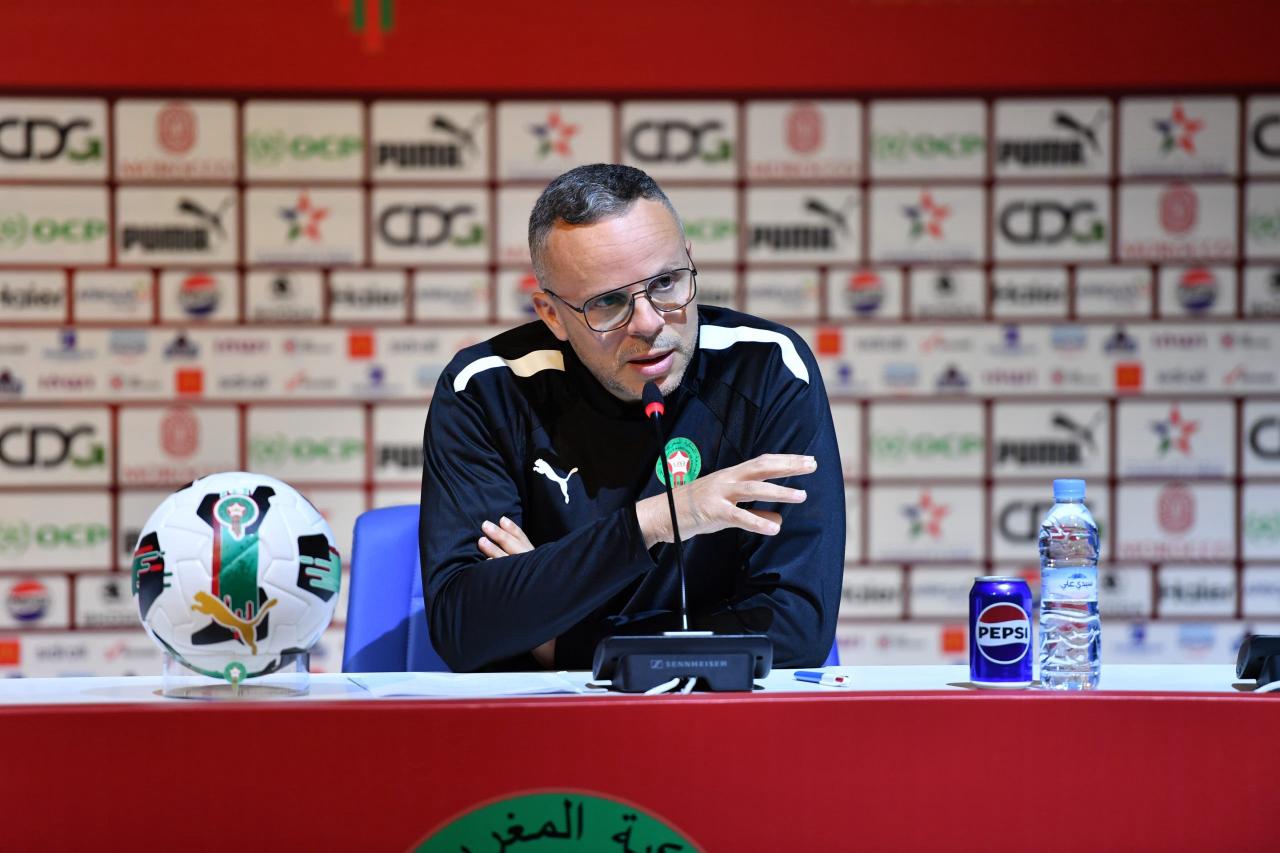
Rabat – Morocco head coach Mohamed Ouahbi has defended the commitment of the Atlas Lions’ dual-national players ahead of the World Cup knockout match against the Netherlands.
Several Morocco players were born or raised outside the country and were eligible to represent another national team.
Their background has again become a topic of discussion before the match against the Dutch.
Ouahbi said having more than one nationality does not weaken a player’s connection to Morocco.
“There are players who hold other nationalities, but they chose to represent Morocco,” he said during his pre-match press conference.
“When it comes to the game, loyalty is only to the national shirt, regardless of any other considerations.”
The coach acknowledged that facing a country where a player was born, raised or developed could create an emotional situation.
However, he said his main concern was ensuring that every player entered the match in the correct mental state.
“For dual-national players, it can sometimes be emotionally complicated,” Ouahbi said. “But the most important thing for me is that they are in the best mental condition and enter the game with full focus.”
A choice that should be respected
The comments come amid repeated claims that Morocco depend on “foreign” players or footballers who are somehow less Moroccan because they grew up abroad.
That argument is both unfair and disconnected from the reality of Morocco’s large diaspora.
A player does not become less Moroccan because he was born in Amsterdam, Brussels, Paris, Madrid or another European city.
Many children of Moroccan families grow up speaking about the country, visiting relatives, following the national team and carrying a strong connection to their parents’ homeland.
When they choose Morocco, they make a legal and personal decision that should be respected.
It is also strange to celebrate these players after wins and then question their loyalty whenever Morocco face the country of their birth.
Their commitment should be judged through their behavior, effort, and performance, not through the location written on their birth certificate.
Ouahbi made clear that he has no doubts about where his players’ priorities lie.
“I am confident that Morocco comes first for them,” he said. “They are proud to wear the national team shirt, and they aim to win and make the supporters happy.”
Morocco’s national team represents the entire country and its communities around the world.
The shirt does not belong only to players born within Morocco’s borders. It belongs to those who choose to represent the country, respect its supporters and give everything on the pitch.
Against the Netherlands, several Moroccan players may face a country they know well.
That may add emotion to the occasion, but it does not make their loyalty unclear.
As Ouahbi said, once the match begins, the only identity that matters is the Moroccan shirt.