 Join on WhatsApp
 Join on Telegram
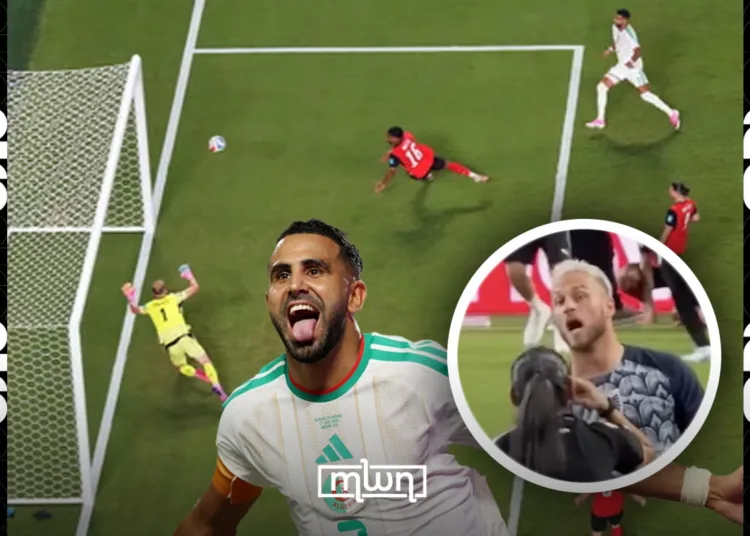
Rabat – Algeria’s 3-3 draw with Austria in their final Group J match has become one of the most controversial moments of the 2026 FIFA World Cup.
The result allowed Austria to finish second in the group, while Algeria qualified for the round of 32 as one of the eight best third-placed teams.
Iran, who had completed their Group G campaign unbeaten, fell to ninth place in the third-place ranking and were eliminated.
The situation led Iranian supporters and other football fans to accuse Algeria and Austria of protecting a result that served both teams.
Algeria and Austria entered the match with three points each after both teams defeated Jordan and lost to Argentina.
A draw was enough to send Austria through as Group J runners-up. It also gave Algeria four points, securing the final available place among the best third-placed teams.
Iran therefore needed either Algeria or Austria to win.
The match appeared to support claims of genuine competition during its opening stages.
Marko Arnautovic gave Austria the lead in the 28th minute before Rafik Belghali equalized for Algeria shortly before halftime.
Marcel Sabitzer restored Austria’s advantage in the second half, but Riyad Mahrez responded five minutes later to make the score 2-2.
The pace of the game then slowed, with both teams keeping possession carefully and taking fewer risks as the end of the match approached.
The 2-2 score was enough for both sides to qualify.
Late goals raise more questions
Mahrez scored his second goal in the third minute of stoppage time to give Algeria a 3-2 lead.
That result would have eliminated Austria and allowed Iran to qualify.
Yet Austria responded almost immediately.
Substitute Sasa Kalajdzic scored with a header in the 96th minute, bringing the score to 3-3 and sending both Algeria and Austria into the next round.
The two late goals were presented by both teams as proof that they had continued trying to win.
Austria coach Ralf Rangnick rejected the accusations of collusion and said the dramatic ending showed that neither side had agreed to protect the draw.
He said he could not remember another match with such an unexpected ending during his four decades as a coach.
Algeria coach Vladimir Petkovic also described the game as “a little crazy” and spoke about his team’s efforts to respond after falling behind twice.
Iranian fans demand answers
Iran finished third in Group G after drawing against New Zealand, Belgium, and Egypt.
The team collected three points and remained unbeaten but needed favorable results from the final groups to reach the round of 32.
Iran appeared set to qualify when Mahrez put Algeria ahead in stoppage time.
Those hopes ended only minutes later when Kalajdzic scored Austria’s equalizer.
The result pushed Iran down to ninth place among the third-placed teams, one position below the qualification line.
Iranian supporters later accused Algeria and Austria of collusion and called for FIFA to examine the final stages of the match.
Videos showing long periods of possession and limited pressure circulated widely on social media.
However, the Iranian Football Federation has not published evidence of an agreement between the two teams.
Iran’s official reaction after the tournament focused mainly on the restrictions and logistical problems the team faced during its stay in North America.
Reports have said FIFA is not expected to open an investigation. The football body has not publicly announced disciplinary action against either team.
Memories of the 1982 World Cup
The controversy also brought back memories of the 1982 World Cup.
At that tournament, West Germany defeated Austria 1-0 in a match that allowed both European teams to advance and eliminated Algeria.
After West Germany scored early, both teams largely stopped attacking because the result served them.
The match became known as the “Disgrace of Gijón” and later led FIFA to schedule the final group matches at the same time.
The presence of Austria and Algeria in another match involving a result that suited both teams made comparisons unavoidable.
The 2026 game, however, included six goals, several changes in the lead and two decisive goals during stoppage time.
The draw can reasonably be questioned because both teams knew that it would send them through.