
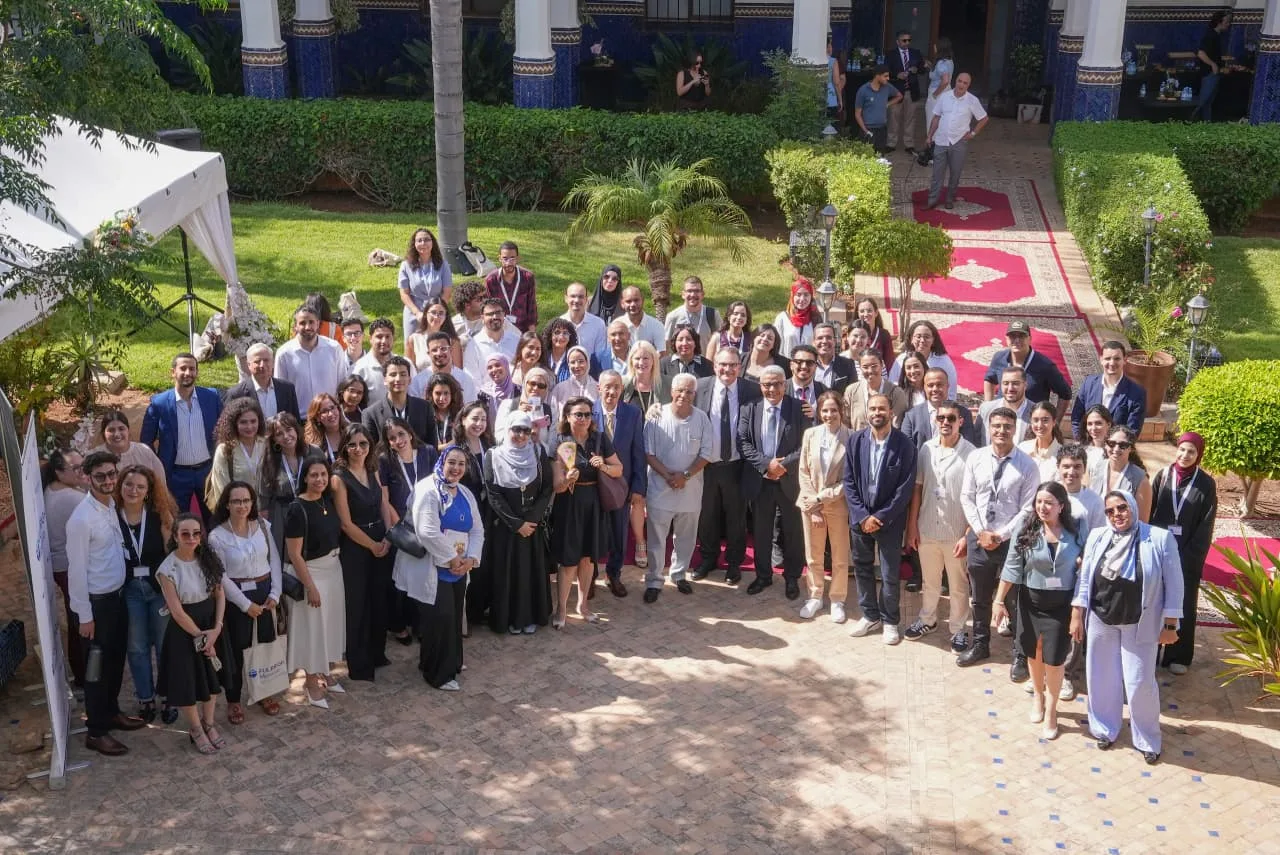
Rabat – In a ceremony that reflects decades of academic ties between Morocco and the United States, officials gathered in Rabat today to mark the departure of a new group of Fulbright grantees who will pursue their studies and research across American universities.
The reception, hosted by the Ministry of Higher Education, Scientific Research and Innovation, brought together diplomats, education leaders, and former Fulbright participants to recognize 41 Moroccan scholars selected for the 2026-2027 academic year.
The group comes from cities across Morocco, from Rabat and Casablanca to Errachidia and Ouarzazate. Each carries a different project, a different ambition. Some prepare for doctoral research, others for master’s degrees or professional programs.
A few will step into classrooms in the US to teach Arabic, while others will enter fields that range from biomedical sciences and environmental studies to journalism, architecture, and film.
Their next destination includes institutions such as the Massachusetts Institute of Technology, New York University, and the University of Chicago. For many, this marks a first extended stay abroad. For all, it opens a door to a different academic culture and a broader professional network.
Speaking during the ceremony, the Secretary General of the Ministry, Noureddine El Halaoui, described academic exchange as a central part of Morocco’s higher education strategy. He pointed to mobility programs like Fulbright as a way to strengthen universities at home, not only through training but through the return of graduates who bring new methods and perspectives.
From the US side, the Deputy Chief of Mission at the US Embassy in Rabat, Benjamin Ziff, described the moment within a longer history. The Fulbright Program now reaches its 80th year worldwide, while cooperation with Morocco under this framework approaches nearly half a century. He described the initiative as more than a scholarship, but rather a long-term investment in people who move between cultures and institutions.
For the Moroccan-American Commission for Educational and Cultural Exchange (MACECE), which oversees the program locally, the focus remains on what happens after the return. Its Executive Director, Rebecca Geffner, noted that the experience does not end with a degree. Participants come back with skills, but also with connections and a different sense of how their work fits into a global context.
This year’s gathering also carries symbolic weight. It comes as Morocco and the US approach 250 years of diplomatic relations, a reminder that educational exchange has long accompanied political ties.
Earlier in the day, the selected candidates attended a pre-departure orientation organized by MACECE. The sessions addressed practical questions, from academic expectations to everyday life in the US. Alumni shared their own experiences, often with a mix of advice and reassurance.
For the new cohort, the path now shifts from preparation to departure. What lies ahead differs for each of them, but the underlying idea remains the same: to study, to exchange, and eventually to return with something that extends beyond individual success.