 Join on WhatsApp
 Join on Telegram
Agadir – Morocco and Libya have reaffirmed their commitment to strengthening bilateral cooperation in employment, vocational training, and skills development, as both countries look to expand opportunities for workers and enhance labor market collaboration.
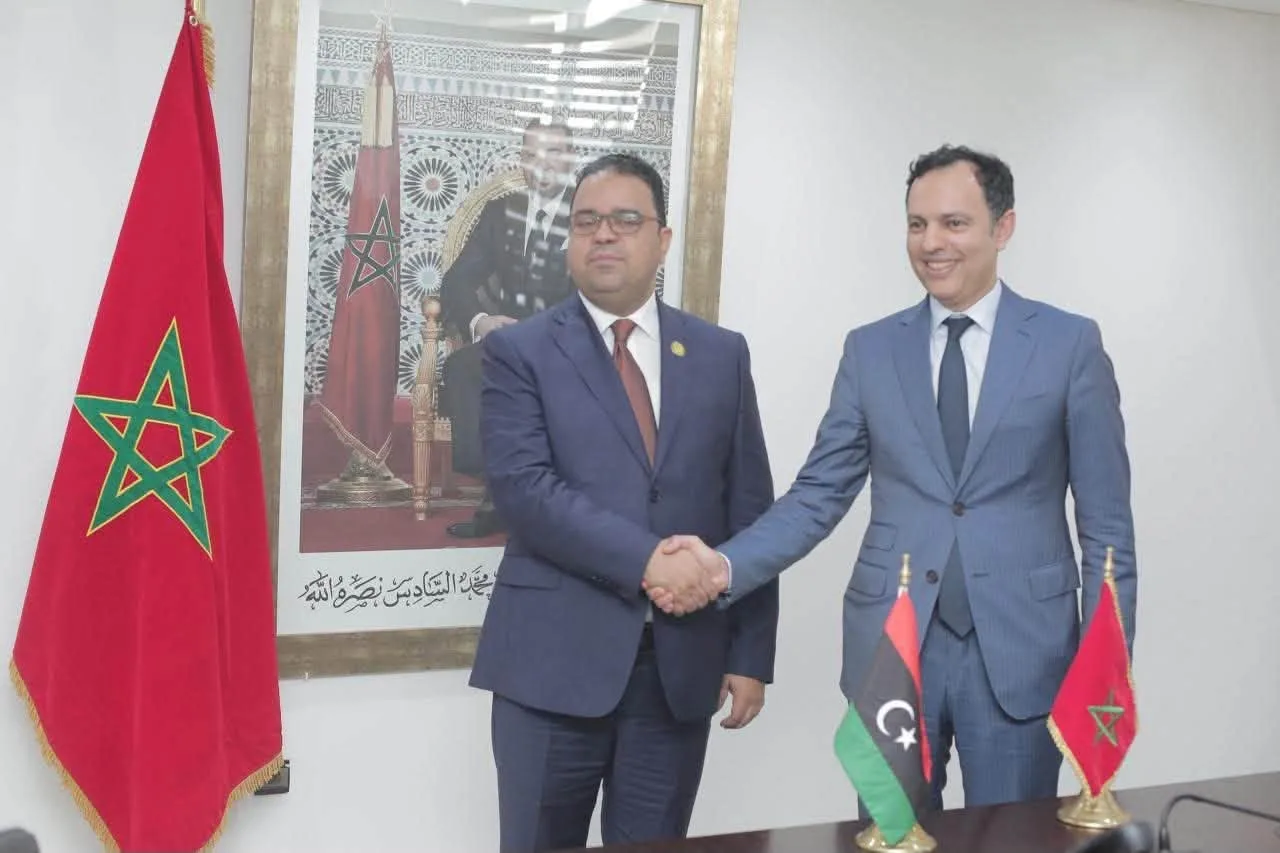
Morocco’s Minister of Economic Inclusion, Small Business, Employment and Skills, Younes Sekkouri, met in Rabat with Libya’s Minister of Labor and Rehabilitation, Ali Alabed Abuazum, for talks focused on advancing cooperation between the two countries.
The meeting reaffirmed the strong ties between Morocco and Libya and their shared commitment to expanding collaboration in employment, workforce mobility, vocational training, and human capital development.
According to Morocco’s Ministry of Economic Inclusion, the discussions explored “prospects for expanding the bilateral partnership through the exchange of expertise on employment policies, enhanced cooperation in vocational training, support for the mobility of skilled workers, and drawing on Morocco’s experience in developing employment and training services that meet the evolving needs of the labor market.”
The ministers also reviewed ways to modernize the bilateral cooperation framework, including preparations for a memorandum of understanding that would formalize future collaboration.
Their discussions covered the development of active employment policies, greater cooperation between public employment services, and the sharing of Morocco’s experience in vocational training. They also examined opportunities to strengthen collaboration in priority sectors aligned with the labor market needs of both countries.
In a statement following the meeting, the ministry said the talks “reflect the shared commitment of the two brotherly countries to building practical and sustainable cooperation based on the development of human capital and the exchange of expertise, with the aim of promoting development and expanding employment opportunities for the benefit of both peoples.”
The latest discussions come as Morocco continues to strengthen labor and vocational training partnerships with regional and international partners as part of broader efforts to develop a more competitive workforce and respond to changing labor market demands.