
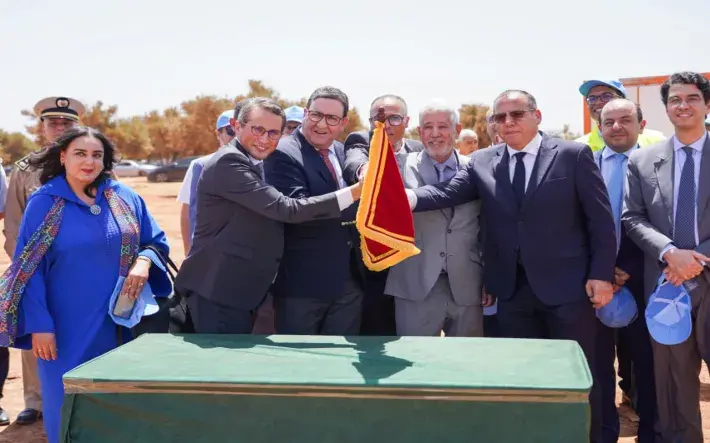
Agadir – Morocco’s Minister of Transport and Logistics, Abdessamad Kayouh, presided over the official launch of construction works for the Fez logistics zone on Wednesday in the province of Moulay Yacoub.
According to a statement from the Ministry of Transport and Logistics, the project represents a public investment of nearly MAD 275 million ($29.41million) and is part of Morocco’s national strategy to improve logistics competitiveness while supporting economic growth through modern infrastructure.
The project is being developed by the Moroccan Agency for Logistics Development (AMDL) in partnership with the Fez-Meknes Regional Council. Construction is expected to take 18 months, with serviced plots for logistics operators scheduled to become available in 2027.
Strategic logistics hub for eastern Morocco
The first phase of the project will cover 32 hectares and include modern warehouses, cold storage facilities, and transport and logistics services.
Located on the outskirts of Fez, the logistics platform is intended to serve the wider eastern region of Morocco by improving the organization of freight flows and strengthening distribution networks.
The ministry said the infrastructure will help reduce logistics costs for businesses, improve access to domestic and international markets, support transport and warehousing activities, and strengthen the economic attractiveness of the Fez-Meknes region.
The statement also noted that, with the launch of the Fez project, AMDL has surpassed 500 hectares of logistics zones currently under development nationwide, exceeding the target initially set for 2028.
Project to support investment and job creation
Speaking during the launch ceremony, Kayouh said “the Fez logistics zone constitutes a structuring project that goes beyond the simple framework of an infrastructure”, describing it as “a strategic lever intended to support the economic dynamic that the Fez-Meknes region is experiencing and to consolidate its position as a logistics hub on a national scale.”
Kayouh explained that concentrating logistics activities within a dedicated platform would improve the management of freight flows, reduce empty truck journeys, ease congestion in urban areas, and limit unnecessary handling operations.
The minister also emphasized the project’s expected contribution to employment, saying the logistics zone would create both direct and indirect jobs in transport, logistics platforms, maintenance, and related economic activities.
He added that the platform would help integrate more logistics professionals into the formal economy while improving working conditions through access to modern logistics services.
The minister further stressed the project’s environmental benefits, noting that better organization of freight transport and optimized transport routes would contribute to reducing carbon dioxide emissions and the environmental footprint of logistics activities.