 Join on WhatsApp
 Join on Telegram
Marrakech – Spain’s Supreme Court has confirmed that the country’s immigration law does not permit “devoluciones en caliente” – or “hot returns” – of migrants intercepted at sea while attempting to reach Ceuta and Melilla, the two Spanish enclaves in northern Morocco.
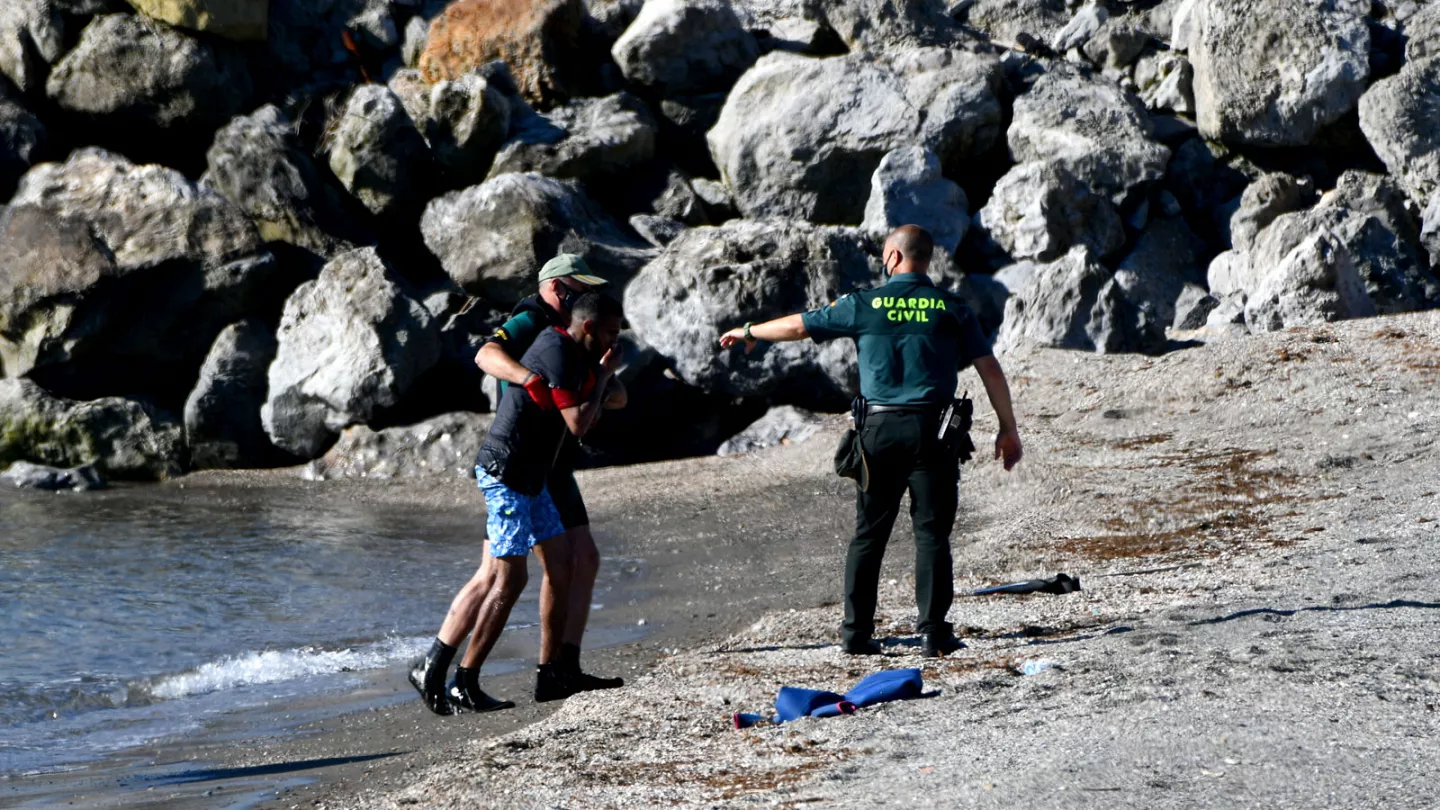
The term “devoluciones en caliente” refers to the practice of immediately returning migrants to the other side of the border without any formal legal process. No identification is carried out. No legal counsel is provided. No asylum claim is heard.
The person is simply handed back to Moroccan authorities on the spot. Spanish law formally calls this practice “rechazo en frontera,” meaning rejection at the border.
The ruling, issued Wednesday by the Fifth Section of the Administrative Litigation Chamber, establishes new legal doctrine on the issue. It draws a clear distinction between migrants who cross the border by climbing physical barriers like fences and those who attempt to enter by swimming from Moroccan shores.
The case centered on an Algerian national handed over to Moroccan authorities after being intercepted at sea on November 14, 2024. He had been trying to swim to Ceuta with two other people. In his appeal, he argued the return was carried out without any formal procedure. He was denied legal counsel and the right to seek international protection. He sought €6,000 in moral damages.
A court in Ceuta and later the Superior Court of Justice of Andalusia ruled in his favor, though both denied the compensation request. They concluded that a person entering by sea does not overcome a “border containment element.” This made the express rejection provision of the immigration law inapplicable. The Supreme Court upheld this reasoning and rejected the state attorney’s appeal.
Under the Tenth Additional Provision of Spain’s immigration law, migrants detected at the border of Ceuta or Melilla while attempting to overcome border containment elements can be immediately rejected. This provision was introduced in 2014 under former Prime Minister Mariano Rajoy through the Citizen Security Law.
The court ruled this regime does not apply to all irregular crossings. It covers only those who enter “by overcoming established border containment elements, such as fences.” The judges clarified that surveillance tools like drones, thermal cameras, and sensors fulfill “surveillance, detection, and alert” functions. They cannot be equated with physical barriers that prevent crossings.
The ruling did leave one opening. Since the law refers to “border containment elements” without specifying land-based structures, the court noted that if maritime barriers were installed, the provision could potentially apply at sea.
The decision has had immediate operational impact. Sources within Spain’s Civil Guard in Ceuta told Spanish media that agents stopped sea pushbacks following the ruling. They are awaiting instructions from the Interior Ministry in Madrid.
“Right now we cannot return them. The Supreme Court has clearly said so. Until there is a change to the law, we must grant them their rights and apply the law,” one official source said.
Sea pushbacks had been systematic in Ceuta for years. Agents returned intercepted adults directly to Morocco without formal proceedings. Only those who appeared to be minors were reportedly spared. Some officers now fear the ruling will increase swimming attempts during summer months. “The only deterrent is the Moroccan navy. We can only act as taxi drivers,” one agent said.
The three NGOs that supported the case – Coordinadora de Barrios, No Name Kitchen, and the Jesuit Migrant Service – welcomed the decision. They maintained that migrants reaching Spanish shores by swimming must be processed through formal deportation procedures with full legal guarantees, including access to a lawyer and the right to seek asylum.
Spain must now apply the standard deportation procedure under Article 58.3 of its immigration law to all migrants intercepted at sea near both enclaves.