
Agadir – Morocco’s management of stray dogs has long been the subject of international debate, with criticism evolving into a hostile anti-Moroccan narrative, as the country prepares to co-host the 2030 FIFA World Cup alongside Spain and Portugal.
Campaigns on social media and international media coverage have long focused on Morocco’s stray animal issue, accusing the country’s authorities of culling dogs and cats without providing evidence.
While the situation reflects challenges that Morocco acknowledges, some international outlets continue to portray the country as making no effort to address the issue. Some have also resorted to lobbying and other campaigns aimed at depriving Morocco of its right to co-host the 2030 FIFA World Cup.
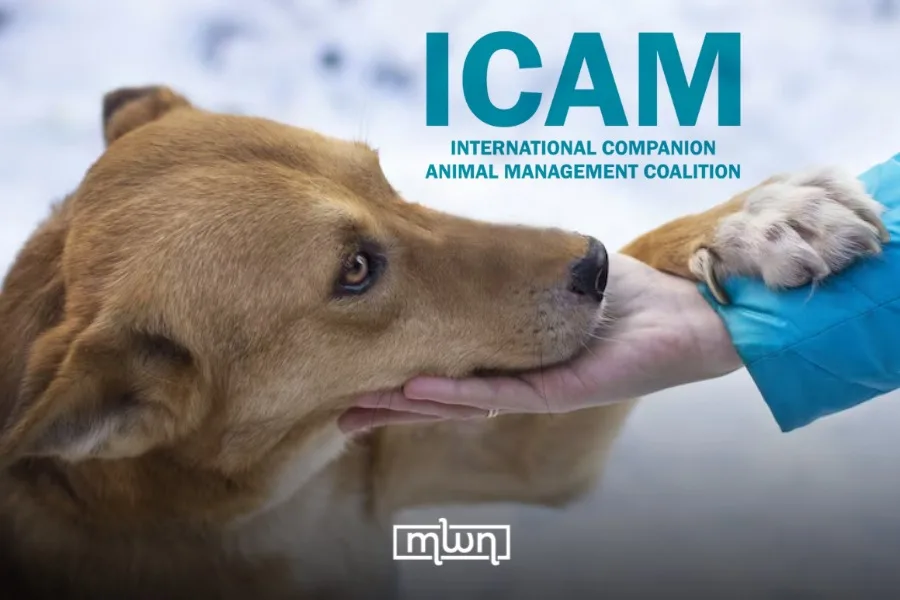
Morocco World News (MWN) recently interviewed the International Companion Animal Management Coalition’s (ICAM) head of communication and engagement, Catherine Thomson, who argued that Morocco’s official policy reflects internationally recognized humane standards to tackle the situation of strays.
She acknowledged, however, that some challenges persist, including ensuring measures to address stray animal cases are implemented consistently across the country.
ICAM, an international coalition that promotes evidence-based dog and cat population management, participated in the United Cities and Local Governments (UCLG) World Congress in Tangier, where it shared international experiences on how local governments can address free-roaming animal populations while safeguarding public health, community safety, and animal welfare.
The coalition led a panel bringing together representatives from Bogotá, Ramallah, Toronto, Bangkok, and Colombo to discuss sustainable and humane approaches to managing stray dog and cat populations.
Catherine stressed that “humane dog population management is a well-established international standard,” adding that “the real test for any country is whether it’s applied consistently and openly enough to be verified.”
A question of implementation
Asked to assess Morocco’s approach, Catherine distinguished between the country’s official policy and its implementation.
“The picture in Morocco is mixed,” she said, noting that Morocco adopted a Catch, Neuter, Vaccinate and Return (CNVR) strategy in 2019. While describing the policy as consistent with international best practices, Catherine argued that reports from journalists, animal welfare organizations, and a Moroccan court in Nador province indicate that implementation has not always reflected those commitments, emphasizing the importance of community engagement and education to better address the situation.
Rather than calling for new measures, Catherine maintained that Morocco already has the foundations for an effective stray animal management system.
“The building blocks are already well understood,” she said, explaining that CNVR programs should be supported by “community engagement and education, clear legislation, policy and regulation, and accessible veterinary services.”
According to Catherine, “the challenge is less about identifying effective approaches and more about implementing them consistently, sustainably and at scale, and allowing that progress to be seen.”
The organization’s head of communication also cited Tangier’s “Project Hayat” as an example of successful implementation, describing it as “a clear success” that demonstrates humane dog population management “can work in Morocco, given the will to run it.”
Public health and animal welfare
Catherine argued that protecting communities and improving animal welfare are complementary goals rather than competing priorities.
“Human health and safety and animal welfare go together. Look after one, and you look after the other,” she told MWN.
Catherine explained that sustained CNVR programs help stabilize dog populations, increase rabies vaccination coverage, reduce breeding, and lessen conflict between people and free-roaming animals over time.
She described Dog Population Management (DPM) as “the humane, sustainable and effective approach” that replaces what she called “discredited culling,” arguing that long-term municipal commitment is essential to achieving lasting results.
Municipalities at the center
Catherine emphasized that municipalities play a central role in successful stray animal management, regardless of whether they operate programs directly or work with veterinarians and animal welfare organizations.
“There’s no single model that fits everywhere, and the right one depends on local capacity,” she maintained. “What stays constant is the municipality’s role at the centre, whether leading the work directly or coordinating the others who do.”
Catherine added that successful programs require sustained political commitment, noting that “whichever route a city takes, one thing decides success: a long-term commitment from the municipality.”
Morocco’s experience shows that humane stray dog management is not a question of choosing between public safety and animal welfare, but of addressing both through effective implementation.
Morocco’s efforts to improve animal welfare
Morocco has always sought to adopt a more structured approach to dealing with stray animals.
The House of Representatives approved a draft law on Monday, 29 June, to address stray animals in urban and peri-urban areas, where concerns over public safety, health risks, and animal welfare continued to grow.
The proposed legislation seeks to establish organized systems for managing stray animals, including shelters, vaccination and sterilization programs, as well as the creation of a national database to monitor populations and interventions.
It also defines the responsibilities of local authorities and relevant institutions, intending to replace inconsistent practices with a coordinated framework.
Despite acknowledged efforts, Morocco continues to face campaigns that target the country, especially advanced by tabloids that often fail to present evidence to support their claims.
In February last year, the head of the Department of Health Preservation and Green Spaces at the General Directorate of Territorial Communities, Mohamed Roudani, denied accusations that the country is planning to kill millions of stray dogs ahead of the World Cup.
“There is no campaign to eradicate stray dogs,” stating that such claims have no basis.
Roudani said Moroccan local authorities are committed to “humane and sustainable” solutions in dealing with strays, noting that municipalities are working in line with international animal welfare standards and are implementing various measures to control the stray dog population ethically.
Morocco’s Ministry of Interior has continued to warn against any acts, calling on local authorities across the country to avoid using violence against stray animals.
In 2023, the ministry renewed its appeal through a circular that urged authorities to replace inhumane treatment with methods proven effective in tackling stray animals, including the TNVR approach.
In 2019, several institutions, including the ministries of interior and health, signed a partnership agreement to activate the TNVR mechanism.
Challenges facing stray animals persist, as well as efforts from local communities and authorities to ensure the cases of strays are handled humanely and in line with international standards. Several courts also ruled against perpetrators of violent behaviors targeting strays or other animals.
Earlier this month, a court in Temara, 12 kilometers south of Rabat, sentenced a Moroccan content creator to eight months in prison over a video he posted showing him skinning and cooking a dead dog.
In the end, Morocco is often cast in a harsh and reductive light on the issue of stray animals’ welfare, yet such portrayals miss a more complex reality. The North African country has taken tangible steps to adopt more humane and holistic approaches, with a clear focus on sterilization, vaccination, and public awareness rather than punitive practices.
Challenges remain, but these efforts mirror a real shift in policy and public mindset. They point to a growing commitment to balance public health with ethical responsibility, offering a more grounded and forward-looking picture than the one often presented.