
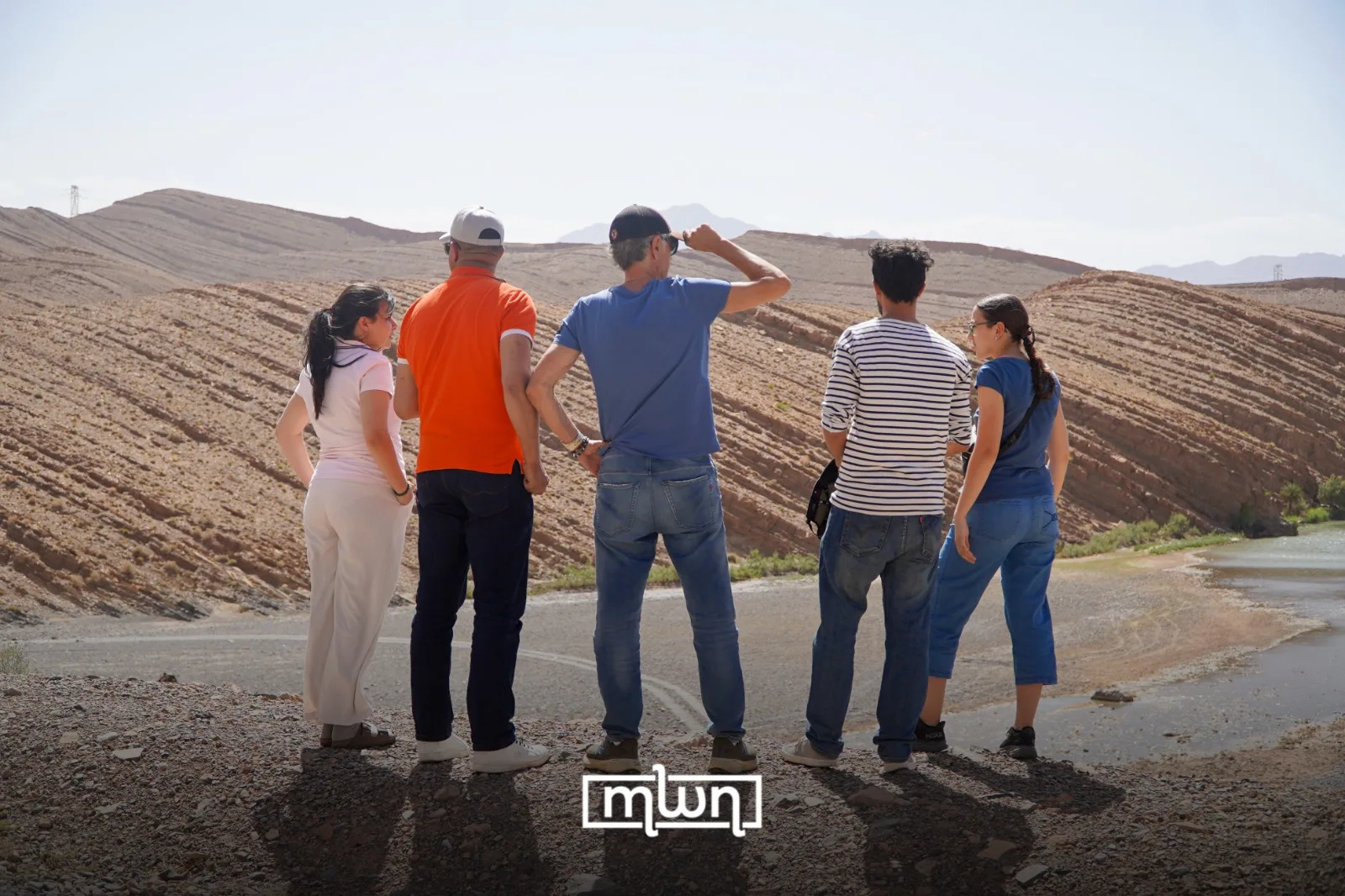
Errachidia — The ClimateLaunchpad Morocco team left Meknes on Monday, crossing the Middle Atlas Mountains toward Errachidia for the second stop of its 2026 Regional Bootcamp Tour.
The trip followed the completion of a two-day bootcamp in Meknes, where entrepreneurs received training in finance, investment, climate impact, and business pitching.
Errachidia will host the next bootcamp on July 14 and 15 at the Regional Investment Center of Drâa-Tafilalet. The regional tour will later continue to Agadir for its final stop.
The tour combines ClimateLaunchpad Morocco with Women in Cleantech, an initiative co-created by Bridgizz and the Deutsche Gesellschaft für Internationale Zusammenarbeit (German Agency for International Cooperation, GIZ). Women in Cleantech receives support through GIZ Morocco’s WoMENA project, which promotes women’s economic and political participation across the Middle East and North Africa.
Before setting out for Errachidia, the ClimateLaunchpad Morocco team and the Morocco World News (MWN) team returned to the Faculty of Letters and Human Sciences at Moulay Ismail University in Meknes to thank Dean Mohammed Larouz and bid him farewell. Larouz, the brother of ClimateLaunchpad Morocco lead Ahmed Larouz, is a prominent professor and researcher specializing in applied linguistics. He also directs doctoral and research activities in language development at the university and on the national level.

As temperatures rose along the road toward southeastern Morocco, the drive became an extension of the conversations that had shaped the Meknes sessions.
A moving conversation about environmental resilience
Dutch cleantech trainer Ron Bloemers turned parts of the long journey into an informal discussion about humanity’s ability to respond to environmental and technological risks.
Bloemers is the founder and managing partner of Amsterdam-based cleantech accelerator START-U-UP. Before launching the accelerator, he spent 12 years working as a renewable energy and climate change expert at McKinsey & Company. He has accumulated more than 20 years of experience in cleantech, entrepreneurship, and innovation, and has trained ClimateLaunchpad participants since 2014.
Bloemers discussed climate policy alongside broader resilience scenarios. These included severe solar activity, disruptions to infrastructure, and other low-probability events that could test how societies prepare and cooperate.
The conversation also returned to examples of scientific cooperation that produced measurable environmental progress.
One prominent example was the international response to ozone depletion. The Montreal Protocol led countries to phase out most ozone-depleting substances, placing the ozone layer on a gradual path toward recovery.
The example offered a reminder that environmental decline is not always irreversible. Coordinated research, policy, financing, and international cooperation can produce results when governments and institutions act on scientific evidence.
The journey also included lighter exchanges and friendly football banter. Team members teased the Dutch trainer about past encounters between Morocco and the Netherlands, repeatedly challenging him to concede that Morocco had produced the stronger performance. The exchange brought humor to a trip otherwise filled with detailed discussions about climate risks, scientific progress, and entrepreneurship.
Forest stops and changing landscapes
The team made its first stop near Azrou, where cedar forests form one of the Middle Atlas region’s most recognizable landscapes.
The area is also known for its Barbary macaques, an endangered primate found in Morocco and Algeria. The animals remain closely associated with the forests around Azrou and Ifrane National Park.
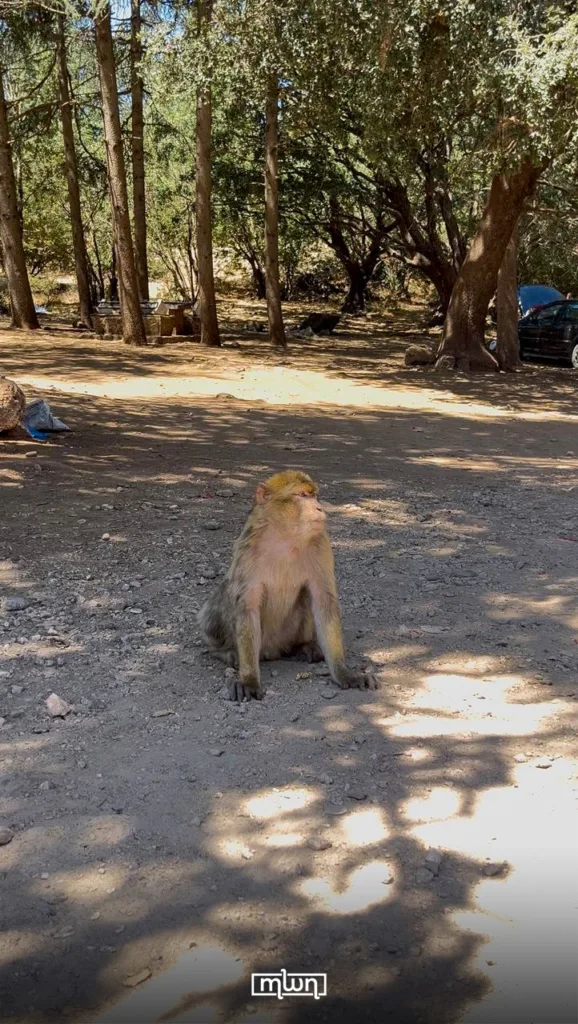
The stop gave the group time to observe the forest and briefly exchange the road’s heat for the shade of its trees.
The journey then continued toward Midelt, where the team paused for lunch before returning to the road.
As the vehicle moved farther southeast, green mountain scenery gradually gave way to increasingly dry valleys, exposed rock formations, and wider horizons.
A final stop a few kilometers outside Errachidia allowed the travelers to take in the changing landscape before completing the journey and checking into their hotel.
Reaching entrepreneurs where they live
Lamyae Afqir, coordinator of ClimateLaunchpad Morocco, said the regional tour aims to reach founders whose ideas respond to the specific needs of their communities.
“If you go from region to region, you have different problems,” Afqir told Morocco World News (MWN). “We want to reach other regions, other people, other ideas, other problems, and other startups.”
She said the initiative is intentionally moving beyond Casablanca and Rabat, which traditionally attract a large share of Morocco’s entrepreneurship programs.
“We want to reach the regions that are mainly marginalized,” she added. “The tour will be successful if participants learn from the bootcamps and get the most out of them.”
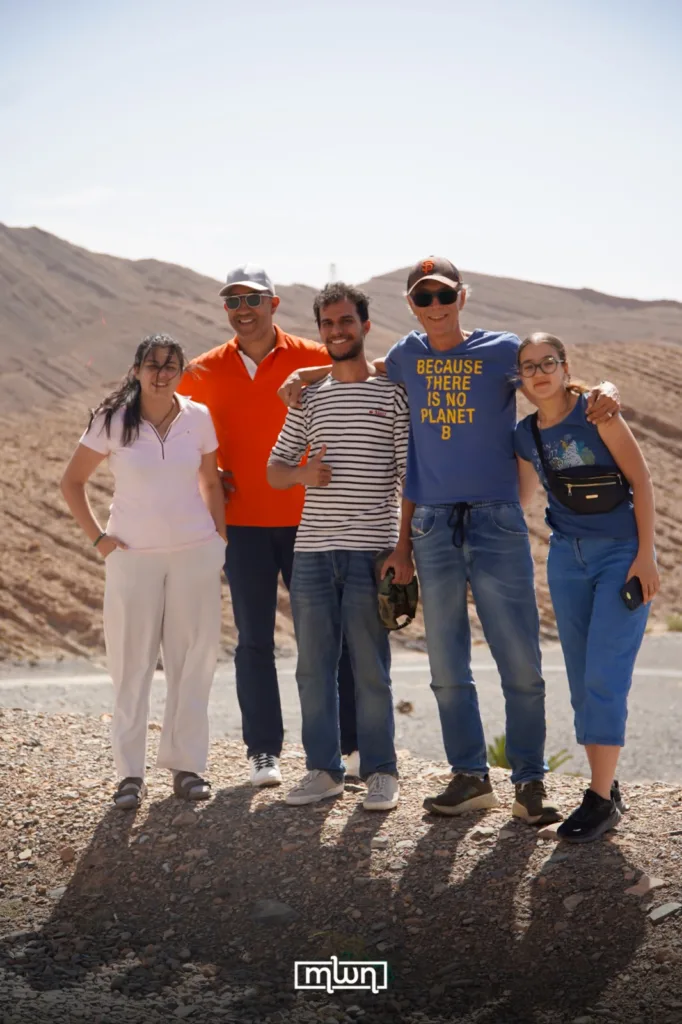
Ahmed Larouz, who leads ClimateLaunchpad Morocco, said the long journey reflected the purpose behind the regional approach.
“This is the reason why we are doing it,” Larouz told MWN. “We are trying to get to the unconnected cities and regions in Morocco to find the right startups and the new generation that will solve global problems.”
He said the Errachidia participants will develop their projects before competing for places in the national finals.
After nearly a full day on the road, the team reached Errachidia to rest and prepare for the opening sessions. The journey offered more than a transition between two cities.
Even the team’s driver, originally from Sefrou, became part of the conversation. By the end of the journey, he was asking how he could develop a cleantech project linked to tourism.
The exchange captured the wider purpose of the regional tour. Climate innovation is not limited to established founders or major business centers. Ideas can emerge from students, workers, local entrepreneurs, and people who have not yet had access to the right support.
The challenge is often not a lack of talent, but limited access to training, networks, financing, and mentorship. Bringing the program directly to overlooked regions helps turn local ideas into viable businesses.
Meknes marked the first step, with Errachidia next.