
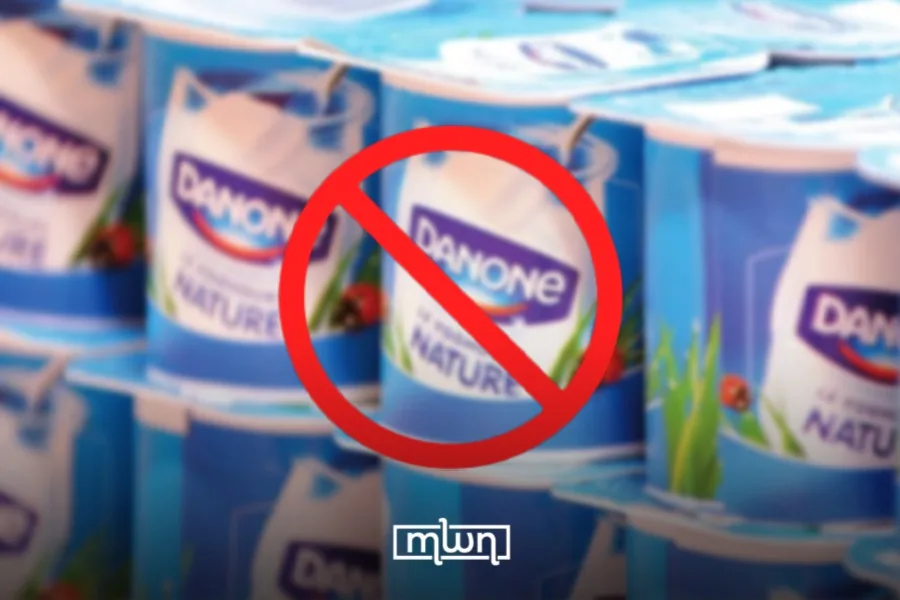
Rabat – Calls to boycott Centrale Danone products have resurfaced in Morocco after the dairy company introduced new price increases on several of its products, rekindling memories of the high-profile consumer boycott that shook the company in 2018.
The new prices began taking effect on July 7, with grocery stores and retail outlets across the country receiving updated price lists from the company. According to the lists circulating among shopkeepers, the increases affect a range of widely consumed products, including Dan’Up, Actimel, Activia, Jervais, Danone Max, and Jamila. Depending on the product and package size, prices have risen by between MAD 0.50 and MAD 1.
The increases come at a time when many Moroccan households continue to grapple with rising food prices and broader cost-of-living pressures, prompting widespread criticism on social media. Within hours of the new prices taking effect, users began sharing calls for a fresh boycott under hashtags such as #خليه_يريب (“Let It Expire”), reviving memories of the 2018 consumer campaign that targeted Centrale Danone alongside other major brands over high prices.
That boycott proved costly for the company. Centrale Danone reported losses estimated at around €178 million in revenue, with the financial fallout extending well into 2019 as sales remained under pressure. The company introduced several measures, including selling one-liter milk cartons at cost price and revising parts of its commercial strategy to rebuild consumer trust, before eventually delisting from the Casablanca Stock Exchange in 2022.
Revisiting 2018 boycott
The renewed backlash has inevitably raised questions about whether the company fully absorbed the lessons of that episode. Many consumers argue that the return of price increases despite the lasting impact of the 2018 boycott suggests that the previous crisis did not fundamentally alter the company’s pricing approach. This fueled renewed calls to use consumer purchasing power as a tool to pressure the dairy giant once again.
The renewed backlash is unfolding amid criticism over the company’s silence regarding the latest price increases. As of now, Centrale Danone has not publicly explained the reasons behind the new pricing policy or commented on the growing boycott campaign.
Consumer rights advocates argue that the lack of communication has only fueled public frustration.
Supporters of the boycott argue that refusing to purchase products remains an effective form of economic protest, as it allows consumers to express dissatisfaction with policies they believe undermine their purchasing power. For many, the success of the 2018 campaign is evidence that coordinated consumer action can influence corporate decision-making.
The timing of the latest increases has also generated discussion online. Some social media users suggested that the price changes coincided with heightened public attention on Morocco’s participation in the 2026 FIFA World Cup, arguing that the decision passed with less scrutiny as much of the country’s focus remained on football. Others, however, viewed the overlap as purely coincidental.
The issue has gained additional visibility on social media after grocery store owners have posted videos displaying the new price lists and supplier invoices in an effort to reassure customers that the increases originated with the manufacturer rather than retailers.
A grocery store owner in Meknes said Central Danone products are beginning to lose customers, pointing to lower sales of several Central Danone products alongside stronger demand for similar items from a competing dairy brand.
In several widely shared clips, shopkeepers expressed solidarity with consumers, saying that they too expect the higher prices to hurt sales. Some openly endorsed the boycott, arguing that companies should bear responsibility for pricing decisions that place additional pressure on Moroccan households.