




 Join on WhatsApp
 Join on Telegram
Marrakech – There is a particular kind of intellectual courage in refusing the easy verdict. Mouloud Ziani, whose new volume “Traditional Cannabis Land: From the Panic of the Past to the Uncertainty of the Present Carrying Legalization” (2026) landed this month, declines both of the comfortable positions on offer.
Adopted in 2021, Law 13-21 lifted cannabis out of blanket criminality and placed it within a licensed regime confined to medical, pharmaceutical, cosmetic, and industrial uses, channeling the Rif’s growers into regulated cooperatives while leaving recreational use untouched, exactly where the law found it: outside the legal framework.
It is the pivot around which nearly every Moroccan argument about the plant now turns. Ziani will neither indict it as cosmetic nor canonize it as deliverance. What he offers instead is something rarer in this debate: a diagnosis.
In an exclusive conversation with Morocco World News (MWN), the Moroccan researcher argues that the 2021 statute opened a door Morocco has yet to walk through – and that the verdict on legalization will be written in the Rif’s roads, markets, and mountain economies, rather than in its statute books.
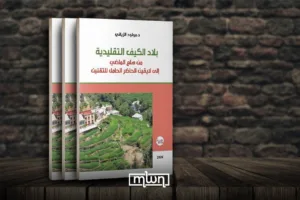
The book’s architecture is deceptively simple – two chapters, one excavating the north’s long entanglement with the plant, the other auditing what the new regulatory order actually promises the people who grow it. Its ambition is not.
Ziani’s wager is that kif cannot be parsed through the narrow apertures of agronomy or criminal law, but only within the territorial and developmental matrix that produced it: isolation, infrastructural neglect, and the chronic failure of every “alternative crop” scheme ever helicoptered into the Rif.
That failure is the hinge of his historical argument. Cannabis, in his reading, did not merely persist in the mountains; it sedimented there – organizing social relations, financing daily subsistence, underwriting local forms of solidarity, becoming load-bearing structure rather than opportunistic sideline. To criminalize it was therefore never to regulate a commodity; it was to criminalize a social order.
A war that outgrew its target
Ziani is unsparing about what followed. The “war on cultivation,” he contends, “was not merely a security measure against illicit cultivation and trafficking. Over time, it became a policy with profound effects on small farmers and their communities.”
For decades, he observes, “the state focused heavily on the security dimension while neglecting the human rights, social, and territorial aspects.” The formulation is measured, but its implication is not: an entire region was administered through the vocabulary of pursuit while the vocabulary of citizenship went unspoken.
Against that inheritance, he grants Law 13-21 its due – “a qualitative shift in public policy,” in his phrase – and then immediately relocates the goalposts. “The success of this transformation cannot be measured only by issuing the law or granting licenses,” he cautions, “but by its ability to achieve fair territorial development in cannabis regions.” Permits are inputs. Justice is the output. Conflating the two is the reform’s standing temptation.
What the ledger shows, and what it hides
The numbers vindicate his skepticism. The National Agency for the Regulation of Activities Related to Cannabis (ANRAC), the body Law 13-21 created in 2021 to license and police the legal sector, reports 5,765 operational authorizations as of this year – 5,492 of them for cultivation, benefiting 5,318 farmers – after granting 4,147 fresh permits in 2025 alone.
On its own terms, the ledger is impressive and creditable, and ANRAC has every reason to present it as such. Director General Mohamed El Guerrouj tallies 19,576 quintals of dried cannabis harvested in 2025, up from 18,810 the previous year – a “qualitative leap,” in his reading – across roughly 3,141 hectares, the overwhelming majority of it planted with Beldia, the Rif’s own landrace.
Five processing plants came online with a combined capacity of 560 tons, eleven more are rising, and 141 cannabis-derived products now hold registration with the medicines agency. Moroccan output has surfaced in more than 600 licensed retail points and in at least seven foreign markets, from France and Switzerland to Australia and South Africa.
The state has meanwhile policed its own creation with conspicuous rigor: 7,526 inspections last year, 111 licenses withdrawn, 1,308 agricultural permits stripped from 1,217 farmers. That last figure is the tell. A regime capable of expelling 1,217 farmers in a single season while enrolling barely 5,300 is a regime whose front door is narrower than its back one.
And the whole edifice collapses against the roughly 60,000 families that Chakib El Khayari, coordinator of the National Collective for Cannabis Legalization, counts as dependent on the crop: fewer than one grower in ten has crossed into the legal channel. The remainder stay moored to an illicit economy that outbids the licensed one and answers to no one.
Here, Ziani names the paradox at the book’s core: cannabis regions “contribute significantly to financial returns but benefit little from them.” Value is extracted upward and outward; risk is deposited locally. “If implemented within a strict and controlled framework,” he suggests, recreational regulation could invert that arithmetic by “opening a legal market, reducing the dominance of intermediaries and illicit networks.”
He is one of the signatories of the appeal for a national debate on recreational use, and he is careful about what that signature does and does not mean. “The call for a public debate on recreational use is not a call for immediate legalization or adopting a ready-made model,” he clarifies, “but rather for opening a scientific and institutional discussion to evaluate all options in light of international developments and national interests.”
Test, measure, then legislate
Which is precisely why the Swiss precedent interests him – not as template, but as method.
In an earlier MWN interview, Paul-Lukas Good, the Zurich attorney who heads Swiss Cannabis Research, the largest study of its kind in the country, run in cooperation with the University of Zurich and ETH Zurich, described Morocco’s decision to legalize cultivation first as “a wise foundation.” His Zurich pilot is cleared for up to 7,500 participants, with a second trial of roughly 5,000 already running in St. Gallen.
Ziani reads that architecture for its procedure rather than its policy. The Swiss model, he reflects, “does not start from a preconceived ideological position, but from a clear principle: test, measure, then legislate.” Good himself put it more bluntly: “Test, measure, then legislate isn’t Swiss. It’s just sound policy.”
Ziani’s sharpest provocation concerns inertia. “The greatest risk today is ignoring the rapid global transformations in the cannabis sector,” he warns – indoor cultivation, synthetic cannabinoids, a world market rearranging itself while Morocco’s comparative advantage quietly depreciates. Standing still is a decision with consequences, merely one nobody has to defend.
His prescription is territorial rather than botanical. The state converts “present uncertainty” into opportunity, he argues, “by shifting from merely regulating the plant to developing the entire territory of traditional cannabis land” – regulation braided into infrastructure, resource valorization, economic diversification, mountain tourism, and the social economy.
The plant, in other words, was never the problem. It was the alibi.


