
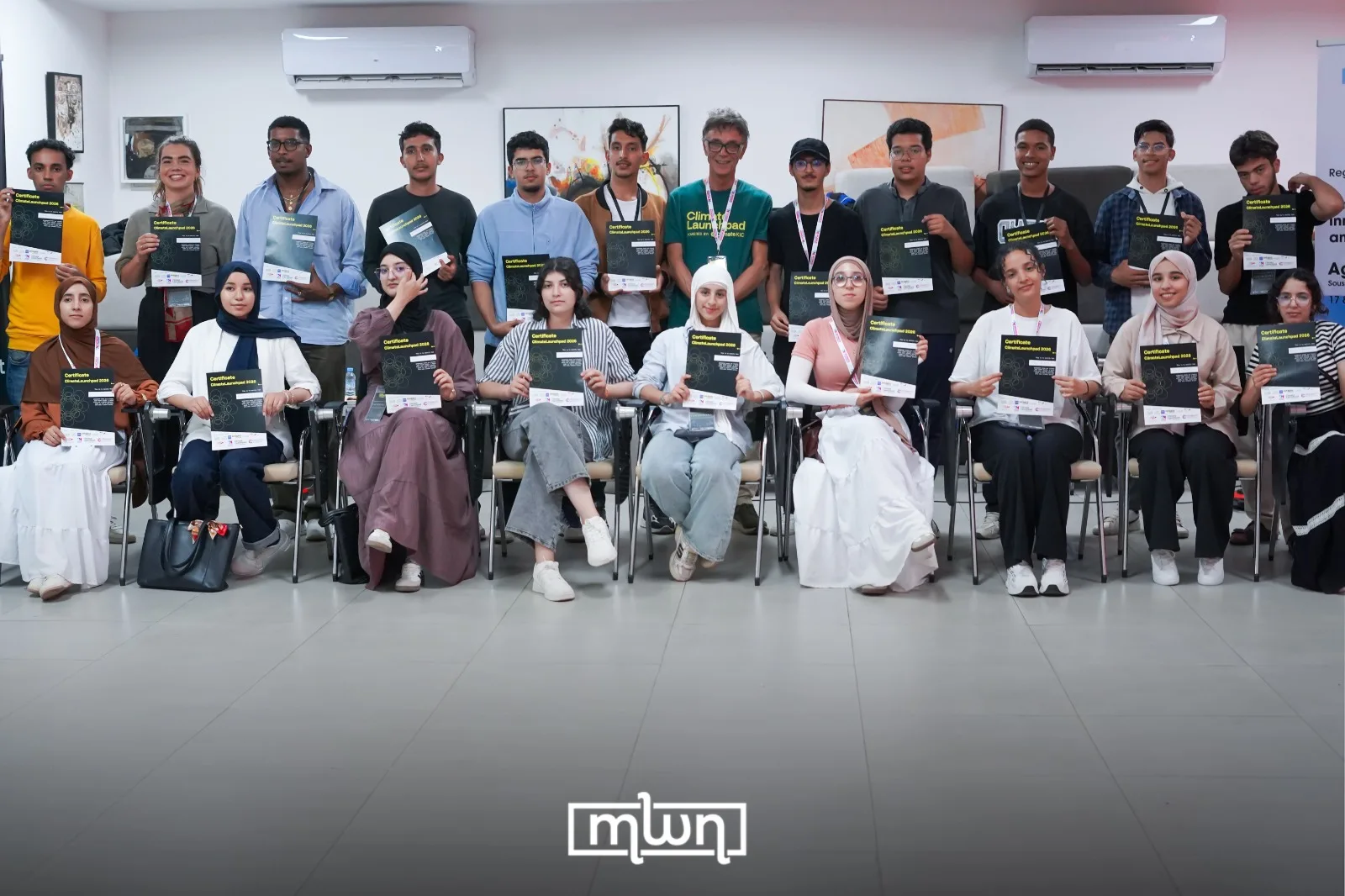
Agadir — ClimateLaunchpad Morocco concluded its Regional Bootcamp Tour in Agadir, closing a week of intensive cleantech training across Meknes, Errachidia, and Souss-Massa.
The final sessions took place at Cité de l’Innovation Souss-Massa, where the Agadir cohort completed its training before receiving participation certificates.
Dutch cleantech trainer Ron Bloemers led the closing activities, continuing his focus on business models, customer discovery, climate impact, public speaking, and investor-ready pitches.

The participants used the final day to refine their presentations, question their assumptions, and clarify the environmental and commercial value of their projects.
A demanding tour reaches its final stop
Ahmed Larouz, founder of Women in Cleantech and head of ClimateLaunchpad Morocco, oversaw the wider tour, including its regional coordination, participant support, travel schedule, partnerships, and logistics.
He worked alongside ClimateLaunchpad Morocco Coordinator Lamyae Afqir, Women in Cleantech Project Coordinator Reda Boujliliba, and Communications Manager Rime Hdioud.
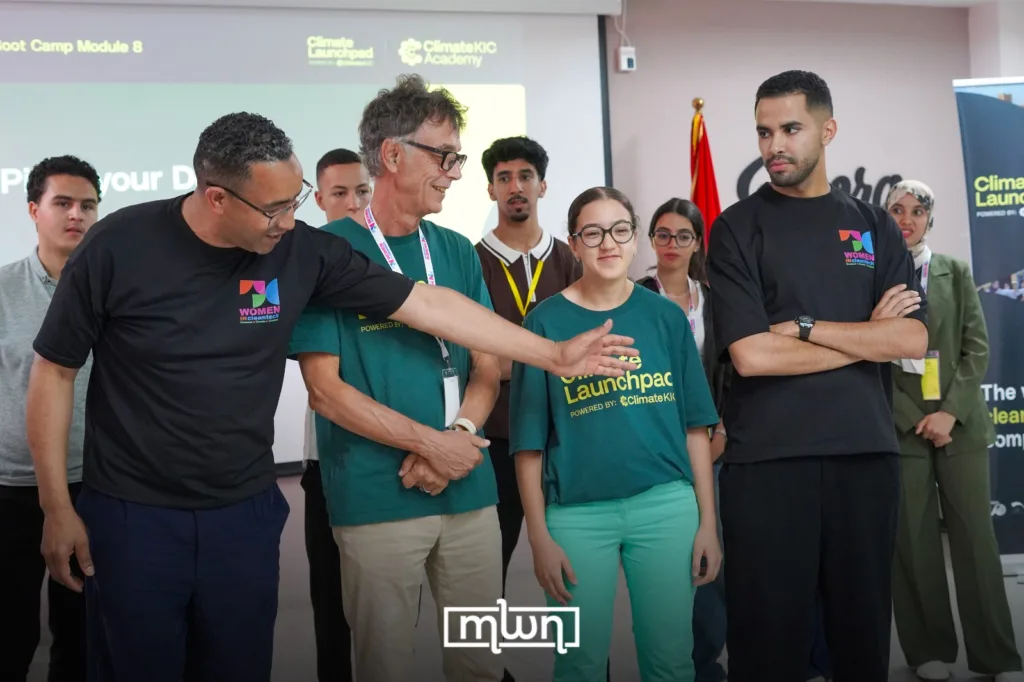
The team delivered three two-day physical bootcamps while also supporting an online bootcamp running in parallel.
Bloemers described their work as “nothing less than exceptional,” noting the difficulty of organizing several training programs alongside long journeys between the regions.
“This tour was organized by three students. I repeat: by three students,” Bloemers told Morocco World News (MWN), referring to Afqir, Boujliliba, and Hdioud.
He said their ability to manage venues, schedules, participants, equipment, travel, and communication reflected what he called the team’s “peak performance.”
Regional talent meets global experience
Bloemers said the tour introduced him to founders whose projects were strongly connected to the environmental pressures affecting their communities.
Some participants traveled for hours to attend. One founder crossed approximately 25 hours from Laayoune to reach the Errachidia bootcamp.
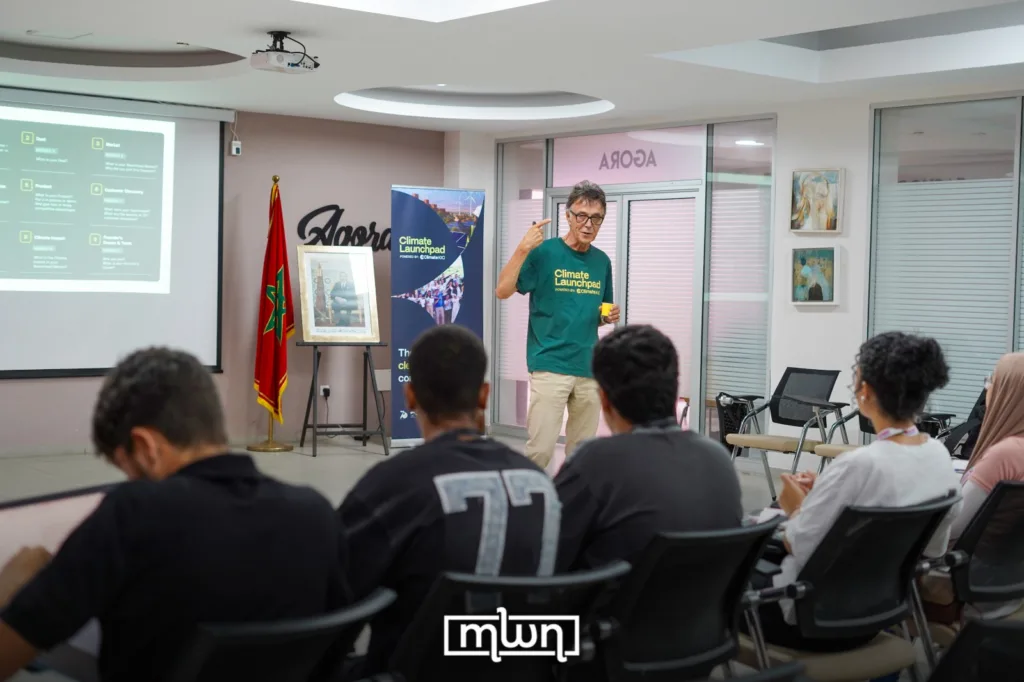
“I have never seen so many driven startups and so much passion,” Bloemers told MWN.
He argued that the entrepreneurs’ commitment created an obligation for trainers and organizers to provide their strongest support.
Larouz said the three regional stops confirmed that technical talent already exists beyond Morocco’s largest startup centers.
“The talent was always there, but what was missing was the room, the training, and the chance,” he told MWN.
He encouraged young founders to strengthen not only their products but also their communication, leadership, negotiation, and pitching abilities.
Larouz also directed a message toward women developing climate-focused ideas.
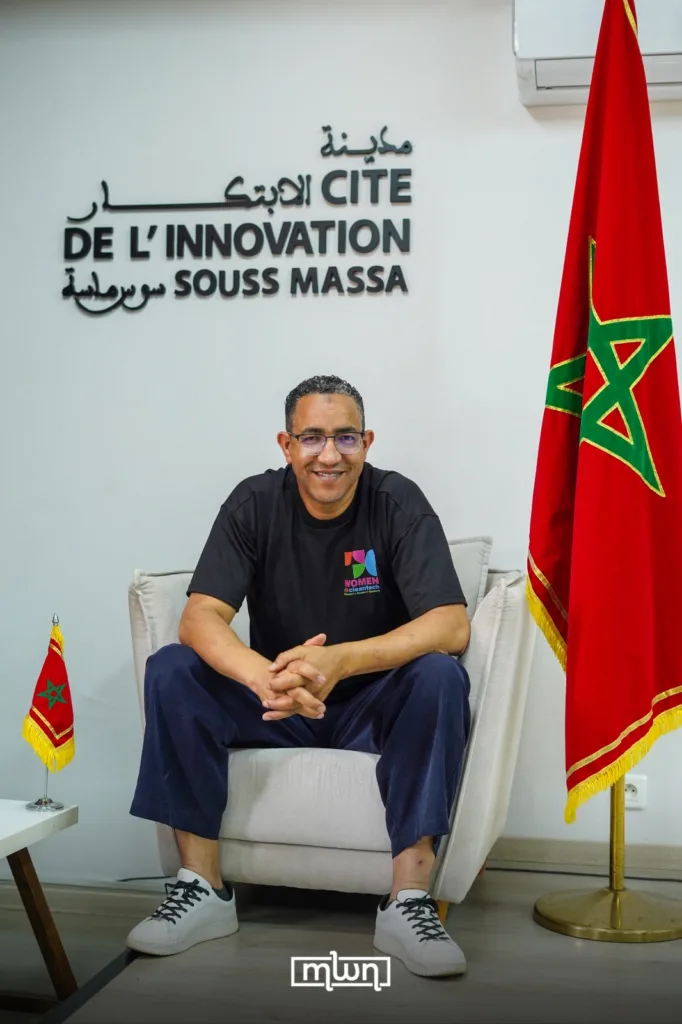
“Your ideas deserve space. Your ideas deserve visibility. Your ideas deserve serious support,” he said.
Water emerges as a defining theme
Water scarcity became one of the clearest themes connecting the three bootcamp cohorts.
In Meknes, Oussama Baazzi presented SQAIA System, an artificial intelligence-powered irrigation platform designed for off-grid farms.
The system aims to reduce water waste while limiting emissions associated with conventional butane-powered irrigation pumps. Baazzi also plans to develop a dedicated data bank to strengthen irrigation decisions.
In Agadir, Yazid Siteli and Shannyth Hoogeveen presented SITELI CW, which combines water-treatment installations with software for industries, agricultural businesses, hotels, golf resorts, and real estate projects.
“We want to create a world where water circularity becomes the standard and every drop receives a second life,” Siteli told MWN.
Bloemers said such projects show why climate entrepreneurship in Morocco must address local realities, particularly water access, agriculture, and resilience.
Partners and volunteers receive recognition
Boujliliba said the tour was designed to reverse the traditional model in which entrepreneurs must travel to established economic centers to access training.
“Instead of asking entrepreneurs to travel to us, we decided to take the bootcamp directly to them,” he told MWN.
Women in Cleantech is implemented by Bridgizz with support from the German Agency for International Cooperation (GIZ) through the WoMENA project.
The organizers also thanked the universities, regional institutions, host venues, mentors, volunteers, and media partners that contributed to the tour.
The host institutions included the Faculty of Letters and Human Sciences at Moulay Ismail University in Meknes, the Regional Investment Center (CRI) of Drâa-Tafilalet in Errachidia, and Cité de l’Innovation Souss-Massa in Agadir.
Boujliliba said much of the organizational work happened behind the scenes, making the successful completion of the tour particularly rewarding.
Certificates and a final celebration
The Agadir participants received certificates during the closing ceremony before gathering with trainers and organizers for group photographs.
The photographs marked the conclusion of the cohort’s training and gave founders professional material to share through LinkedIn and other networking platforms.
The national team later celebrated with the Agadir volunteers, recognizing the time and effort they contributed to reception, coordination, technical support, scheduling, and participant assistance.
Bloemers ended his reflections by thanking Morocco and expressing his willingness to return.
“Shukran, Morocco,” he said. “If you want me, I will be back.”