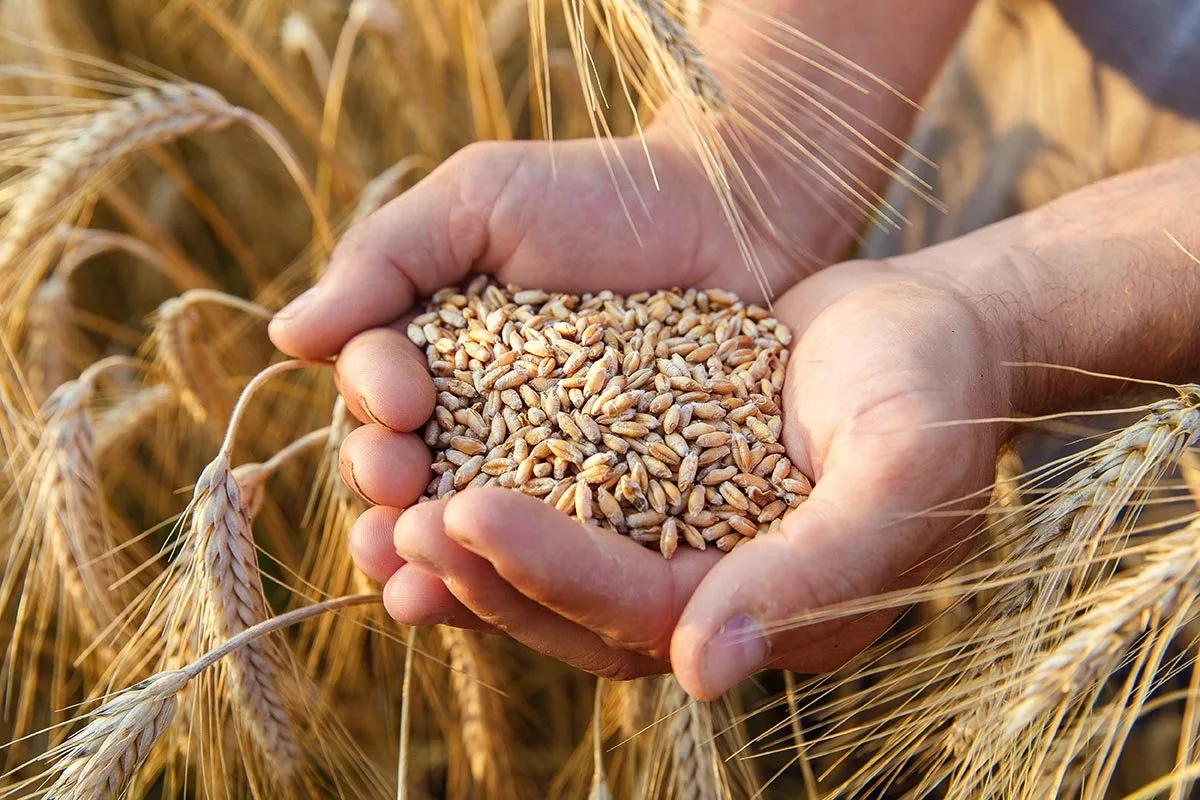
Marrakech – Rainy seasons alone no longer guarantee Morocco’s food security. As the climate shifts, scientists face growing pressure to design durable solutions that help farmers adapt. Out of that work, three new national durum wheat varieties have emerged.
They are the product of more than seven years of research by the National Institute of Agronomic Research (INRA) and the International Center for Agricultural Research in the Dry Areas (ICARDA). Both work under the BOLD project, short for Biodiversity for Opportunities, Livelihoods and Development.
The goal is a new generation of Moroccan durum wheat that tolerates drought, heat, and extreme conditions while holding its yield and meeting market demand.
BOLD targets varieties that resist water and thermal stress, adapt to climate swings, and keep production stable through hard seasons. According to data ICARDA provided to SNRTnews, “Jawahir” leads the group. It carries dark grains, delivers strong yields in arid zones, and reaches early maturity suited to unstable campaigns.
The second variety, “Nacht,” is marked by its black awns and has performed in both irrigated zones and oases, a sign of its flexibility. “Sabil,” the third, draws interest for its productivity, drought resistance, grain quality, and heavy straw output, which feeds livestock.
The research phase is now closed, and distribution has begun. “Jawahir” and “Nacht” are being multiplied by the National Seed Marketing Company (SOGAP) and will reach farmers in 2027 and 2028. “Sabil” was registered this year in the National Catalogue of Species and Varieties by INRA.
Read also: Morocco to Build 8-Million-Quintal Wheat Reserve to Secure Food Supply
Farmers interviewed by the Moroccan publication described the new varieties as the future of durum wheat in the country, noting that the seeds give them the confidence to keep working despite the drought. Their performance in local fields, several growers noted, had impressed the wider farming community.
Project leaders frame the effort as a new model of agricultural innovation, built on partnership between researchers and farmers. That partnership matters because a variety only counts once farmers adopt it. A study cited by the outlet found that a lack of demonstration plots and weak farmer involvement in selection can cut adoption rates by 50%.
Still, resistance persists. Some farmers in the country’s arid zones acknowledged that the climate poses real challenges, yet many prefer to keep traditional varieties even when those are less suited to the new conditions.
To close that gap, BOLD tests its varieties on working farms, exposed to heat, drought, and local soils. Filippo Bassi, who leads the project and breeds wheat at ICARDA, evaluates new varieties “directly in real conditions” rather than controlled ones.
That method, he added, folds in farmer criteria such as grain color, straw length, and commercial quality. The aim is to rebuild trust between research and the farming world.
Morocco’s seed work also reaches abroad. On June 17, the Svalbard Global Seed Vault in Norway received 1,172 Moroccan-held samples through ICARDA, packed in four boxes across 30 species, including 302 chickpea and 268 lentil samples.
These are local landraces bred over generations for harsh climates. The system has proven itself before: when war shut ICARDA’s genebank near Aleppo in Syria, samples withdrawn in 2015 and 2017 were replanted in Morocco and Lebanon.
The effort carries a diplomatic side as well. Last week in Rabat, Agriculture Minister Ahmed El Bouari met his French counterpart, Annie Genevard, to widen cooperation in training, research, and innovation, including a new framework agreement between the French Agricultural Research Centre for International Development (CIRAD) and IAV Hassan II for 2026-2031.