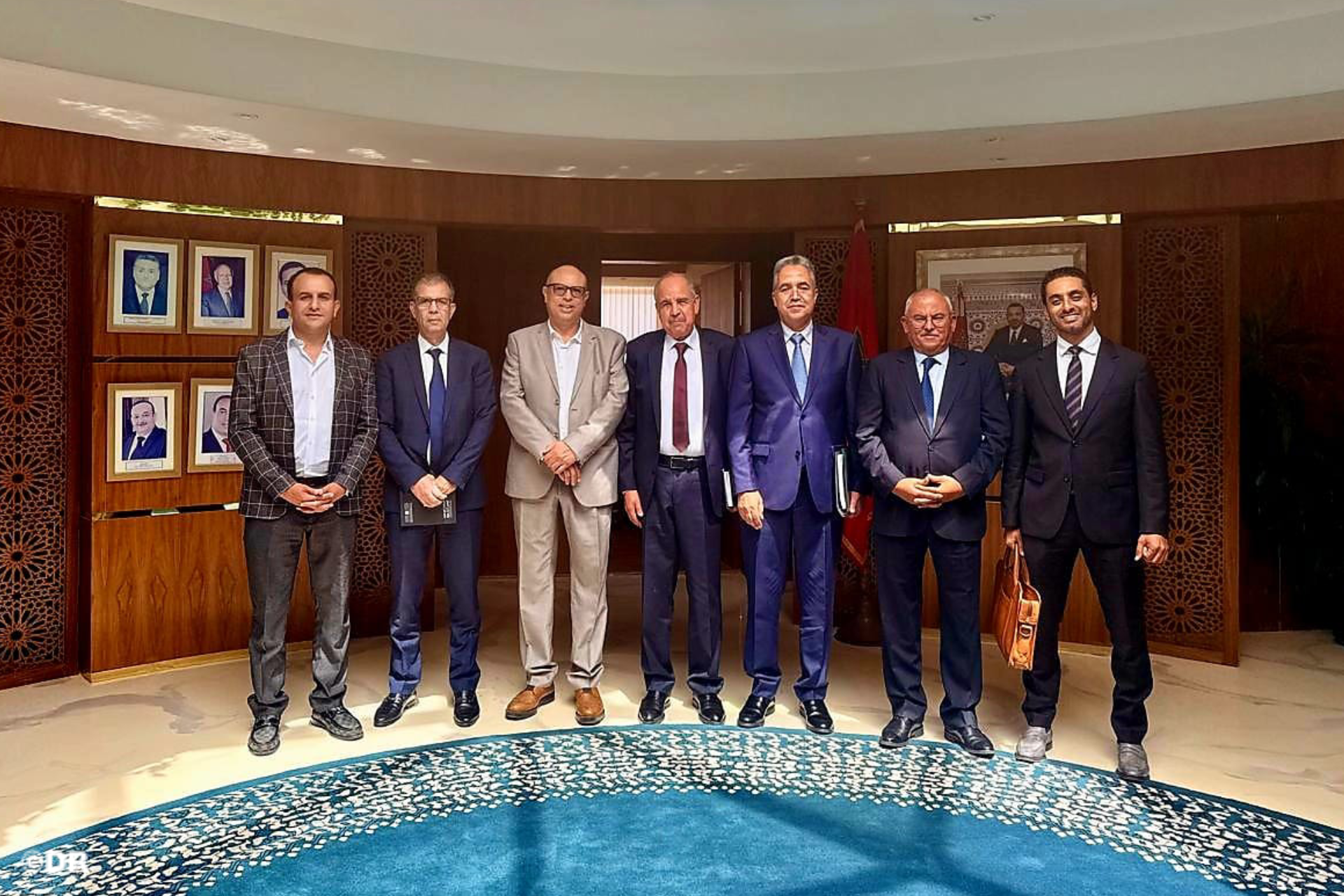
Rabat – Morocco officially installed the members of a temporary committee that will assume the responsibilities of the National Press Council (CNP) until a new council is elected, the Ministry of Youth, Culture, and Communication announced on Friday.
The committee was created under Article 96 of Law No. 09.26 on the reorganization of the National Press Council, which recently entered into force. It will temporarily carry out the council’s duties while preparing and overseeing the election of representatives of professional journalists and the appointment of newspaper publishers’ representatives before announcing the final results.
Abdelaziz Boujdaïni, Secretary-General of the Communication Department, oversaw the installation ceremony.
The committee is chaired by Hassan Jaber, a judge representing the Supreme Council of the Judiciary. Other members include Abdelghani Bardi, representing the National Human Rights Council (CNDH), Mohamed Benkdour, representing the Economic, Social and Environmental Council (CESE); Abdelrahim Ariri, representing newspaper publishers and appointed by the Head of Government; and Yassine El Omari, representing professional journalists and also appointed by the Head of Government.
The committee is scheduled to hold its first meeting on Monday, in line with the legal deadline requiring it to convene within 10 days of the law’s publication in the Official Gazette.
Read also: Constitutional Court Finds Major Flaws in Morocco’s Press Council Reorganization Law
The temporary body follows the adoption of Law No. 09.26, which reorganizes the National Press Council after the Constitutional Court ruled that several provisions of an earlier version of the bill were unconstitutional, prompting the government to revise the legislation before Parliament approved it.
The reform has sparked debate within Morocco’s media sector.
The government says the new law is designed to strengthen the governance of the council, improve transparency, and ensure continuity in regulating the journalism profession while new elections are organized. It also described the reform as a step toward reinforcing media self-regulation and modernizing the legal framework governing the press.
However, several journalist organizations and press freedom advocates have criticized both the legislative process and some provisions of the new law. They argue that the government did not adequately consult journalists, publishers, and civil society during the drafting process and have raised concerns that the new framework could weaken the council’s independence as a self-regulatory body.
Established in 2018, the National Press Council is responsible for regulating the journalism profession, issuing press cards, enforcing ethical standards, and handling disciplinary matters involving journalists and media organizations.
Its previous elected mandate expired several years ago, leading to an extended transitional period during which temporary arrangements were used while lawmakers worked on a new legal framework.