
Rabat – Spain has criticized what it described as a “very selfish attitude” by some European countries amid growing political tensions over the mass influx of irregular migrants into the Spanish-administered enclave of Ceuta, known in Morocco as Sebta.
The criticism came as local Ceuta officials reportedly raised the death toll from the crossings to 86 and Spanish authorities said around 53,000 of the approximately 60,000 people who entered the enclave had returned to Morocco.
The casualty figures remain subject to confirmation. Ceuta officials gave Sky News the higher figure of 86 on Saturday afternoon, while Spanish Interior Minister Fernando Grande-Marlaska earlier announced an official toll of 67.
Reuters, the Associated Press, and Spanish newspaper El País also cited 67 as the latest figure confirmed by Spain’s Interior Ministry.
The victims reportedly died after drowning while attempting to swim around the Tarajal breakwater or being crushed during the mass movement toward the border infrastructure.
Spain criticizes European response
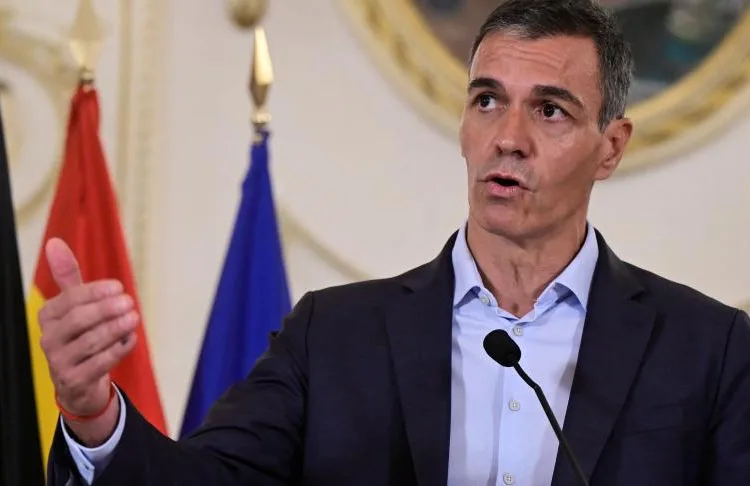
Speaking from Ceuta, Grande-Marlaska said most European Union countries had expressed support for Spain but accused others of showing a “very selfish attitude with no solidarity.”
“They have taken a selfish approach, trying to score party points,” the minister said, describing the reaction as irresponsible and unacceptable.
Spanish Prime Minister Pedro Sánchez separately requested an urgent meeting of EU interior ministers, criticizing what he called a “selfish, polarising and unlawful reaction” from certain member states.
Sánchez argued that Spain had prevented unauthorized movement from Ceuta toward mainland Europe and said the enclave’s special border arrangements already limit onward travel within the Schengen Area.
The diplomatic dispute intensified after Italy temporarily reintroduced border checks for non-EU travelers arriving from Spain by air or sea.
Rome said the one-month measure was required on national security grounds following the mass crossings.
Italian Prime Minister Giorgia Meloni said the situation demonstrated the urgent need for a coordinated European response to irregular migration.
A group of 22 EU governments also called for an emergency videoconference to discuss border security and migration policy.
Spain describes Morocco as a reliable partner
Despite criticism and speculation over Morocco’s role in the initial border breach, Grande-Marlaska defended cooperation between Rabat and Madrid.
“Morocco is not a threat to Ceuta, or to the rest of Spain. It is a reliable partner,” he said.
The minister added that cooperation with Moroccan authorities enabled Spain to reverse much of the situation within 24 hours, while acknowledging that both countries would need to evaluate how such a large-scale movement occurred.
Spanish figures concerning the number of crossings and returns have changed throughout the crisis.
The Interior Ministry initially estimated that approximately 50,000 people entered Ceuta, while local authorities placed the number closer to 60,000.
By Friday evening, the Spanish government said more than 48,300 people had returned to Morocco. Sky News later reported that this number had increased to approximately 53,000.
Moroccan and Spanish forces intensified their presence around the border after the crossings peaked on Thursday and Friday.
Spanish officials said new entries had largely stopped overnight, while security personnel continued escorting people toward the Moroccan border.
Grande-Marlaska blamed the unprecedented movement on human-smuggling networks, traffickers, and people who exploit vulnerable individuals.
Misinformation circulating on social media, including misleading interpretations of a Spanish Supreme Court ruling concerning immediate returns, has also been cited as a possible contributing factor.
The Associated Press cautioned, however, that the precise cause of the sudden mass movement remains unclear and that claims accusing Morocco or other governments of deliberately organizing it have not been substantiated by publicly available evidence.