
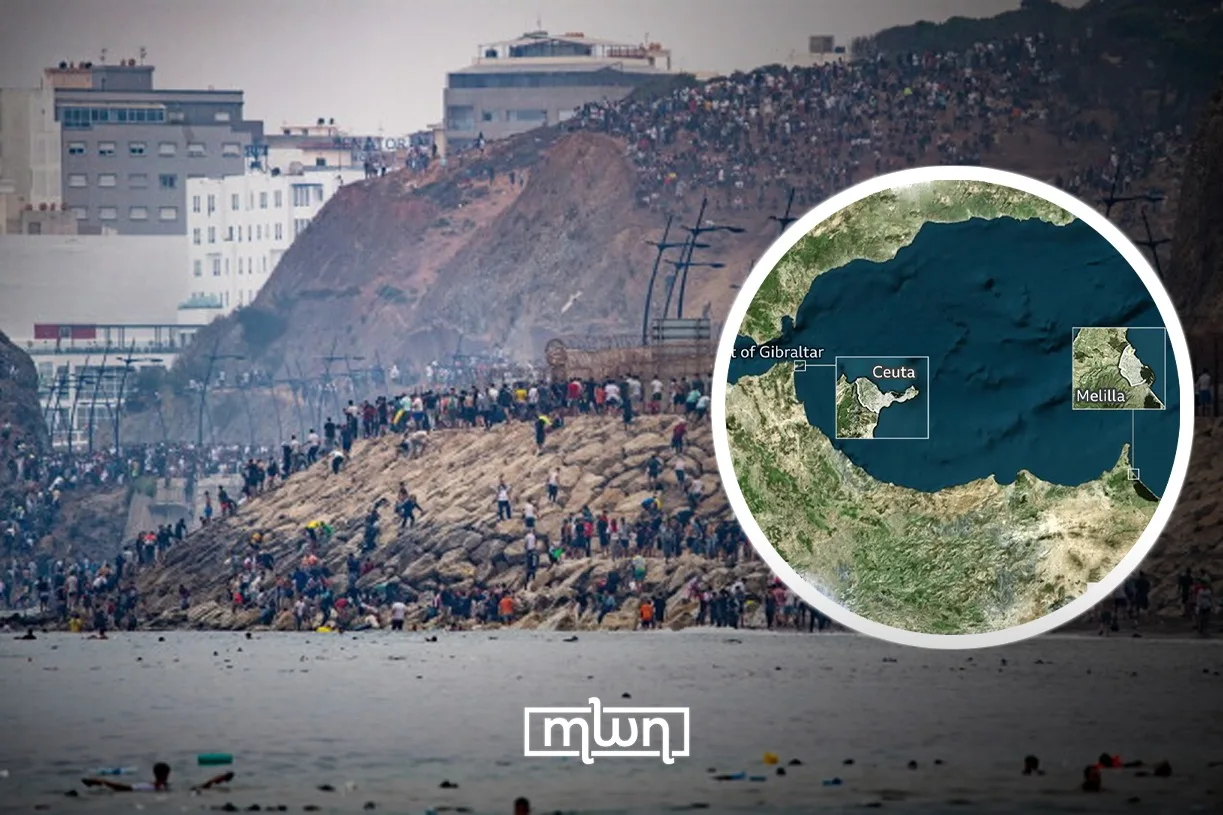
Rabat – A US congressional committee report describing Ceuta and Melilla as Spanish-administered cities “located in Moroccan territory” has resurfaced amid the recent migration crisis in the two occupied cities.
The report, issued by the US House Appropriations Committee in May, was attached to a 2027 funding bill covering national security, the State Department, and related programs.
In a section addressing Morocco and Spain, the committee noted that Ceuta and Melilla are “located in Moroccan territory and remain the subject of Morocco’s longstanding claim.”
The report also expressed support for efforts by the US Secretary of State to encourage diplomatic engagement between Morocco and Spain over the future status of the two cities.
The document has gained renewed attention following the mass migration attempts toward Ceuta and Melilla on July 30 and 31. Tens of thousands of people, including men, women, and children, attempted to enter the enclaves, leading to a major humanitarian and political crisis.
Moroccan authorities said that around 40,000 people headed toward Ceuta and more than 1,000 toward Melilla during the mass migration attempts.
The events led to chaotic scenes and a major humanitarian response, while several people died and others remained missing. Moroccan and Spanish authorities said they launched rescue and search operations as families waited for news about their relatives.
Read also: Ceuta Crisis: Facts and Political Context Over Conspiracy
Morocco’s Ministry of the Interior said that 11 people died while attempting the crossing, most of them by drowning. Spanish authorities, however, said the death toll exceeded 70, though many of the recovered bodies were reportedly in advanced stages of decomposition, suggesting they are linked to earlier migration attempts.
The mass migration attempts were reportedly fueled by false information circulating online, including claims linked to legal procedures. Many misinterpreted Spain’s new immigration regulations as allowing undocumented migrants who reached Ceuta to obtain legal status automatically.
Moroccan authorities also pointed to the role of human trafficking networks and online calls encouraging people to head toward Ceuta.
The resurfacing of the US report has also brought renewed attention to the historical dispute over Ceuta and Melilla.
Morocco considers Ceuta and Melilla occupied territories and has long maintained its claim to the two cities. In Moroccan political discourse, they are often described as remaining vestiges of Spanish colonialism because Spain continues to administer them despite their location on Morocco’s northern coast.
Spain, however, considers Ceuta and Melilla an integral part of its national territory and rejects Morocco’s claim. Madrid has maintained that the status of the two cities is not open to negotiation.