
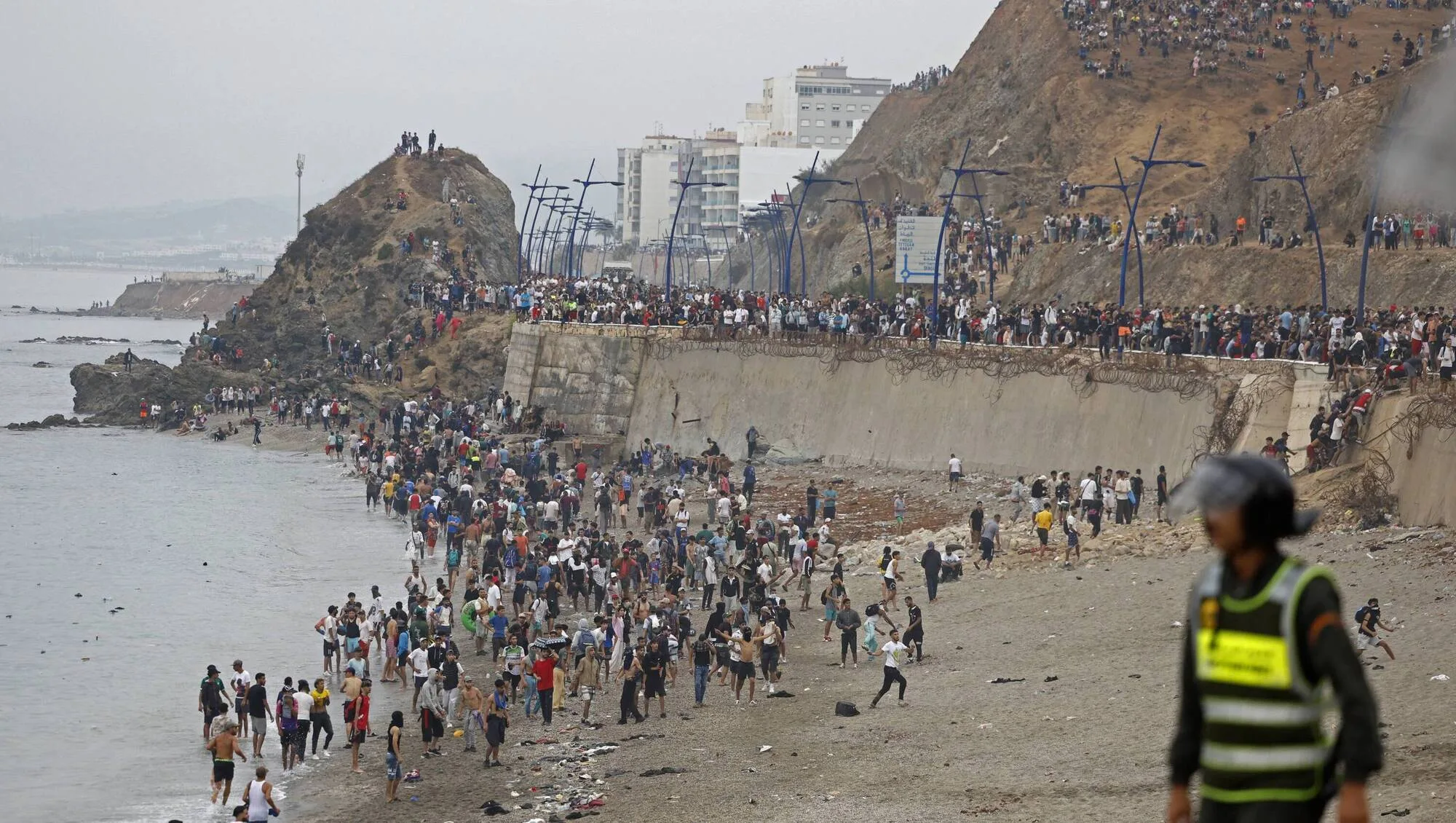
Rabat – Spanish authorities have expanded forensic operations in Ceuta as they work to identify the 80 people who died during last week’s mass crossing from Morocco into the Spanish-occupied enclave, while families on both sides of the border continue searching for missing relatives.
Most of the victims are expected to be buried in Ceuta in the coming days, officials said. Before the burials, forensic teams have collected fingerprints and DNA samples from the bodies to continue identification efforts even after burial.
The scale of the tragedy overwhelmed Ceuta’s forensic services. The city’s five-member team, which handled 76 deaths throughout all of last year, was suddenly faced with 80 bodies after the July 30 crossing. Spanish authorities have since brought in eight additional specialists from mainland Spain and set up a larger morgue at a former military hospital.
“We have faced such a number of victims that it has overwhelmed our operational capacities,” forensic team director Manuel Aparcero said. He was among those who certified the deaths as the bodies were brought ashore.
According to a statement from a local court issued Thursday, four victims have already been identified through fingerprints found in Spanish databases or through DNA testing. Authorities are also carrying out tests to confirm the identities of four more people.
Spanish police have shared the fingerprints of all those who died with Moroccan authorities. They have also opened an office near the border where relatives can report missing family members and provide DNA samples. By Thursday, 19 missing persons reports had been filed.
Autopsies found that many of the victims died from cardiopulmonary arrest, a condition commonly associated with drowning, according to pathologists.
Authorities said all bodies will be buried in Ceuta unless relatives request the repatriation of an identified family member. The bodies could also be exhumed later and transferred abroad with judicial authorization.
Aparcero said forensic teams have also cleaned the bodies according to Muslim funeral rites, adding that authorities “respect their ideology and religion.”